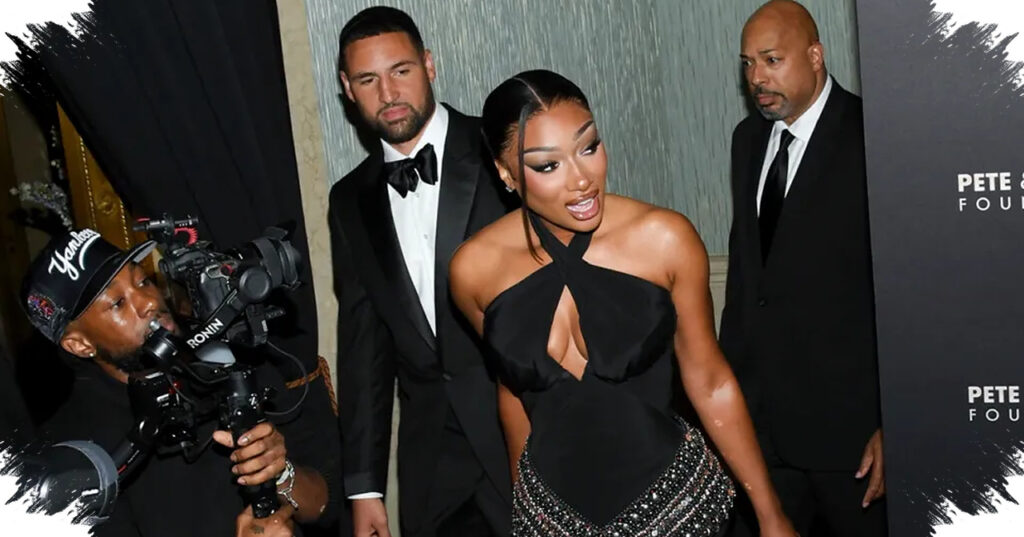
Megan Thee Stallion’s breakup with Klay Thompson has become bigger than a celebrity split because it has set off a wave of backlash in the Black manosphere. The reaction has shifted attention away from the allegation in her statement that Thompson cheated and toward attacks on Megan’s character, sexuality, and dating history.
Her representative said Megan ended the relationship because “trust, fidelity and respect are non-negotiable” and that she wanted to move forward “with peace and clarity.” Thompson has not publicly responded, but online critics have treated Megan as the problem anyway.
Why the reaction turned so harsh
The backlash has largely followed a familiar pattern in online spaces where misogyny and racial bias overlap. Megan has faced memes that paint her as either too sexual to deserve sympathy or, absurdly, as a gold digger despite her success as a businesswoman and entertainment star.
That framing ignores the basic point of her statement: she said the relationship broke down because of infidelity. Instead, some commentators have turned her decision to speak publicly into a criticism of her, as if naming a betrayal is more offensive than the betrayal itself.
Comments from media personalities fueled the pile-on
On the podcast “It Is What It Is,” Mase and Cam’ron discussed Megan’s past relationships and suggested her “reputation” affected how the breakup is being perceived. Mase said, “This whole idea with Megan Thee Stallion, I think her reputation precedes her.”
Stephen A. Smith also questioned why the breakup was announced publicly, saying, “Why? How come you just couldn’t break up and go on your merry way?” He also said the private details were “none of my damn business,” even while criticizing the decision to share them.
Those reactions reflect a double standard that appears frequently when Black women speak openly about harm in relationships. Megan is being criticized for setting a boundary, while the man accused of cheating is largely being excused.
Misogynoir sits at the center of the criticism
The criticism aimed at Megan matches a broader pattern of misogynoir, the gendered racism Black women often face. In that framework, Black women are reduced to stereotypes, treated as less worthy of care, and blamed for problems caused by others.
Megan addressed that dynamic in a 2020 New York Times op-ed, writing that Black women “struggle against stereotypes” and are often seen as “angry or threatening when we try to stand up for ourselves and our sisters.” Her breakup has revived that same response online, where some users have framed her as undeserving of heartbreak because she is openly sexual.
That logic is central to the attacks now spreading across social platforms. It suggests that a successful, confident Black woman should accept disrespect quietly, instead of naming it and leaving.
The backlash also follows an older pattern around Megan
This is not the first time Megan has become a target for the Black manosphere. She has faced hostility since Tory Lanez was convicted of three felonies connected to the shooting that injured her in 2020.
The jury in that case accepted that Lanez shot her, that bullet fragments were removed from her foot, and that gun residue was found on his hands. Even so, some corners of the internet still treat the facts as disputed and continue to mock or dismiss her pain.
That history matters because it shows the current breakup backlash is not happening in isolation. Megan has repeatedly been forced to defend her credibility in public while others shape narratives around her without her consent.
A public romance turned into a public target
Megan had been linked to Thompson since at least July 2025, and she shared moments from the relationship with her Instagram followers. She posted about boating on a vessel Thompson named after her, buying a home in California, sharing dinners, and spending Thanksgiving with his family.
Those posts created the picture of a serious relationship, which is part of why the breakup landed so visibly. Fans saw a romance that appeared stable, then watched it unravel in public as the criticism quickly turned toward Megan herself.
That response also stands out because celebrity breakups are common, yet Black women often receive the harshest scrutiny when they choose to talk about the end of a relationship. In this case, the reaction has been less about the breakup and more about punishing Megan for refusing to stay silent.
What the online rhetoric reveals
Some commentators have portrayed Thompson as the prize and Megan as replaceable, despite her own fame, awards, and business success. Mase suggested Thompson did not need Megan, saying, “If you 6’7” and you’re light-skinned with good hair, you could have anybody.”
That kind of talk reduces relationships to status, race, and desirability while stripping Megan of agency. It also shows how quickly Black women can be blamed for a man’s conduct when online spaces treat men’s feelings as more important than women’s boundaries.
Recent reporting about loneliness among boys and men has pointed to a broader mental health crisis, and the manosphere has become a refuge for some of that frustration. But directing that pain toward women does not solve isolation, and it often turns into harassment that is especially dangerous for Black women.
For Megan, the fallout has once again shown how public support can evaporate when a Black woman insists on respect in love. The breakup may be personal, but the reaction around it has made clear how quickly the Black manosphere turns private disappointment into another public attack on her.