


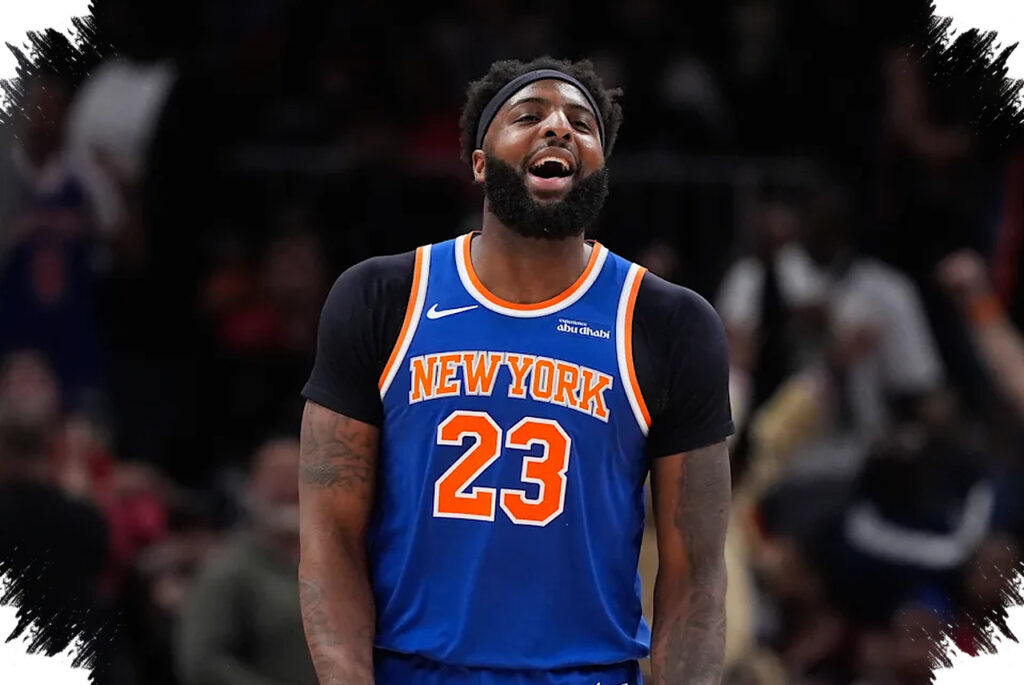
Mitchell Robinson was unavailable for the New York Knicks in Game 2 against Philadelphia because of an illness, leaving New York without its key backup center at a time when the 76ers were also short-handed in the middle. The injury report changed late in the day, and the Knicks confirmed shortly before tipoff that Robinson would not play.
The absence mattered because Robinson has been an important piece for New York through the postseason. His rebounding and defense help the Knicks, and his presence also gives the team the option to use a larger lineup next to All-Star center Karl-Anthony Towns.
A sudden setback for New York’s frontcourt
Robinson’s status became even more notable because Philadelphia already ruled out Joel Embiid earlier on Wednesday. Embiid sat with a sprained right ankle and a sore right hip, which meant both teams entered the game without a center.
That altered the matchup and removed one of the Knicks’ most reliable reserve options. Robinson has played just 13.6 minutes per game in the playoffs, but his impact has been efficient and specific.
He has made 17 of 19 shots, an 89.5% mark, while averaging 5.6 points and 5.1 rebounds. Those numbers reflect the value he has provided in limited minutes, especially around the basket.
Why Robinson matters in the series
Robinson gives the Knicks energy on the offensive glass and rim protection on defense. He also allows the coaching staff to pair him with Towns when a bigger front line is needed.
His scoring profile is limited, but his interior presence changes how New York can play. That makes his absence more meaningful than the modest minutes total might suggest.
There is also a clear weakness in his game that opponents have already tried to exploit. Robinson has made only 5 of 17 free throws in the postseason, and Philadelphia intentionally fouled him twice in the first quarter of Game 1.
He missed both attempts in that stretch, which showed why teams may view him as a late-game target. Even so, his overall postseason production has been efficient enough to make him a valuable rotation player for New York.
With both teams missing a center, Game 2 shifted into an unusual frontcourt situation that put more attention on depth and lineup choices. Robinson’s illness removed one of the Knicks’ most useful defensive and rebounding options at a key point in the series.
Read more at: sports.yahoo.com