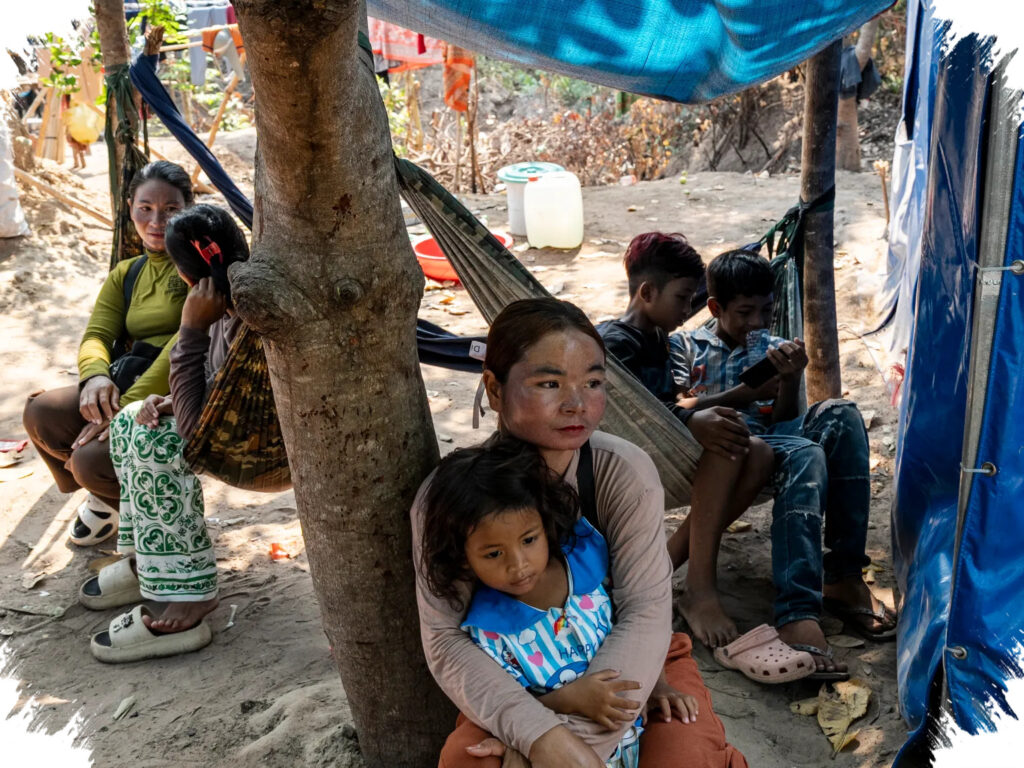
Cambodia’s displaced border communities are still living with the effects of the latest clashes with Thailand, even as a fragile ceasefire holds along the frontier. In camps across Preah Vihear and Siem Reap provinces, families say daily life remains suspended by fear, loss of income, and uncertainty over when they can safely return home.
More than 34,440 people remain in displacement camps in Cambodia, including 11,355 children, according to the Ministry of Interior. Many of them fled areas where troops are now stationed or where access has been blocked by military barriers, leaving families dependent on aid, temporary shelters, or government-built wooden houses that are only now reaching some of the displaced.
Life in the camps stays fragile
For 11-year-old Sokna, life in a camp at a Buddhist pagoda means starting the day with water collection, washing dishes, and sweeping the area around the family’s blue tarpaulin tent. Her mother, Puth Reen, said Sokna and her sister have stopped going to school since the family moved after the fighting.
Puth Reen said she tried to push them back into class, but the instability around them has made that difficult. Their experience reflects a wider problem for displaced families who have not been able to settle back into normal routines months after the most recent outbreak of violence.
Some families are surviving on donations, while others are slowly moving from emergency tents into wooden stilted houses provided by the Cambodian government. Even so, the military presence along the border remains heavy, and many households still live with the fear that the current calm could break quickly.
Border villages remain under tight control
In places such as Chouk Chey and Prey Chan in Banteay Meanchey province, Thai forces have used shipping containers and barbed wire to block access to villages that were once home to Cambodian residents. These sites have become symbols of the dispute, and they continue to draw anger from nationalists who see the barriers as a sign of occupation.
On the Cambodian side, the military has also kept residents away from some front-line areas. Sun Reth, a 67-year-old farmer, said she is not allowed to sleep in her own house because a Cambodian military base sits nearby, and she cannot freely harvest cashew nuts from her farm for income.
The border has effectively turned into a highly militarised zone, with both sides remaining alert and communities caught between military caution and civilian need.
Schooling has been disrupted for many children
Children in the camps are still enrolled in school in some cases, but education has become irregular and difficult to maintain. At the Wat Bak Kam camp in Preah Vihear province, mothers told Al Jazeera that younger children can attend a local school, while older students must travel about 15km to the provincial capital each day.
That journey has become even harder because of higher petrol costs, which especially affect teenagers who rely on motorcycles to get to class. Kinmai Phum, technical lead for WorldVision’s education programme, said dropout rates and class absences have risen among children from displaced border communities.
Phum said the situation combines several pressures at once: families keep moving in search of shelter, temporary learning spaces often lack basic facilities, and some children carry psychological trauma from the conflict. Local authorities now worry that many may not return to school if the displacement and economic strain continue.
Children are also carrying the conflict mentally
For some families, the war has affected attention and emotional stability as much as daily logistics. Yuon Phally, a mother of two primary school children, said her son and daughter often come home talking about rumours that fighting between Cambodia and Thailand may resume.
She said their concentration has been weak because they keep focusing on those fears instead of schoolwork. The pressure became worse when their father, a soldier stationed in the Mom Bei area, was on the front line during the December fighting.
Phally said her children waited for a call from him and became increasingly anxious. Their focus improved only after he returned to the camp to rest and recover from sickness and injuries sustained in battle.
Fear still shapes movement near the front line
Even those who live in camps often feel compelled to return to their homes near the border. Soeum Sokhem, a deputy village chief, said his house sits in a militarised “danger zone,” but he goes back every few days to check the property, tend crops, and sometimes sleep there briefly.
He described a life shaped by decades of conflict in Cambodia, from war linked to neighbouring Vietnam and the US bombing campaign to the Khmer Rouge period and the later civil war. He also pointed to the sporadic border clashes with Thailand that began in the 2000s.
For Sokhem, the border is no longer a place of routine movement. He said he sometimes hears gunfire when he returns, and even simple trips back to his home now carry fear.
The tense ceasefire signed on December 27 has prevented a new round of open warfare, but it has not restored normal life for people living along the Thai-Cambodian border. For displaced families, the main concern remains the same: whether peace will hold long enough for children to return to school, farmers to return to their land, and families to live without the constant threat of another forced move.