


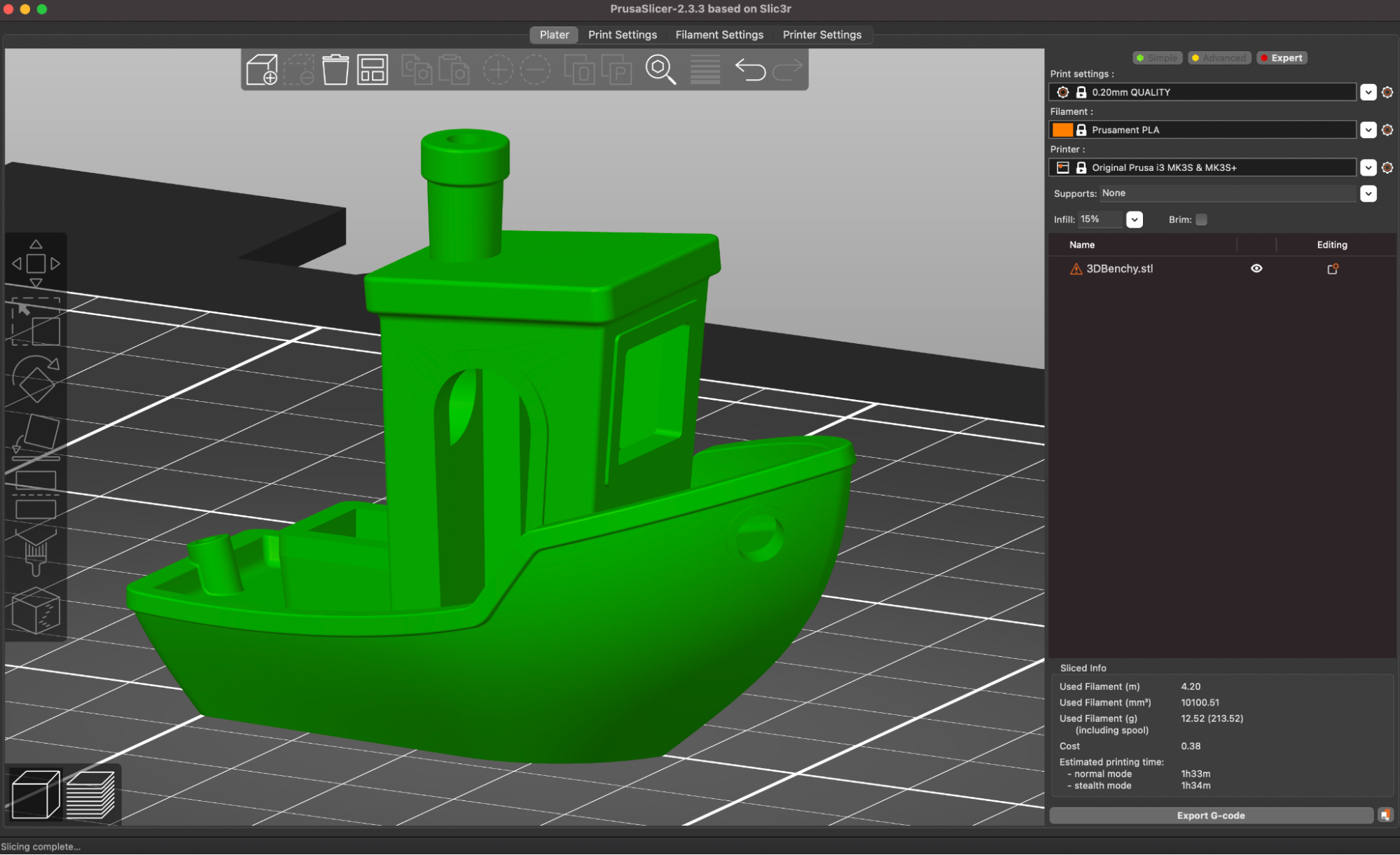
A Nintendo Switch has been turned into an unlikely performance booster for a Prusa MK3S 3D printer, and the results are striking. In a demo shared by Cocoanix 3D Printing, the aging machine cut its 3DBenchy print time from about 90 minutes to just 8 minutes and 41 seconds.
The setup uses a jailbroken Switch running Ubuntu Linux and Klipper, shifting motion planning away from the printer’s older control hardware. Cocoanix also says the change improves print quality, with less ringing and ghosting in the finished parts.
How the Switch became the printer’s brain
The Prusa MK3S is no longer a new machine, and its stock electronics can become a limit when higher speeds are the goal. In this case, the Nintendo Switch handles the heavier compute work, while Klipper manages the printer’s motion control.
That approach is different from the way many users speed up 3D printers with a Raspberry Pi or a laptop. The Switch adds a quad-core Nvidia SoC and a built-in touchscreen, which makes the setup more unusual than practical for most people, but it works as a compact controller in this project.
Speed gains come with familiar hardware limits
The performance jump is not just a small tweak. Cocoanix says the MK3S reached its “absolute speed limit” at 400mm/s and 17,000mm/s² of acceleration when using Input Shaper.
Even so, the print itself shows that the rest of the machine still matters. The hotend and extruder become the main bottlenecks at that point, and cooling plus the bed-slinger Y-axis also appear close to their physical limits.
Why Klipper matters here
Klipper plays a central role in the upgrade because it offers more advanced planning than older firmware setups. It also supports vibration compensation and other motion-control techniques that can help reduce artifacts on fast prints.
The software is also easier to tune than traditional firmware workflows, according to the video. Cocoanix points out that configuration happens through a simple editable text file, while the user interface is handled through the Mainsail or Fluidd web dashboard.
What the demo showed
The video walks through the installation process, including how to set up Klipper on the Switch and how to configure and flash the MK3S. The most important proof point comes near the end, where the 3DBenchy print finishes in 8 minutes and 41 seconds under SpeedBenchy rules.
The result is not flawless, but Cocoanix links the rougher output to the printer’s remaining mechanical constraints rather than the Switch-based control setup itself. For an older 3D printer, the project shows how much extra headroom modern motion-control software can unlock when paired with unusual hardware.