


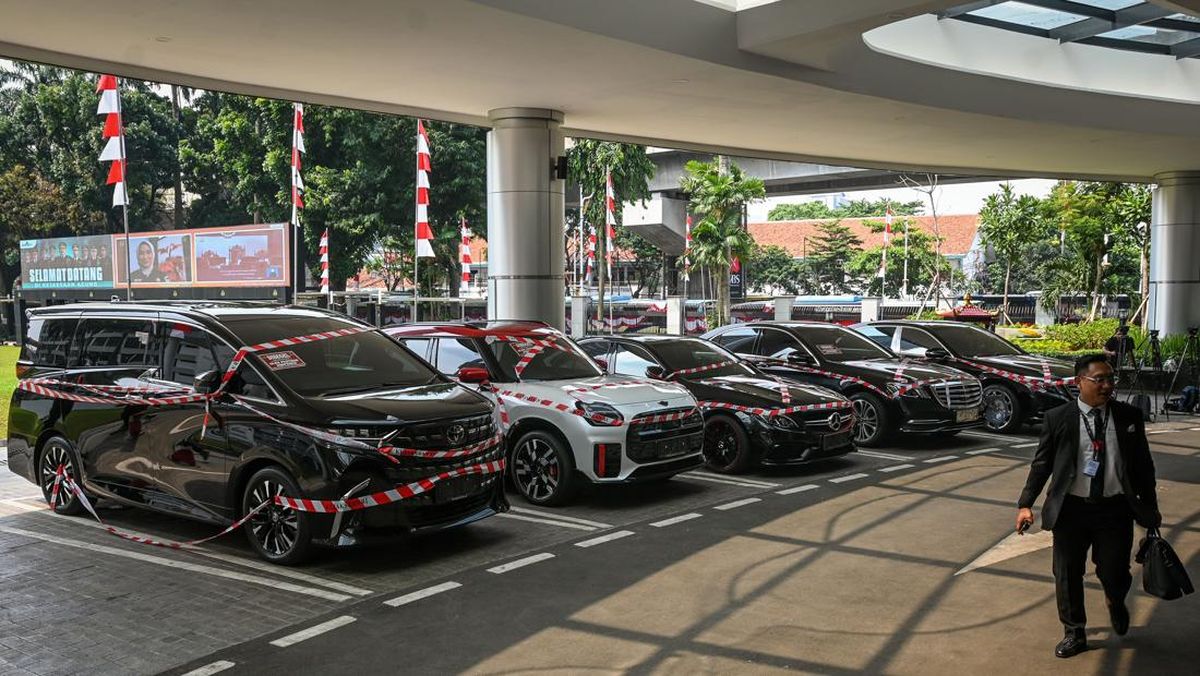
Confiscation of luxury cars owned by Riza Chalid has captured public attention after the Attorney General’s Office revealed significant asset seizures. Riza Chalid, a prominent suspect linked to a major money laundering case involving crude oil management corruption, saw his prized car collection taken over by authorities.
Indonesian law enforcement confirmed that the seizure of these luxury vehicles was conducted in several phases. They carried out operations at multiple locations, including exclusive areas of Jakarta, Depok, and Bekasi. The list of confiscated vehicles demonstrates the scale of Riza Chalid’s alleged wealth gained from illicit activities.
Details of the Luxury Car Confiscation
According to official statements from Anang Supriatna, Head of the Center for Legal Information at the Attorney General’s Office, the car confiscation process began with five vehicles on the fourth day of the operation. The initial batch included one Toyota Alphard, one Mini Cooper, and three Mercedes-Benz units. All vehicles were believed to be acquired through proceeds from the crude oil corruption scheme involving Riza Chalid.
During subsequent operations, investigators seized more cars deemed to be in Riza’s possession. On the fourteenth day, the authorities added four more vehicles to the list. The assets confiscated at this stage included a BMW 528i in white, a Toyota Rush, and two Mitsubishi Pajero Sport SUVs—one bearing the 2.4 Dakar specification.
These luxury cars were located in two residential properties in the Bekasi region. Each car had its own registration and legal ownership history, but authorities tracked the financial trails back to Riza’s funds, reinforcing suspicions of illicit origins.
List of Riza Chalid’s Confiscated Luxury Cars
Below is the list of the nine luxury vehicles seized by state officials from Riza Chalid:
- Toyota Alphard
- Mini Cooper
- Mercedes-Benz (first unit)
- Mercedes-Benz (second unit)
- Mercedes-Benz (third unit)
- BMW 528i (white)
- Toyota Rush
- Mitsubishi Pajero Sport
- Mitsubishi Pajero Sport 2.4 Dakar
Those vehicles are part of ongoing efforts to recover state losses, estimated in the hundreds of trillions of rupiah due to systemic corruption.
More Assets Seized Beyond Cars
Authorities did not only target luxury vehicles in this large-scale operation. During the same investigation phase, investigators also seized cash in both rupiah and various foreign currencies. The raids and searches took place at three key locations: one in Depok and two in South Jakarta—Pondok Indah and Mampang. These moves were direct results of suspicions that financial resources linked to Riza Chalid were scattered across several locations, concealed in both physical and financial forms.
On the twenty-seventh day, enforcement teams took further steps by seizing other major assets, including a prestigious property in the elite Rancamanya area of Bogor. This large estate spanned a total of 6,500 square meters and was divided into three separate land certificates. Each land lot was registered under nominees, but forensic tracing by authorities revealed that Riza Chalid was the true financial source behind the property acquisition.
The steps taken by law enforcement represent a comprehensive effort to clamp down on money laundering and asset concealment practices. The pattern of ownership, which involved the use of family members and third parties, is common in major financial crime cases.
Tracing the Legal and Financial Trails
During the investigation, prosecutors discovered that not all confiscated properties were registered under Riza’s own name. However, further analysis and evidentiary tracking showed that purchases and investments relied on funds channeled directly or indirectly by Riza Chalid. In one case, a luxury house inside an exclusive neighborhood in Kebayoran Baru, Jakarta, was found to be owned by Riza’s daughter, Kanesa Ilona Riza, as recorded in the official land document. Investigations confirmed that the money for that property also originated from Riza.
Authorities explained that such asset placement was a typical tactic to disguise the true owners and sources of illicit funds. Tracing these complex webs of transactions is part of the ongoing investigation, aiming to present a complete picture of the corruption and money laundering networks.
Background and Current Status of the Case
Riza Chalid is recognized as the beneficial owner of PT Navigator Khatulistiwa and PT Orbit Terminal. He was named a suspect in a series of corruption cases involving crude oil and refinery management at PT Pertamina, one of Indonesia’s most important state-owned enterprises. The investigation covered activities between multiple business groups and contractors spanning several years.
Altogether, law enforcement has named a total of eighteen suspects in the case, which resulted in state losses estimated at Rp285 trillion. The scale of the legal process reflects both the seriousness of the alleged offenses and the authorities’ intention to pursue ill-gotten gains regardless of their form or location.
Additionally, Riza Chalid faces a separate charge related to money laundering, as confirmed by the Attorney General’s Office. At the time of this publication, he remains a fugitive, with asset tracing and confiscations ongoing under the directive of the central task force.
The Wider Context of Asset Recovery
The government’s move to confiscate Riza Chalid’s luxury vehicles forms part of a broader anti-corruption drive. Asset recovery in high-profile financial crime cases has become a central element in efforts to enforce accountability and restore integrity to public financial management. Similar strategies are being used in other large-scale investigations across Indonesia, reflecting an increasing emphasis on transparency and effective law enforcement.
The focus on asset confiscation also sends a strong public signal that proceeds from corruption will not remain untouched. By tracking assets and reversing attempts at money laundering, Indonesian authorities aim to deter further misappropriation and signal the risks involved in enabling or benefiting from corrupt arrangements.
Ongoing collaboration between forensic accountants, investigators, and legal experts underpins these asset recovery efforts. Each case contributes to refinements in investigative techniques, asset tracing protocols, and legal frameworks for returning assets to public control.
The developments in Riza Chalid’s case underline the complexity faced by investigative authorities when tracing multi-layered asset movements. As the process continues, public interest remains high, especially regarding updates on additional asset seizures, prosecution progress, and prospects for recovering state losses.