


The electric vehicle industry in Indonesia continues to show remarkable growth. Hyundai is intensifying its strategy to boost sales of battery electric vehicles (BEVs) in the country, focusing on their upcoming flagship model, the Ioniq 9.
Hyundai Motors Indonesia’s management observed a rapid shift in consumer interest. According to Fransiscus Soerjopranoto, Chief Operating Officer, monthly EV sales recently reached around 6,000 units, doubling from only 3,000 units previously. This surge contributed to EVs capturing up to 10% of Indonesia’s automotive market, up from just 5%.
EV Market Trends and Rising Competition
Data from the Association of Indonesia Automotive Industries (Gaikindo) illustrates this momentum. During the first nine months, wholesale electric car sales in Indonesia totaled 55,225 units. This represents a significant jump compared to the previous year’s figure of 43,188 units.
Industry observers link this boost to the influx of new EV brands and models. Entrants like VinFast from Vietnam, Polytron under Djarum Group, and Maxus from Indomobil Group are enriching the market. The result is tougher competition, pushing established players like Hyundai to innovate and diversify their product lineup.
Hyundai’s Plan With the Ioniq 9
Hyundai is preparing to introduce the Ioniq 9, a seven-seater electric SUV, as part of its strategic move. Company spokespersons confirmed that the Ioniq 9 is under serious study, with Hyundai closely monitoring Indonesian consumer preferences before official introduction.
Recent data from the official Jakarta tax authority lists the Hyundai Ioniq 9 EV with a standard vehicle value of Rp699 million. However, this figure does not reflect the on-the-road price, as it excludes several taxes such as VAT, luxury goods tax, and vehicle registration fees.
Local Assembly and Initial Launch Strategy
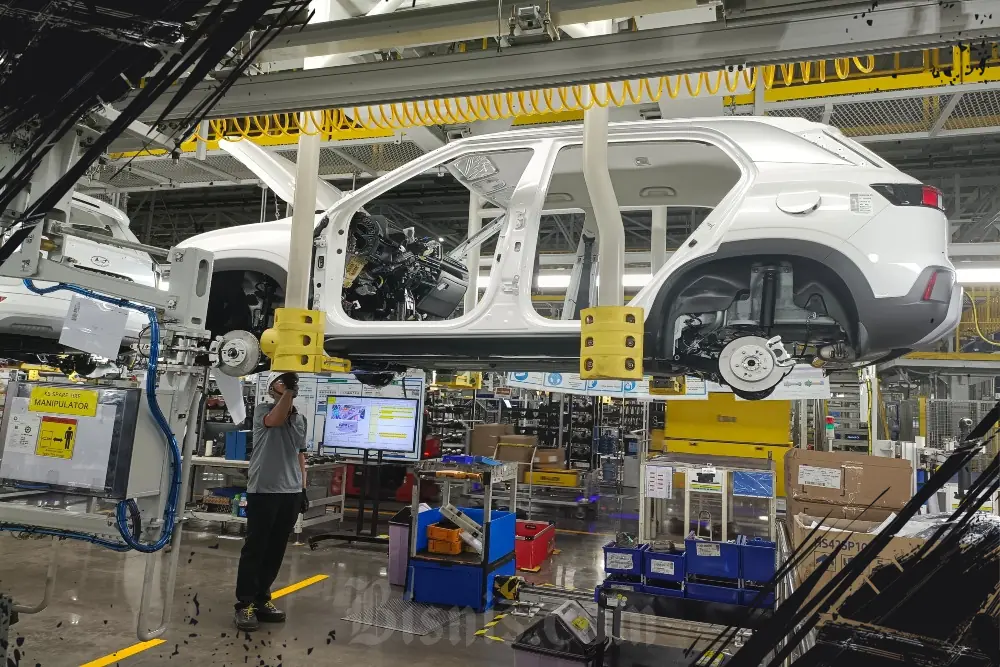
Hyundai has committed to assembling the Ioniq 9 at its Cikarang plant, operated by Hyundai Motor Manufacturing Indonesia (HMMI). Local assembly is scheduled to begin the following year. In the meantime, Hyundai will import the Ioniq 9 as a completely built-up (CBU) vehicle from South Korea to test market demand.
This strategy gives Hyundai flexibility. By gauging market reception with imported units, the company minimizes risk before ramping up local production. If Indonesian consumers show strong interest in the Ioniq 9, Hyundai can quickly scale up domestic assembly.
Hyundai’s Broader Electric Vehicle Ecosystem
Currently, Hyundai’s BEV lineup in Indonesia includes the Ioniq 5, Ioniq 6, and Kona Electric. The company also offers hybrid SUVs such as Tucson Hybrid, Santa Fe Hybrid, and Palisade Hybrid in the premium segment.
Beyond individual models, Hyundai is building a comprehensive EV ecosystem. The brand operates three key facilities in Indonesia:
- PT Hyundai LG Indonesia (HLI) Green Power – battery production.
- PT Hyundai Energy Indonesia (HEI) – energy management and components.
- PT Hyundai Motor Manufacturing Indonesia (HMMI) – vehicle assembly.
This integrated value chain supports local industry growth and ensures a steady supply of components.
Substantial Investment and Economic Impact
Hyundai’s commitment is reflected in a reported investment of US$3 billion, equivalent to around Rp50 trillion. This financial outlay has created employment opportunities for approximately 5,000 workers in Indonesia, underlining the company’s role in developing the national automotive sector.
By leveraging global experience and significant capital, Hyundai is aiming to secure a larger share of the fast-evolving Indonesian EV market. The upcoming introduction of the Ioniq 9 is expected to reinforce Hyundai’s positioning and respond to increasing demand from environmentally-conscious drivers seeking spacious, innovative mobility solutions.
With competition intensifying and more models arriving, Hyundai’s multifaceted approach—ranging from local assembly to comprehensive EV infrastructure—places the brand in a favorable position to shape the future of electric mobility in Indonesia.