


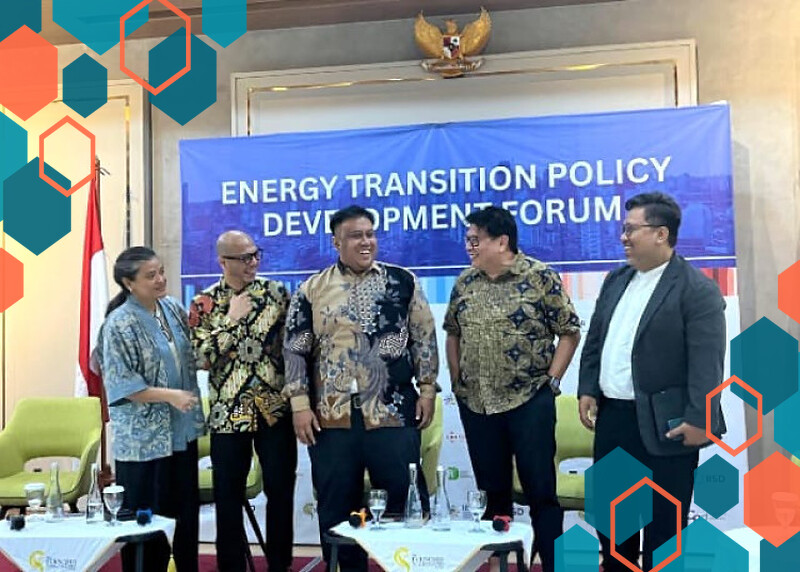
Indonesia’s energy policy is at a pivotal moment as the administration of President Prabowo Subianto and Vice President Gibran Rakabuming Raka enters its second year. The global spotlight on climate commitments contrasts with the uneven progress on the ground. Despite bold pledges at international forums like G20 and COP30, actual implementation of clean energy transitions faces enduring hurdles, including subsidy inefficiencies, stagnant renewable investments, and fragmented coordination across ministries.
In response, the Energy Transition Policy Development Forum (ETP Forum), a collaborative initiative involving Climateworks Centre, CPD, IESR, IISD, IRID, and Purnomo Yusgiantoro Center, released a comprehensive report detailing achievements, challenges, and nine strategic policy recommendations. These aim to strengthen Indonesia’s energy transition trajectory aligned with the new administration’s goals.
Key Challenges in Indonesia’s Energy Transition
Indonesia’s renewable energy mix rose modestly to 16 percent in the first half of the current year, with an additional 876.5 MW of clean energy capacity added. Although this shows progress, it remains inadequate to meet targets laid out by the Paris Agreement. Furthermore, government expenditure allocation reveals an imbalance: less funding is directed toward renewable energy development compared to traditional energy subsidies, signaling the need for fiscal realignment.
Kuki Soejachmoen, executive director of IRID, highlights a critical gap between international commitments and domestic policy execution. This disconnect hampers momentum and risks undermining Indonesia’s leadership in global climate efforts.
Four Policy Clusters and Strategic Recommendations
The ETP Forum structured its recommendations into four policy clusters to address these challenges comprehensively:
-
Subsidy Reform and Energy Access in Remote Areas
The Forum urges shifting from commodity-based subsidies toward targeted direct subsidies using the National Energy Subsidy Single Data system. This redirection would free fiscal space to invest in micro-grid and off-grid electricity infrastructure in remote, frontier, and underdeveloped regions (known as 3T areas), improving energy equity and accelerating renewable uptake. -
Governance and Regulatory Improvements
Separating regulatory bodies from energy business operators is essential to enhance transparency and attract investor confidence. The creation of a Presidential Task Force on Energy Transition—established with a solid legal foundation—would improve cross-agency coordination, reducing overlaps and inefficiencies. Additionally, expanding the Carbon Economic Value to industrial and transport sectors, in alignment with the forthcoming Renewable Energy Bill, would strengthen market signals for decarbonization. -
Long-term Commitments and Technology Investment
Aligning key national energy policies—such as the National Energy Policy (KEN), National Electricity General Plan (RUKN), and Electricity Supply Business Plan (RUPTL)—with the vision of achieving 100% renewable energy by 2040 or sooner is crucial. Heavy investments in research and development for clean energy technologies, including electric vehicle batteries, green hydrogen, and ammonia fuel, are recommended to boost technology deployment and maintain Indonesia’s competitive advantage. - Environmental Standards and Social Justice
Strong Environmental, Social, and Governance (ESG) standards must be enforced in the downstream processing of critical minerals to balance economic benefits with environmental preservation. Integrating Gender Equality, Disability, and Social Inclusion (GEDSI) principles alongside a Just Transition Framework ensures the energy transition process protects workers and vulnerable groups, promoting an inclusive and fair transformation.
Voices from Experts
Fabby Tumiwa, CEO of IESR, stresses that setting ambitious yet realistic targets aligned across policy documents will drive consistency and investor confidence. He also underscores the importance of innovation to accelerate adoption of clean technologies. Zacky Ambadar from IISD emphasizes that embedding ESG and social inclusion frameworks ensures sustainable development without compromising communities.
Fiscal and Institutional Realignment for Sustainable Progress
Despite allocating over Rp400 trillion towards energy resilience, the disparity in funding priorities calls for urgent subsidy reform and better financial management. Reorganizing institutional roles and enhancing legal frameworks will improve governance effectiveness. These steps are vital for unlocking additional investment and realizing Indonesia’s renewable aspirations.
The ETP Forum’s comprehensive recommendations provide a roadmap for the Prabowo–Gibran administration to translate their commitments into substantial progress. Strengthening policy coherence, expanding investments in technology, and embedding social and environmental safeguards remain key pillars for Indonesia’s clean energy future.