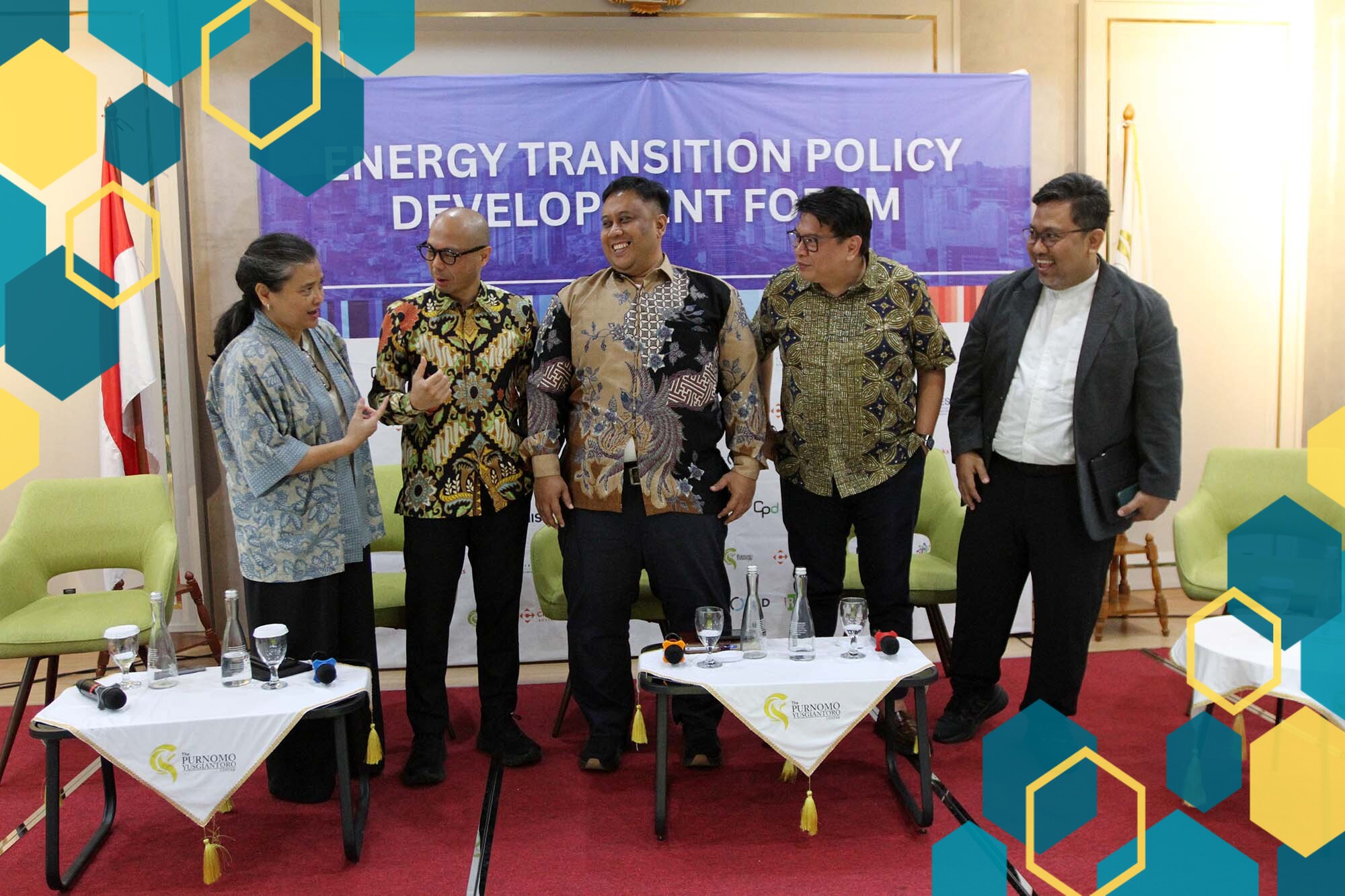
Since the start of President Prabowo Subianto and Vice President Gibran Rakabuming Raka’s administration, Indonesia’s energy policy faces significant opportunities and challenges. While commitments toward energy transition and climate action have been reiterated in international forums, the national implementation requires more concrete and consistent measures.
The Energy Transition Policy Development Forum (ETP Forum) — a coalition of Climateworks Centre, Centre for Policy Development (CPD), Institute for Essential Services Reform (IESR), International Institute for Sustainable Development (IISD), Indonesia Research Institute for Decarbonization (IRID), and Purnomo Yusgiantoro Center (PYC) — has issued an updated set of nine key recommendations. These aim to strengthen Indonesia’s energy transition policy as discussed in their recent annual media briefing.
1. Prioritize Clear and Consistent Energy Policies
Officials must focus on policies that provide regulatory certainty to investors and stakeholders. Frequent shifts or uncertainty in regulations may delay renewable energy development and discourage investment.


2. Accelerate the Renewable Energy Mix Expansion
Indonesia should intensify efforts to increase the share of renewable energy in the national grid. Targets should be realistic but ambitious to align with global climate commitments made at forums like COP30.
3. Strengthen Institutional Coordination
Better collaboration between ministries and agencies is essential for efficient policy execution. Overlapping regulations and fragmented responsibilities can create bottlenecks in project approvals and implementation.
4. Support Innovation and Technology Adaptation
Investment in new technologies such as electric mobility and smart grid systems should be accelerated. This supports decarbonization and enhances energy efficiency across sectors.
5. Enhance Financing Mechanisms for Energy Transition
Access to affordable financing is needed for renewable projects, especially for small and medium enterprises. Government-backed incentives and risk mitigation tools can leverage private sector participation.
6. Promote Inclusive Energy Access
Policies should ensure equitable access to clean and affordable energy across all regions. Bridging urban-rural energy disparities remains crucial for sustainable development.
7. Develop Human Capacity and Skills
Investing in training programs will prepare the workforce for the green economy. Capacity building among policymakers and technicians ensures smooth deployment and maintenance of new energy technologies.
8. Monitor Progress with Transparent Data
A robust monitoring and reporting framework is necessary to track the progress of energy transition initiatives. Transparency will build public trust and guide policy adjustments.
9. Integrate Climate Risk into Planning
Energy policies should incorporate climate resilience to mitigate environmental risks. This approach aligns Indonesia’s energy strategy with global trends and sustainable development goals.
The ETP Forum stresses that early-stage progress should be matched with concrete actions at the local and national levels. Without diligent follow-through, ambitions for a clean energy future may remain unfulfilled. Coordinated efforts, combined with innovative and inclusive policies, will be critical for Indonesia’s sustainable energy transformation.