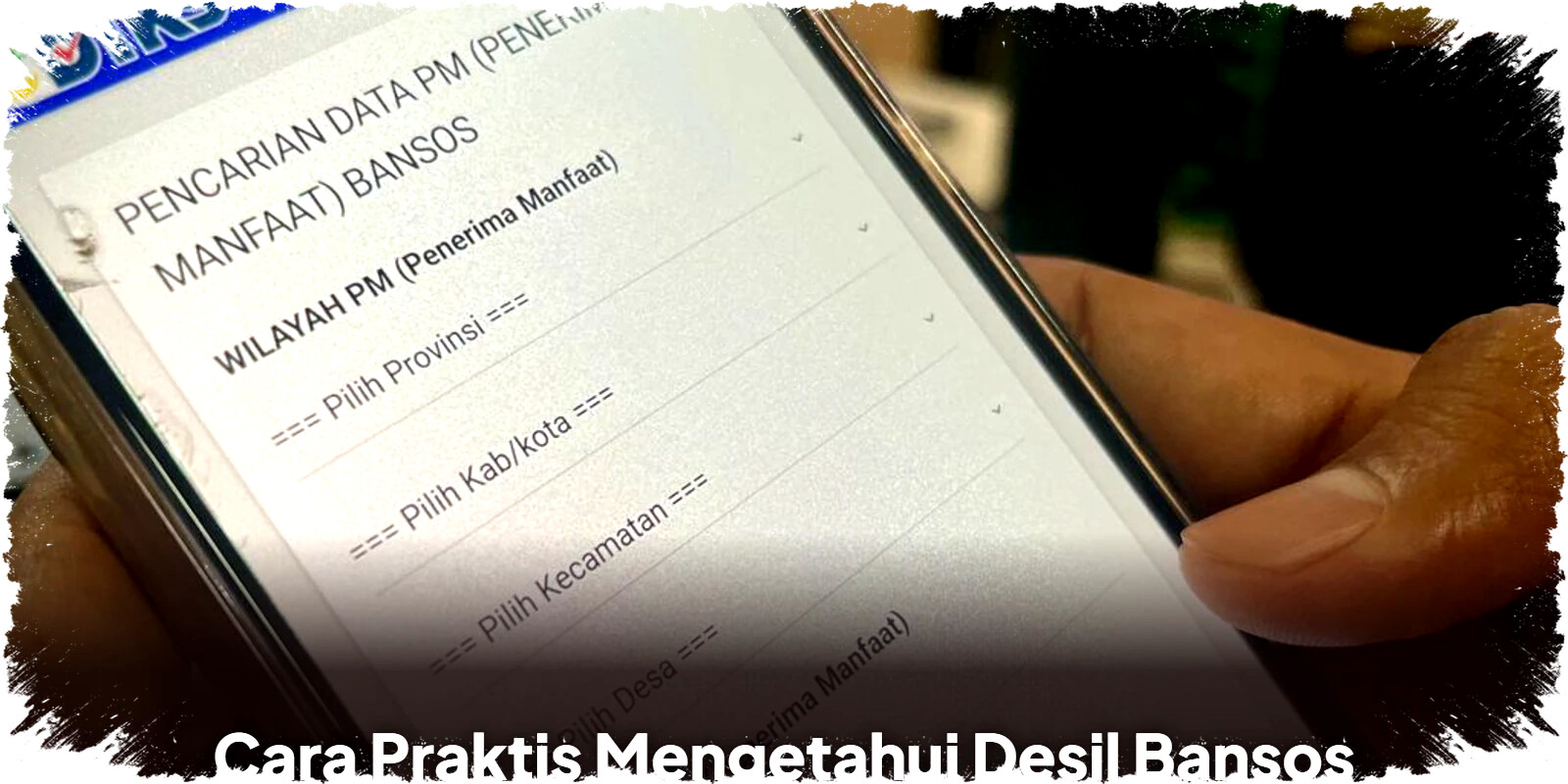
The government continues to optimize social assistance distribution to ensure aid reaches those who need it most. A key measure used is the welfare ranking or decile, which categorizes families based on their economic condition. Currently, individuals can easily check their decile status for PKH (Family Hope Program) and BPNT (Non-Cash Food Assistance) by using their National Identity Number (NIK) through official digital platforms.
This self-check option eliminates the need to visit social service offices, saving time and effort. Citizens can now verify their eligibility status conveniently on smartphones or computers, providing greater transparency in social assistance management.
How to Check Your PKH and BPNT Decile Using NIK


There are two main methods you can use for checking social assistance decile data:
1. Via the Official Ministry of Social Affairs Website
This option is fast and requires no additional applications. To proceed:
- Open the Ministry of Social Affairs’ official website in a web browser.
- Navigate to the section labeled “Check Social Assistance” or similar.
- Enter your NIK (National Identity Number) exactly as on your KTP (Identity Card).
- Complete the displayed captcha for verification.
- Click the “Search Data” button.
The system will show information including the recipient’s name, the decile ranking, and the types of assistance received, such as PKH or BPNT. Certain sensitive information might be partially hidden to protect privacy.
2. Through the “Cek Bansos” Mobile Application
For a more detailed overview, including data on all family members listed on your Family Card (KK), the “Cek Bansos” app is recommended:
- Download and install “Cek Bansos” from Google Play Store or Apple App Store.
- Register and create a user account if you don’t have one.
- Log in to access the app.
- Select the “Check Social Assistance” menu.
- Enter your NIK and KK number accurately.
- The app will display comprehensive data about your social assistance and welfare decile.
Using the app also allows access to features such as filing data corrections or objections if you believe the recorded information is inaccurate.
Understanding the Meaning of Decile and Its Impact
Decile classification divides the population into ten groups from lowest to highest economic status. Decile 1 covers the bottom 10% of welfare conditions, while decile 10 represents the top 10%. This data is sourced from the Integrated Social Welfare Data (DTKS) managed by the Ministry of Social Affairs.
Calculating decile considers several factors:
- Individual and household information such as education level and employment status.
- Housing conditions including building size and electrical power capacity.
- Asset ownership like vehicles or electronics.
Households classified within deciles 1–4 receive priority for social assistance programs including PKH and BPNT. Those in decile 5 often remain eligible for complementary benefits such as the government-subsidized health insurance scheme (PBI-JK).
It is important to note that decile status is dynamic and can change over time. If you believe your economic situation is inaccurately reflected, you may request a data update. Updates can be made through local village offices, social services, or directly via the objection features within the “Cek Bansos” application. The Central Statistics Agency (BPS) periodically verifies and recalculates welfare rankings to ensure fair targeting.
Steps to Request a Data Update or Correction
- Visit the village/sub-district administrative office responsible for social welfare.
- Submit a formal request to update or correct your data.
- Provide valid supporting documents reflecting your current condition.
- Alternatively, use the “Sanggah” or objection feature in the “Cek Bansos” app to report discrepancies.
- Await verification and confirmation conducted by official authorities.
This process aims to keep the DTKS accurate and responsive to changing social and economic circumstances.
By utilizing these digital tools and understanding the decile framework, citizens gain clarity on their position and eligibility for social assistance. Access to real-time, transparent data helps the government distribute aid effectively while empowering individuals to participate actively in social welfare management.
Maintaining updated and truthful personal data ensures that social assistance such as PKH and BPNT meets its objective of supporting vulnerable families. Regularly checking your decile status and promptly reporting any misalignments benefits both recipients and the overall social protection system in Indonesia.