Acne-prone, oily skin needs products that control excess sebum without stripping the skin barrier. Dermatology groups note that acne often worsens when pores become clogged with oil, dead skin cells, and bacteria, so a routine should focus on gentle cleansing, targeted actives, and non-comedogenic hydration.
For readers searching for practical options, here are seven skincare recommendations that are widely used for oily and acne-prone skin, along with the key ingredients and usage notes that matter most. The list below combines product-level references from the source material with general acne-care principles from trusted dermatology guidance.
Why oily skin needs a different routine
Excess oil does not only create shine. It can also increase the chance of breakouts when combined with clogged pores and inflammation.
The American Academy of Dermatology explains that acne management works best when people use acne-fighting ingredients consistently and avoid harsh routines that irritate the skin. That means the ideal skincare for oily, acne-prone skin should calm inflammation, reduce bacteria, and help keep pores clear.
7 recommended skincare products for oily and acne-prone skin
- La Roche-Posay Effaclar Duo+M 7.5 ml
This treatment is designed with a triple-action approach. The formula includes Phylobioma to help target acne-causing bacteria, Procerad™ to help fade post-acne marks, and niacinamide to soothe skin and support the skin barrier.
It is meant for morning or evening use and should be applied gently over the face after warming the product in the hands. The source lists a starting price of $9.50 equivalent from Rp152,000, making it one of the more accessible targeted options for daily acne care.
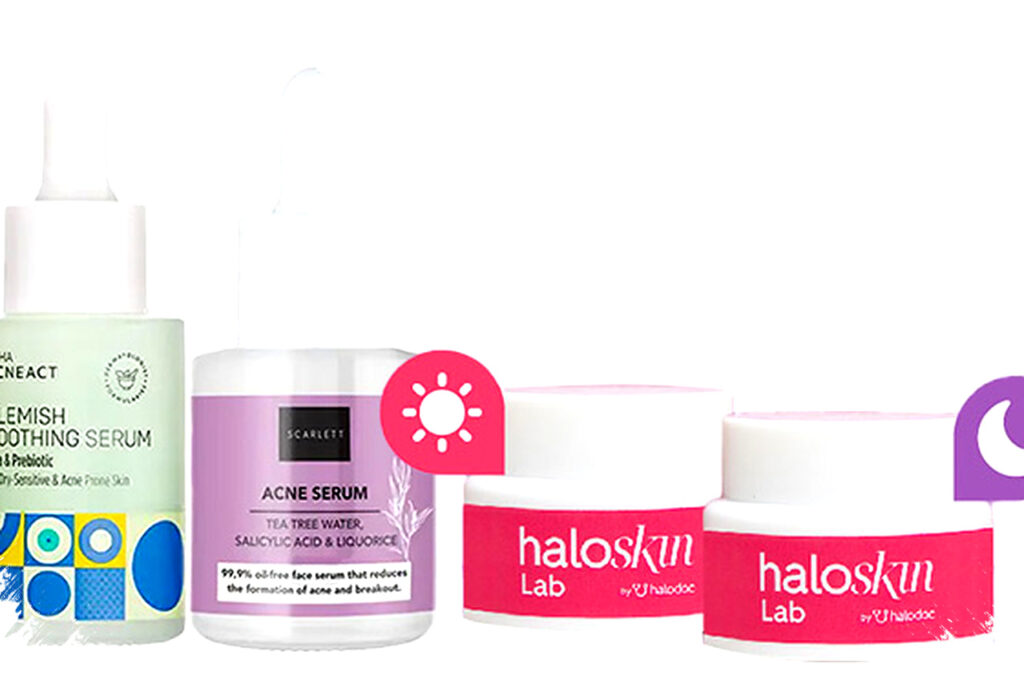
- Haloskin Lab Acne Fighting Package
This package pairs a day cream and night cream formulated by dermatologists. The day cream contains erythromycin, clindamycin, benzoyl peroxide, niacinamide, and tranexamic acid, while the night cream includes adapalene, azelaic acid, clindamycin, and tretinoin.
Because the formula is customized, it is available only after an online consultation with a Haloskin doctor. The source also notes that the product should be stored properly and used for only one month after opening, which matters because some prescription-style acne compounds lose stability if handled incorrectly.
- Haloskin Lab Acne Recovery Package
This option is aimed more at skin repair than active breakout control. It is positioned to help regenerate skin, reduce acne marks, and improve uneven texture through a day cream and night cream regimen.
The product should be used only according to the doctor’s instructions. It is especially relevant for people whose acne has improved but who still deal with post-inflammatory marks and rough texture.
- Haloskin Lab Moms Acne Special Package
This package is formulated specifically for pregnant and breastfeeding users, which is important because many standard acne ingredients are not suitable during pregnancy. The day cream contains erythromycin, clindamycin, niacinamide, and tranexamic acid, while the night cream includes azelaic acid, clindamycin, and other ingredients chosen based on skin needs.
It is prescription-based and not sold freely, so professional supervision is required. That makes it a relevant choice for a sensitive group that still needs acne treatment but must avoid stronger over-the-counter ingredients.
- Erha Acneact Blemish Soothing Serum 30 ml
This serum is intended for people dealing with stubborn facial acne and redness. The source says it helps relax the skin and reduce inflammation, which can be useful when breakouts are accompanied by irritation and a sensitized complexion.
It can be used in the morning and at night, and the serum should be patted in gently until absorbed. The listed price starts from $9.30 equivalent from Rp146,800, placing it in the mid-range for a targeted acne serum.
- Erha Acneact BHA & Sulphur Acne Spot Gel 10 g
Spot gels are useful when acne is localized rather than spread across the whole face. This formula uses BHA and sulfur to treat pimples directly, and the source notes that consistent use can also help reduce acne marks over time.
It should be applied only to the pimple and the area around it as needed. For people who get occasional inflamed spots but do not need a full-face treatment, this is a practical add-on to a basic routine.
- Avoskin Your Skin Bae Salicylic Acid 2% + Zinc 30 ml
This serum combines salicylic acid and zinc, two ingredients often recommended for acne-prone skin. Salicylic acid exfoliates inside the pores, while zinc helps control excess oil and may limit the growth of acne-causing bacteria.
The source recommends applying a few drops in the morning and evening, followed by a gentle massage until absorbed. With a starting price of $7.00 equivalent from Rp109,900, it is one of the more budget-friendly options for people looking for an exfoliating acne serum.
How to build the right routine
A good acne routine does not depend on one product alone. It works best when the products follow a logical order and support each other.
- Use a facial cleanser to remove oil, dirt, and sunscreen.
- Follow with a toner, if needed, to prep the skin.
- Apply an active serum such as salicylic acid or niacinamide.
- Seal moisture with a non-comedogenic moisturizer.
- Finish with a broad-spectrum sunscreen SPF 30 or higher that will not clog pores.
- Add spot treatment only on active pimples when necessary.
This order helps reduce the risk of irritation while maximizing the effect of acne-fighting ingredients. The key is consistency, because acne treatments usually work gradually rather than overnight.
Practical habits that support acne treatment
Skincare works better when daily habits reduce the triggers that worsen oil and breakouts. Washing the face twice a day helps remove accumulated oil and debris.
Exfoliation can help too, but it should stay limited to about one or two times per week to avoid over-irritation. Products labeled non-comedogenic are also preferred because they are less likely to block pores.
Dermatology guidance also warns against squeezing pimples, since that can push inflammation deeper and raise the risk of scarring. Stress management matters as well, because stress can increase oil production and make acne harder to control.
When to see a dermatologist
Not every breakout improves with over-the-counter skincare. If acne becomes painful, spreads widely, or leaves dark marks and scars, a dermatologist can adjust treatment more effectively.
The source references Indonesia’s Ministry of Health, which supports dermatologist consultation to help prevent more serious skin conditions. For people whose acne persists despite routine care, professional treatment may include prescription actives, stronger topical combinations, or other medical options.
People with acne-prone skin often need a routine that balances treatment and barrier care at the same time. Products with salicylic acid, niacinamide, azelaic acid, sulfur, or prescription acne ingredients can help, but the best results usually come from matching the formula to skin sensitivity, breakout severity, and whether the skin also needs recovery support.