


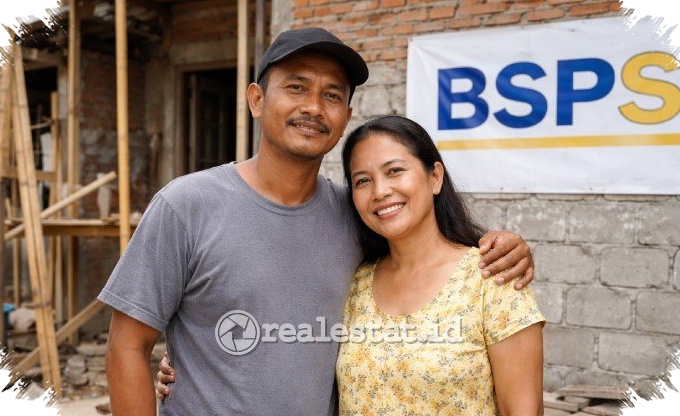
Hashim Djojohadikusumo has asked the government to pair home renovation aid with free land title certification for beneficiaries of the Housing Stimulus Assistance Program, better known as BSPS. The request came during a field visit to a BSPS site in Malendeng, Paal Dua District, Manado, where he reviewed renovation works and highlighted the need for stronger legal certainty over home ownership.
The proposal reflects a broader push to connect housing improvement programs with land administration services. For many low-income households, a repaired house is only one part of the challenge, because without a certificate the home still lacks full legal protection and long-term asset value.
Hashim links housing aid with land rights
During the visit, Hashim praised the Ministry of Housing and Settlements for carrying out the home-improvement program. He said the effort aligns with President Prabowo Subianto’s direction to strengthen ownership certainty for Indonesian families.
He also stressed that beneficiaries should not stop at physical home upgrades. In his view, the government should continue by helping residents secure free certification for the land and houses they occupy.
The message was straightforward: public housing support should not end with walls, roofs, and floors. It should also move toward legal recognition that can protect families from land disputes and open access to future economic opportunities.
Hashim said many Indonesians already live in their own homes but still do not hold certificates. He noted that the country still has tens of millions of such households, making land data collection a key step for policy action.
Why certification matters for BSPS beneficiaries
A land certificate gives residents stronger legal standing over the property they use and occupy. It also reduces uncertainty if land ownership is challenged later, especially in dense urban neighborhoods and long-established settlements.
For low-income families, certification can also improve financial resilience. With clear legal status, a home may be more easily recognized as an asset, which may matter in inheritance, access to financing, and long-term planning.
The government’s plan to gather data on households without certificates is important because land records remain uneven in many regions. Some families live on inherited plots, while others occupy land for years without completing registration.
Hashim said that the collected information can become the basis for issuing ownership documents, including Hak Milik or HGB, depending on the legal status of the land. That approach suggests the administration wants to match housing aid with a more structured land legalization process.
BSPS scale rises sharply
Sri Haryati, Director General of Urban Housing at the Ministry of Housing and Settlements, said the national BSPS program is expanding rapidly. She noted that the program targets around 45,000 housing units in the current cycle and jumps to 400,000 units in the following cycle.
That rise marks a major expansion in the government’s housing intervention strategy. It also signals that home improvement remains one of the key policy tools for reaching families living in inadequate housing conditions.
For North Sulawesi, the increase is especially sharp. Sri said the allocation climbed from 748 units to 8,198 units, which is nearly ten times higher and gives the province a much larger share of the national program.
The numbers show that the region is being treated as a priority area in the housing agenda. They also indicate a wider attempt to reduce the backlog of unfit homes across islands and urban centers in the province.
Manado receives targeted allocations
Manado itself received 290 BSPS units spread across four districts. The distribution is designed to reach neighborhoods with different settlement patterns, including dense urban areas and communities close to the coast.
- Bunaken: 123 units
- Tuminting: 60 units
- Mapanget: 33 units
- Paal Dua: 74 units
The allocation reflects the city’s varied housing needs. In an urban area like Manado, poor housing conditions can appear in both crowded inner-city settlements and peripheral communities with limited infrastructure.
Officials said the distribution is intended to help households most in need, especially those in coastal areas and high-density neighborhoods. Those zones often face additional risks from limited space, aging structures, and environmental exposure.
The local focus also shows how housing policy can be adjusted to fit geography. A city with waterfront communities and compact settlements requires a different delivery pattern than inland districts with more dispersed housing.
Broader coverage across North Sulawesi
The BSPS rollout is not limited to Manado. Several other districts in North Sulawesi also received significant allocations, showing that the program has been spread across both mainland and island areas.
The following table shows the reported distribution:
| Region | BSPS allocation |
|---|---|
| North Minahasa | 720 units |
| Minahasa | 344 units |
| Bolaang Mongondow | 968 units |
| Talaud Islands | 200 units |
| Sangihe Islands | 100 units |
Bolaang Mongondow received the largest allocation among the areas mentioned. The inclusion of Talaud and Sangihe also shows that the government wants to extend housing support to remote island communities, where construction costs and access can be more difficult.
This wider spread matters because housing quality gaps are not limited to one type of settlement. Some families face overcrowding in cities, while others in outer islands struggle with aging structures and weak service access.
What the policy could mean for residents
If the certification plan moves forward, BSPS beneficiaries may receive more than renovated houses. They could also gain a stronger legal foundation for the land beneath those homes, which would increase security and potentially strengthen household assets.
The policy would require close coordination between the housing ministry and ATR/BPN. It would also depend on accurate data collection, document verification, and local government support to ensure eligible families are properly recorded.
For residents in Manado and other parts of North Sulawesi, that coordination could determine whether the program becomes a one-time renovation effort or a more complete housing-security package. The distinction matters because a house is more stable when its legal status is clear as well as its physical condition.
The push in Manado shows that the government is trying to connect social housing assistance with land administration reform, while the expanded BSPS figures suggest that the housing program will reach far more neighborhoods in the months ahead.