


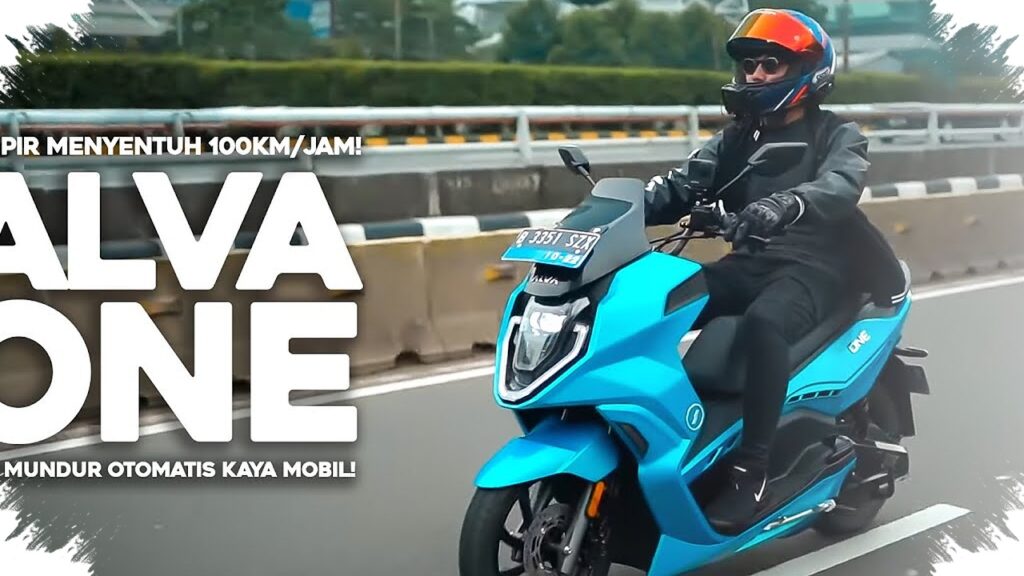
Rising fuel prices and stronger government incentives are pushing more Indonesian riders to move from gasoline scooters to electric motorcycles. In the second quarter of the year, that shift is shaping a more competitive market, with brands competing through lower entry prices, battery subscription plans, and battery-swap networks.
For urban commuters, the key question is no longer whether electric motorcycles work, but which model fits daily needs best. Based on market data and the latest pricing references, these are five electric motorcycles that stand out for range, performance, practicality, and ownership flexibility.
1. Polytron Fox-R: the range-focused choice
Polytron Fox-R remains one of the most attractive mid-range options because it balances distance, price, and daily usability. With a 3.75 kWh battery, it can travel up to 130 km and reach a top speed of 90 km/h.
The model also uses a battery-rental scheme to keep the upfront purchase price lower, which makes it more accessible for first-time electric motorcycle buyers. After government support, its on-the-road price in Jakarta is about $900, making it one of the most affordable long-range options in its class.
2. Alva Cervo: built for riders who want stronger performance
Alva Cervo targets users who want a more premium feel and stronger acceleration in city traffic. Its Boost Mode delivers instant torque of 53.5 Nm, which helps the scooter respond quickly during overtaking and stop-and-go riding.
The model is priced at roughly $2,330 to $2,640 in Jakarta, depending on the battery variant. It also offers IP67-rated protection against water exposure and app connectivity features that support modern urban mobility.
3. United E-Motor TX3000: designed for steep roads and heavier use
United TX3000 is positioned as a practical choice for riders who often face hills, heavy loads, or less forgiving road conditions. Its dual-battery setup supports a range of up to 120 km and gives it the stamina needed for tougher daily routes.
At around $2,690 after subsidy, the TX3000 adds value through dual disc brakes and a sturdy twin suspension system. Those hardware choices make it more appealing for riders who prioritize stability and comfort over a lightweight city-scooter feel.
4. Gesits Raya G: a local option with easy maneuverability
Gesits continues to strengthen its position with the Raya G, a model that emphasizes local production and simple urban practicality. Its open handlebar design gives it a more relaxed riding position, which helps in dense traffic and short city trips.
Priced at about $1,320 in Jakarta, the Raya G also benefits from a high local content rate, which can support spare parts availability and after-sales service. For buyers who want a domestically developed electric motorcycle with a familiar commuter layout, this model remains highly relevant.
5. Smoot Zuzu: ideal for riders who want battery swapping convenience
Smoot Zuzu is aimed at users who prefer not to wait for charging sessions. Its retro-inspired design comes with access to a battery-swapping ecosystem available in multiple retail locations, allowing riders to replace a depleted battery in under 10 seconds.
The model is priced at around $980 after subsidy, which places it among the more affordable entries in the market. Its battery-swap model also removes the burden of battery maintenance, making it attractive for riders who use their scooter intensively every day.
Quick comparison of the five models
| Model | Main strength | Estimated OTR Jakarta |
|---|---|---|
| Polytron Fox-R | Long range | $900 |
| Alva Cervo | Strong performance | $2,330–$2,640 |
| United TX3000 | Hill climbing and stability | $2,690 |
| Gesits Raya G | Local support and easy handling | $1,320 |
| Smoot Zuzu | Fast battery swapping | $980 |
Government policy remains a major factor behind the latest pricing trends. Eligible Indonesian buyers can still receive a discount of about $430, which is applied directly at the dealer and helps narrow the gap between electric and conventional scooters.
That policy support matters because the market is no longer driven by price alone. Battery innovations, lower global battery costs, and new ownership models are making it easier for riders to choose based on lifestyle, commute distance, and charging convenience rather than only upfront cost.
What buyers should consider before choosing
- Daily distance matters, because range needs differ sharply between short urban trips and longer commutes.
- Charging access must match real habits, especially for riders without home charging support.
- Performance features matter for riders who frequently carry passengers or face steep roads.
- Service availability and spare parts are important for long-term ownership confidence.
- Battery ownership model can change total cost, so rental and swap systems should be compared carefully.
For buyers who want a long-range commuter, Polytron Fox-R offers strong value. For those who want stronger acceleration, Alva Cervo stands out, while Gesits Raya G and Smoot Zuzu appeal to riders who value local support and practical ownership systems. United TX3000 fills the niche for riders who need a tougher electric motorcycle that can handle more demanding roads without sacrificing stability.