


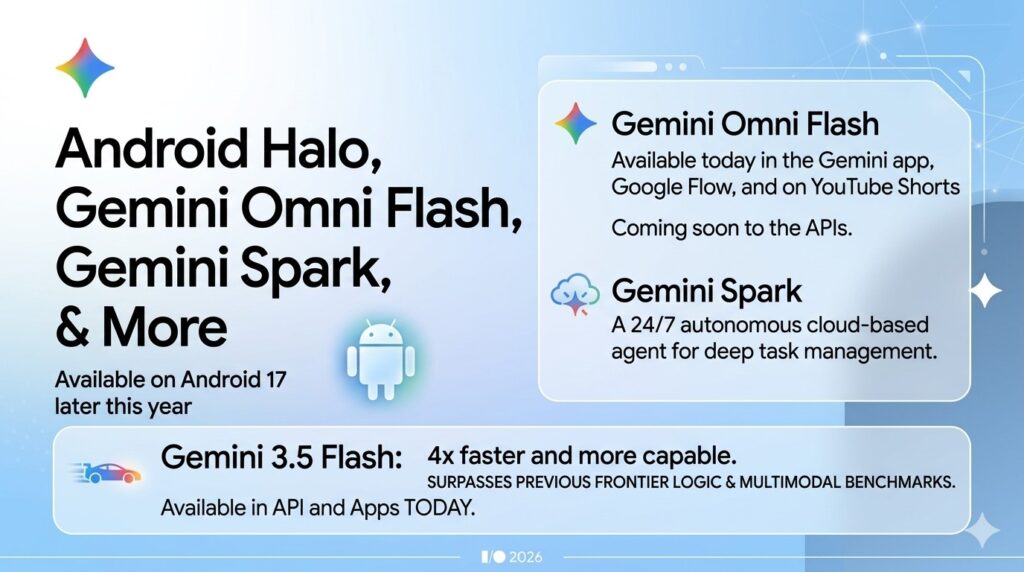
Google’s Gemini may be moving beyond a chat-first design and into something closer to a task-running agent. Leaked screenshots of Gemini Spark suggest an AI that can continue working without needing constant follow-up instructions.
That shift matters because it points to a more practical role for Gemini. Instead of only responding to prompts, Spark appears aimed at finishing digital work from start to finish.
A more autonomous direction for Gemini
The screenshots show Spark as a semi-autonomous agent. In practice, that means it can execute tasks more independently and does not always wait for step-by-step guidance.
This places Spark closer to an AI productivity agent than a standard chatbot. The emphasis is on completing work, not just holding a smart conversation.
The concept also lines up with products such as Claude Cowork, which focus on autonomous task completion. Google appears to be exploring a similar direction for Gemini.
What the screenshots suggest Spark can do
The leaked interface places Spark in the Gemini side menu, accessed through the hamburger icon in the upper-left corner of the app. When opened for the first time, it presents a set of prebuilt help scenarios.
Those built-in actions focus on everyday productivity. One example is cleaning up an inbox by unsubscribing from newsletters or mailing lists that are never read.
Spark also appears able to summarize useful information. Other visible functions include preparing pre-briefs before meetings and generating daily news summaries based on user interests.
Custom skills are also part of the picture
Another screenshot shows an option to create a new skill. That suggests users may be able to provide instructions and let Spark build a workflow around them.
This detail is important because it shows the system would not rely only on preset functions. If the leaked behavior is accurate, Spark could be adapted for more specific needs.
There is also evidence that the agent can work across multiple apps at once. That kind of cross-app behavior is valuable for tasks that pull information from different places and combine it into a single result.
Workspace appears to be the starting point
Google Workspace shows up frequently in the screenshots that have circulated. That fits Google’s existing productivity ecosystem, which centers on Gmail, Docs, Calendar, and other work tools.
The focus on Workspace suggests the target audience is professional users. Spark seems designed to reduce administrative load through tasks like meeting monitoring, information summaries, and inbox management.
The broader goal is efficiency. Rather than trying to be impressive in conversation, Spark appears to be built for getting digital work done.
There are still limits to the scope
Even with the promise of more independent task handling, Spark does not seem intended to control an entire computer. Its scope is likely narrower than agents with full system access.
However, the leaked material points to browser control, including Chrome. That still leaves a large area for automation, since many work tasks and information searches happen on the web.
The limitation also suggests Google may be keeping the agent’s control measured. Browser access is broad enough to be useful, but not so broad that the system appears fully unrestricted.
All of this is still based on leaked screens and early testing. Even so, the direction is clear: Gemini Spark is being positioned as a more active and context-aware AI, one that moves closer to real work than a typical chatbot.
If Google shows it at Google I/O, attention will likely focus on how far it can operate on its own. The key question is no longer whether Gemini can answer, but whether it can carry a task through to a finished result.
Source: www.androidpolice.com