


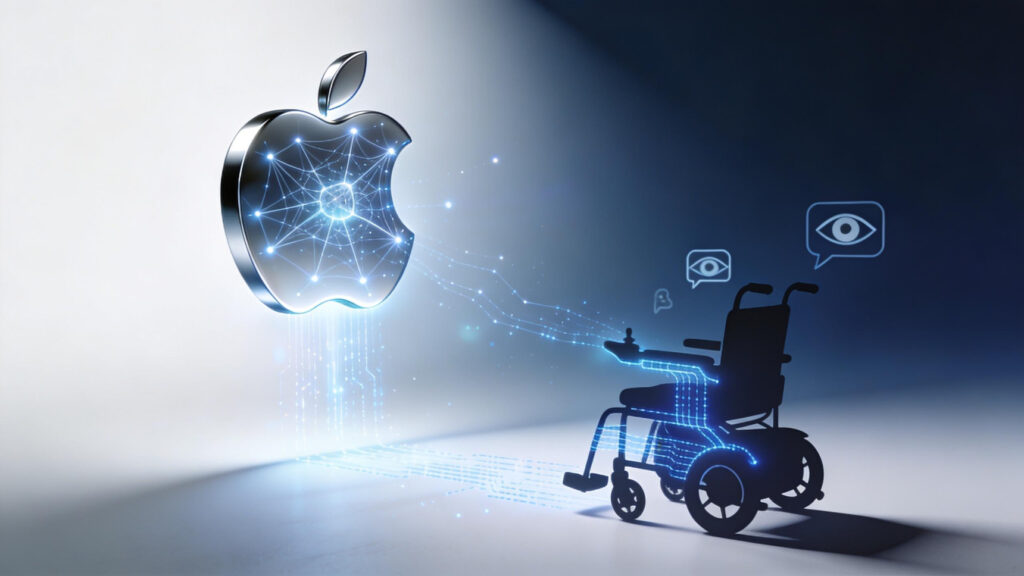
Apple is broadening accessibility in a way that puts practical control, privacy, and flexibility at the center. The company’s latest wave of features reaches across iPhone, iPad, Mac, Apple TV, and Apple Vision Pro, with Apple Intelligence helping make assistance feel more natural for people with vision, hearing, mobility, and reading challenges.
A key part of the strategy is that the AI work is tied to privacy from the start. Apple relies heavily on on-device processing, which allows these accessibility tools to use intelligence while keeping user data under a more protective design.
VoiceOver and Magnifier become more conversational
For users who are blind or have low vision, VoiceOver is getting one of the most important upgrades. The refreshed system can provide richer descriptions of photos, scanned bills and documents, personal notes, and surroundings captured through the camera.
Apple is also adding natural-language interaction to VoiceOver, so users can ask follow-up questions about what is on screen or in view. That makes visual exploration less rigid and more useful than a single one-time description.
Magnifier is being enhanced with AI as well. It now offers stronger visual descriptions and voice-based navigation, including commands to zoom in, turn on the flashlight, or ask for an explanation of the surroundings.
Subtitles expand across Apple devices
Apple is also extending automatic subtitles powered by AI to video that does not already include captions. The feature will be available on iPhone, iPad, Mac, Apple TV, and Apple Vision Pro.
The subtitles are generated through on-device speech recognition, which Apple positions as a more private way to help users who are deaf or hard of hearing reach more content. The feature can be used on personal recordings, shared family videos, and online clips that have no captions.
Users will also be able to adjust subtitle appearance through playback settings, giving them more control over how captions are displayed.
Voice Control gets less rigid
Another important update comes to Voice Control, where Apple is adding natural-language navigation. Instead of needing exact button names or screen labels, users can now issue more flexible commands.
That means a person can say things like tap the purple folder, open the restaurant guide, or press the button on the right side. For people with mobility limitations, this approach makes voice navigation easier to use across apps and menus.
It also helps in situations where an app does not provide clear accessibility labels. In those cases, voice commands can still offer a usable path through the interface.
Vision Pro adds eye-based wheelchair control
One of the most notable accessibility additions appears on Apple Vision Pro, which now supports compatible electric wheelchairs through eye tracking. The initial support covers Tolt and LUCI drive systems.
Apple says the system is meant to allow independent control without a traditional joystick. The feature uses Vision Pro’s eye-tracking technology and is designed to stay reliable in different lighting conditions without repeated calibration.
Vision Pro is also getting facial gesture controls as another input option for accessibility. That gives users more ways to interact with the device beyond standard hand-based input.
Reading support, travel help, and broader ecosystem updates
Apple is also updating Accessibility Reader with AI-based reading tools aimed at people with dyslexia, low vision, and other reading difficulties. The new version supports scientific articles, multi-column layouts, images, and tables.
The reader also includes built-in article summaries and translation support while keeping the original formatting intact. That makes it more suitable for content that uses complex structure rather than simple blocks of text.
Beyond those headline changes, Apple is preparing Vehicle Motion Cues to help reduce motion sickness. It is also bringing larger text to tvOS, expanding Name Recognition to more than 50 languages, and adding support for Sony Access controller in gaming.
There is also wider access for the Hikawa Grip & Stand MagSafe adaptive accessory. Apple says these updates are part of a broader effort to make its devices more usable across different needs, while keeping privacy central to the design.
Tim Cook said Apple’s approach to accessibility is different from others, adding that Apple Intelligence brings powerful new capabilities to accessibility features while maintaining the company’s privacy commitment from the design stage.
Source: sundayguardianlive.com