


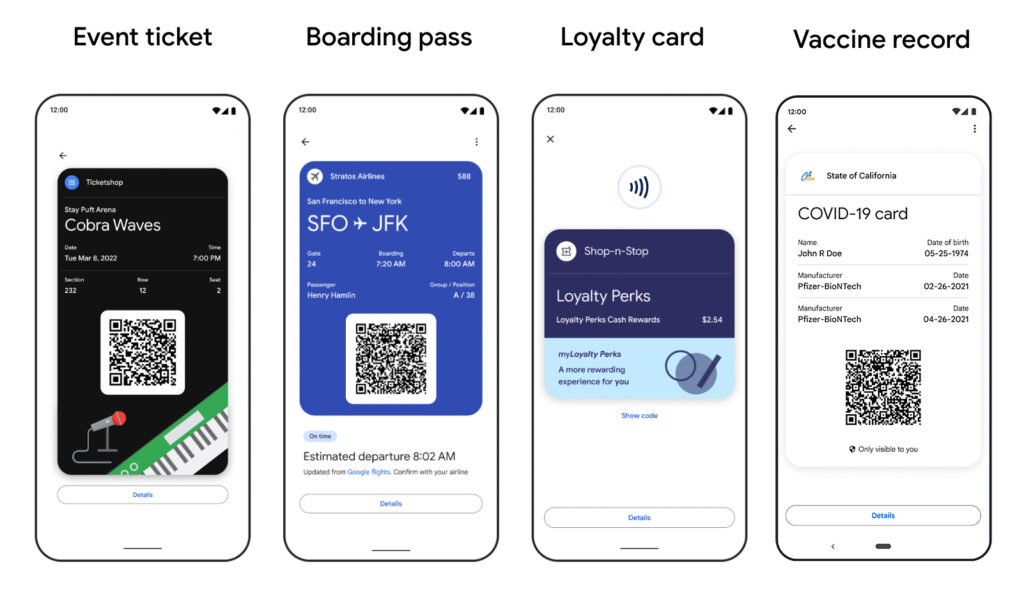
Google Wallet is becoming more than a place to store cards and passes. Google is steering the app toward a more active role in travel, loyalty, and everyday payments, with automatic pass handling and smarter prompts designed to reduce manual work.
The shift is meant to make common tasks feel less fragmented. In a developer session held around Google I/O 2026, the company said Wallet is being shaped to make trips feel less stressful and less disconnected.
Passes that appear on their own
One of the most notable updates is called “Auto-linked Passes.” With this system, related items can be added to Wallet automatically, so users do not need to save everything one by one.
Google pointed to a Brazilian airline as an example. After check-in, whether online, on a phone, or at the airport, the boarding pass can be issued automatically into Wallet.
That does more than simplify ticket storage. The same setup can also surface baggage tag access, airport offers, or rewards tied to the boarding pass and loyalty cards already saved in the app.
A more active travel companion
Google is also adding more contextual prompts for air travelers. Users may see an invitation to join an airline’s frequent flyer program directly from a boarding pass stored in Wallet.
The idea is to reduce the need to open a separate airline website or app just to take the next step. Wallet then acts less like passive storage and more like a travel assistant that surfaces relevant actions at the right moment.
Google had already redesigned Wallet to emphasize time-sensitive items. Boarding passes, for example, are now prioritized as departure time approaches.
That interface change is supported by an updated “View more” area, which serves as a search hub for everything stored in the app. It also includes transaction-related information.
Rewards are being pulled into the same flow
The travel changes are only part of the broader plan. Google is also preparing a new loyalty feature for in-store shopping.
After a tap-to-pay transaction at the register, users may receive a prompt to join a store’s rewards program. That makes loyalty enrollment faster and places it at a moment when it is most relevant.
The app is therefore being positioned as useful not only during flights, but also during physical store purchases. Google Wallet is expanding its role as a place where payment and rewards can meet in one place.
Location-aware notifications get smarter
Google is also updating “Nearby Passes” notifications. Previously, merchants had to manually define as many as 10 store locations before notifications could appear.
That limit is being removed with help from Google Maps. Google said the system will use map data to infer the correct location automatically for Wallet passes and notifications.
The result should be more relevant alerts when a user is actually near a participating store. That includes loyalty cards, coupons, or rewards passes that are useful in the moment rather than arriving too early or too late.
Wallet data is spreading across devices
Google is also expanding Chrome Autofill with data stored in Wallet. Information such as passports, driver’s licenses, booking confirmations, loyalty cards, and boarding passes can be used to fill forms automatically on desktop and iOS.
A similar capability has already been available on Android since December for users who enabled Enhanced Autofill in Chrome settings. The wider rollout shows Wallet being positioned as a connected source of identity and travel data across multiple devices.
For people who move between a phone, laptop, and iPhone, the change can reduce repeated typing of important details. Booking and form-filling processes should become more compact as a result.
Digital receipts are next
Google is also preparing support for digital receipts through a new API in the future. If a retailer supports it, purchases and receipts can appear automatically in Wallet.
That could make returns and order tracking easier. With transaction documents stored in one app, Wallet moves closer to becoming a central place for both travel records and shopping paperwork.
Source: www.androidauthority.com