


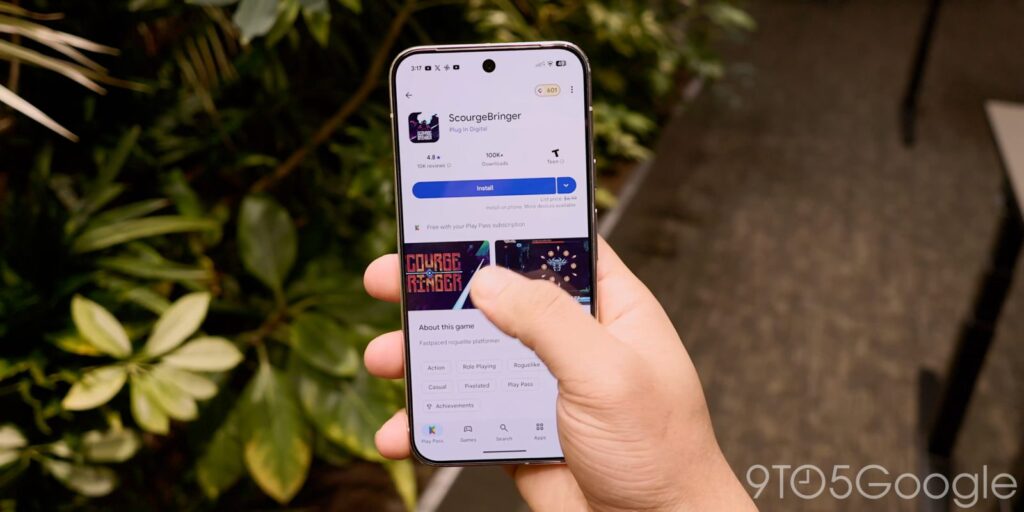
Google is changing how people find apps in Play Store by making the search process feel more like a conversation than a string of keywords. The new Ask Play feature is designed to understand what users want in context, which matters because many app searches are too specific for traditional search to handle well.
The idea is simple: instead of forcing people to restart a search every time they add a new requirement, Ask Play can keep track of the full request as it evolves. Google also plans to extend a similar approach into Gemini, where app recommendations can appear directly inside a chat.
A more conversational way to search
Ask Play works as an AI-powered overlay that reads both the original request and the follow-up details. That means someone can start with a broad need, then narrow it down step by step without losing the earlier context.
Google’s example shows how this changes app discovery in practice. A user can look for a science-fiction strategy game that does not show ads and does not use a paywall, then add another condition such as offline mode, and the system will adjust the results to match all of those requirements together.
This approach addresses a long-standing problem in app stores. Many people search for apps using a mix of genre, monetization style, and specific features, and that combination is often difficult for standard keyword search to interpret accurately.
Highlights for complex searches
Google is also adding Ask Play highlights for more complicated queries. Instead of making users scan through every result one by one, the feature will show a high-level summary directly on the results page.
That extra layer is meant to help users narrow down choices faster. When a search is too broad, the AI can read the intent behind it more fully and surface the most relevant options sooner.
Gemini will surface app suggestions in chat
The Play Store is not the only place getting this treatment. Gemini will also gain a new integration that can show apps and related content directly inside the chat interface.
The rollout will be available on Android and the web in the coming weeks. Google says the system can act proactively, meaning it may bring up relevant apps when the conversation itself suggests a clear need.
One example is a user asking for an app that can show what kinds of fish might appear during a scuba dive. In that case, Gemini can highlight apps that help identify marine life.
Another example involves a discussion about the faded look of old movies with a disposable-camera feel from the 90s. Instead of giving only a general suggestion, Gemini can present apps that offer filters or shooting modes with that kind of effect.
What this means for app discovery on Android
Together, these changes point to a broader shift in how Google wants people to discover apps and games. Search in Play Store is moving away from rigid keyword matching and toward a system that can understand layered intent.
At the same time, Gemini expands that discovery process beyond the store itself. Recommendations can now appear in everyday conversation, which means users may encounter useful apps even before they actively open Play Store.
For Android users, that could make finding the right app faster and more precise. For developers, it may make contextual needs and specific use cases more important in how apps are discovered.
Source: www.androidpolice.com