


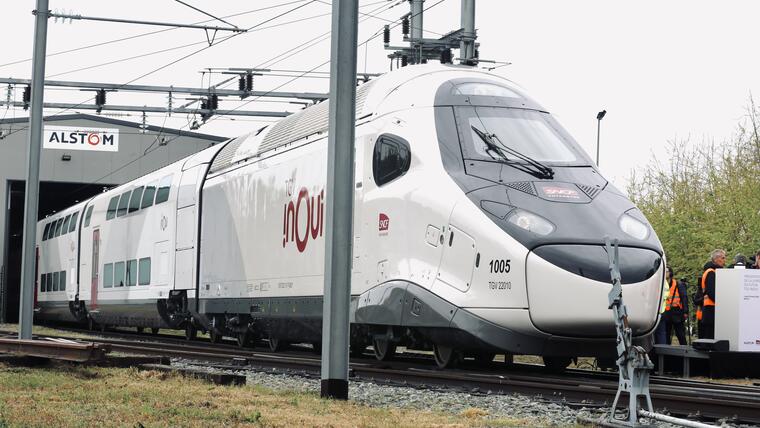
A new milestone for France’s high-speed rail network has brought TGV-M closer to commercial service. The train has now received approval to run at up to 320 km/h, a key step that removes one of the main barriers in its path toward passenger operations.
The approval matters because speed is only one part of the story. TGV-M was designed to carry more passengers, use less energy, and fit the demands of a dense high-speed network that already handles heavy traffic.
A fifth-generation TGV built for a crowded network
TGV-M is the fifth generation of the TGV family and the first model based on Alstom’s Avelia Horizon platform. SNCF ordered 100 trainsets in 2018 and later expanded that order.
The design keeps familiar TGV traits. It still uses two power cars instead of a detachable locomotive, and it also retains the Jacob bogie layout, where two cars share one bogie to keep the train compact for high-speed operation.
More seats, lower energy use
One of the most notable changes is capacity. SNCF says the train can carry 740 passengers, up from 600 in the previous generation.
Energy performance is another major selling point. SNCF expects the train to use 20 percent less energy, while Alstom says the Horizon family could deliver savings of up to 30 percent.
Each trainset is 200 meters long, and multiple units can be coupled together when greater capacity is needed. That flexibility helps the train fit different service demands without changing the core platform.
Approval linked to signaling systems
The new top speed does not apply in every operating condition. Under the approval, 320 km/h is permitted when the train runs under ETCS and TVM.
The limit drops to 220 km/h under KVB, and to 160 km/h on networks using Crocodile. The speed profile reflects how closely the train’s performance is tied to the protection system in use.
Built with wider network use in mind
Although TGV-M is aimed at France, the Horizon family also has a role beyond the domestic network. The platform is considered important for Eurostar, especially for service needs involving the Channel Tunnel.
Eurostar plans to use 30 units to replace aging stock, and those trains are designed with support for four electrical voltages to improve compatibility across countries. The French-approved version supports 1.5 kV and 25 kV, matching domestic operational needs while keeping flexibility on relevant routes.
Commercial launch remains on course
The latest approval comes after SNCF stopped giving a fixed date for the train’s entry into commercial service. Even so, reports circulating around the project point to the first passenger trip possibly taking place in August or September 2026.
TGV-M also comes with 5G-based Wi-Fi for SNCF’s network. With its higher capacity, lower energy demand, and newly approved top speed, the train now stands out as one of the most significant upgrades in France’s high-speed fleet.