


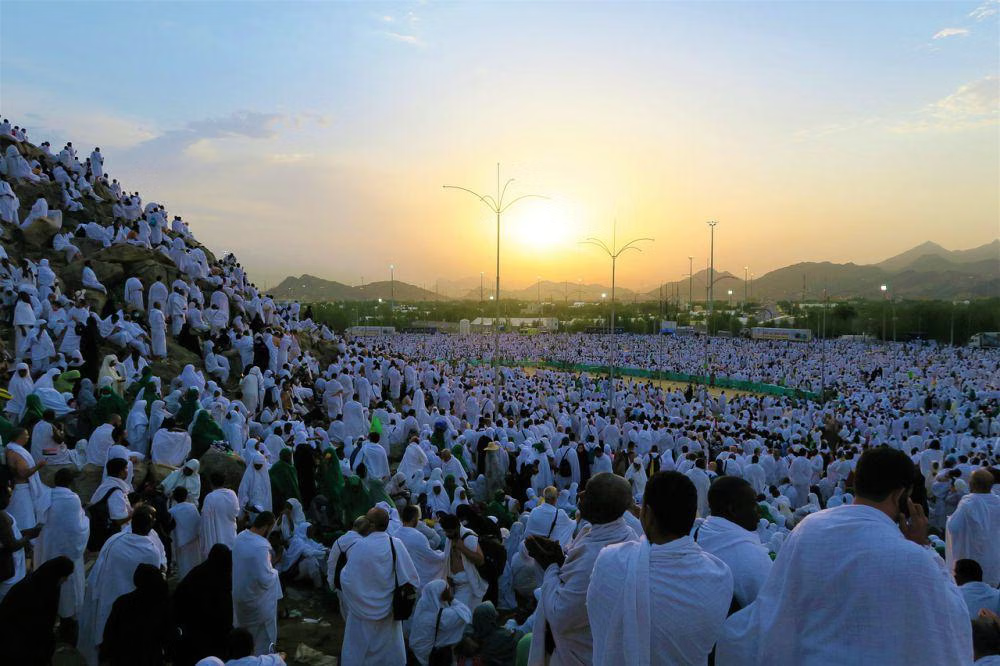
Saudi Arabia is placing artificial intelligence at the center of Hajj operations, using it to help manage one of the world’s largest annual gatherings with greater speed, safety, and control. The goal is not simply to digitize services, but to make crowd movement, emergency response, and real-time monitoring work more smoothly across the Holy Sites.
The effort is being handled behind the scenes so millions of pilgrims can move through the pilgrimage more efficiently. According to Saudi Data and Artificial Intelligence Authority, or SDAIA, the system is designed to support operations from departure in pilgrims’ home countries to their arrival in Saudi Arabia and their return after the rituals end.
AI as an operational layer
SDAIA spokesperson Majed al-Shehry said the priority is to keep the technology working in the background rather than making it the focus of the experience. He explained that predictive systems, advanced data analysis, and live monitoring are being used to improve security and operational efficiency throughout the Hajj season.
The same approach is also meant to support faster emergency response and better management of pilgrim flow. In addition, AI tools are being used to improve transportation efficiency and provide multilingual assistance for pilgrims arriving from different countries.
Crowd monitoring at the busiest sites
Some of the most critical pressure points are Masjid al-Haram in Mecca, along with Mina, Arafah, and Muzdalifah. These areas bring together huge numbers of pilgrims at nearly the same time, which makes crowd oversight a major challenge.
To address that, SDAIA and Saudi Arabia’s Ministry of Interior developed the Baseer and Sawaher platforms. Both systems use computer vision, thermal imaging, and AI-based analytics to monitor density and movement patterns in real time.
The platforms analyze live video feeds and surveillance data to identify congestion points. They are also used to predict crowd surges so authorities can respond faster when areas begin to fill up. The aim is to reduce the risk of incidents linked to extreme congestion while keeping pilgrim movement steady during the rituals.
Digital services beyond crowd control
Saudi Arabia is also broadening AI-based digital services to make the pilgrimage more practical for users. Administrative processes and essential support tools are being designed to run faster and in a more integrated way.
One of the main programs is the Mecca Route Initiative, which has already been used by more than 1.5 million pilgrims. It relies on advanced digital verification and smart data processing, and it now operates at 17 airports in 10 countries.
Through the initiative, pilgrims can complete several steps before arriving in Saudi Arabia. Those steps include biometric registration and ticket processing, which help speed up arrival procedures and reduce airport queues.
Apps and identity tools for pilgrims
Inside the Holy Land, the Tawakkalna and Nusuk apps also play a central role in Hajj operations. Together, the platforms provide more than 1,300 digital services to support pilgrims during their stay in Saudi Arabia.
The available services include digital Hajj permits, navigation tools, weather information, emergency support, ambulance requests, qibla direction, and digital identity through the Nusuk Card. The card includes medical data and emergency contact information, allowing faster support when needed.
With AI and smart digital infrastructure working together, Saudi Arabia is treating technology as a core part of Hajj management on a global scale. The system is intended to deliver a safer, more efficient, and more comfortable experience for millions of pilgrims from many countries.
Source: www.idntimes.com