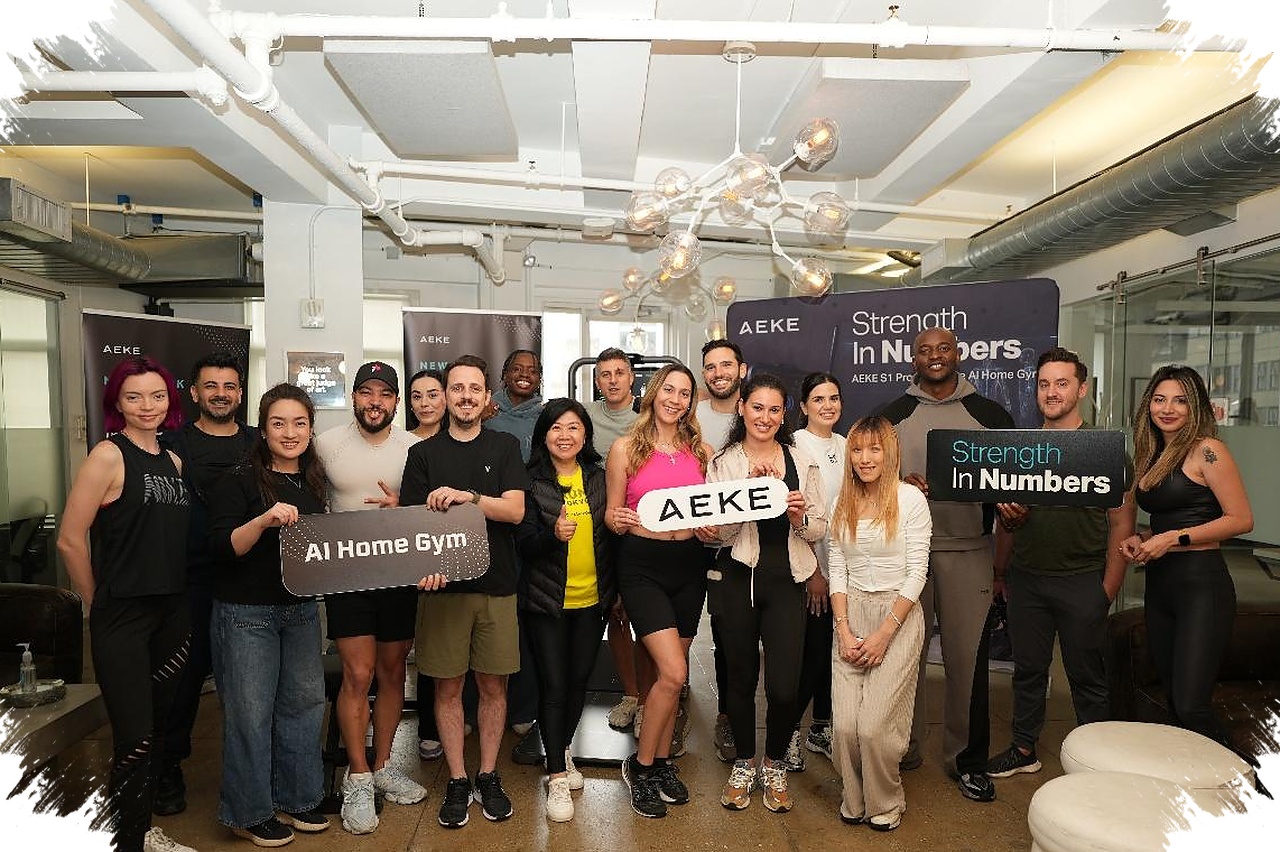
At New York City’s “Strength In Numbers” event, AEKE presented a version of AI fitness that aims to feel less mechanical and more responsive to the person using it. Instead of simply streaming workouts or applying digital resistance, the system reads the body in real time and adjusts training based on what it detects at that moment.
That approach made the AEKE S1 Pro stand out as more than a compact home gym. The system combines real-time feedback, personalized programming, digital resistance, and full-body movement training into one setup, with the promise of guiding form as the workout is happening rather than waiting until the session ends.
A workout system built around body data
The Manhattan event, held near Times Square, drew creators from technology, fitness, wellness, and lifestyle circles. The setting felt closer to an interactive lab for the future of strength training than a standard product demo.
Guests moved through body assessments, mobility work, strength exercises, recovery features, and demonstrations of the AI system in action. Music filled the space while conversations centered on body data that appeared within minutes.
One of the most talked-about moments was the posture and body-structure assessment. Participants created a personal profile, then underwent scanning and evaluation that measured posture, balance, body composition, mobility, and strength-related metrics.
The results often sparked immediate reactions. The system surfaced posture imbalances, alignment scores, body fat percentage, bone mass, muscle balance, and recovery indicators, giving attendees a detailed picture of how the platform interpreted their bodies.
AI that turns numbers into context
The appeal of the system was not only the amount of data it produced. Several attendees noted that the AI also helped translate biometrics into practical guidance tied to how they moved and trained.
In one example, metrics from a smart scale and wellness indicators were said to match fatigue and inconsistent sleep that a user was already experiencing. That made the platform feel less like a dashboard of numbers and more like a tool for understanding how daily condition affects movement and exercise.
The environment also kept the experience from feeling clinical. Participants compared results, joked about the findings, and encouraged one another when the data revealed areas that needed work.
That social tone supported the event’s “Strength In Numbers” theme. Information that is usually private became part of a shared conversation, which made the body assessments feel collaborative rather than judgmental.
Real-time corrections during training
The feature that drew some of the fastest reactions was live correction during exercise. While a person is training, the S1 Pro can guide posture, range of motion, and execution in real time.
For people working out alone, that matters because it helps reduce the risk of repeating poor technique or building bad form over time. The feedback arrives during the movement itself, not after the workout is already finished.
The system also supports a wide range of sessions. At the event, attendees tried strength moves with adaptive resistance, mobility-focused routines, recovery sessions, and cardio-oriented work.
Flexibility was a major part of the appeal. The cable positions can be adjusted, allowing users to move from lunges to rotational pulls, then into presses, balance work, mobility sequences, and explosive cardio movements without switching to another machine.
That kind of transition supports more natural training. Full range of motion, rotational movement, and quick changes between exercises become easier than they would in a traditional cable-based gym setup.
Crowdfunding momentum and subscription-free appeal
Interest in the product was already building before the New York event. AEKE said the S1 Pro crossed $1 million in Kickstarter funding in just two hours after launch.
The campaign then reached $2 million in less than fourteen hours, and three days into the launch it had already passed $3 million. The official Kickstarter page later showed more than $3.7 million in support from over 1,200 backers.
Another point that drew surprise in the room was the absence of an ongoing subscription fee. For a connected fitness product, that detail stood out sharply and prompted visible reactions from several attendees.
Taken together, the response suggests growing interest in home equipment that blends fitness, AI, biometrics, recovery, and personal coaching into one system. AEKE’s pitch is not just about advanced hardware, but about making training feel clearer, more responsive, and more closely tied to the body itself.
Source: www.geeky-gadgets.com-
-

-
-