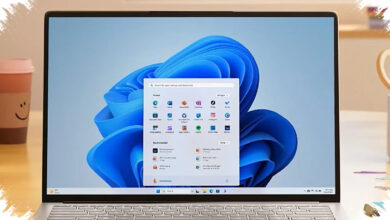
Microsoft is taking an unusual route back into the premium laptop conversation, and the move puts Nvidia at the center of the story. Instead of relying on the familiar AMD, Intel, or Qualcomm options, the company is preparing a Surface laptop built around an Nvidia co-developed processor and aiming it directly at creators.
The device is called the Surface Laptop Ultra. Microsoft is positioning it as a machine for photo and video workflows, helped by a 15-inch mini-LED display, HDR peak brightness of up to 2000 nits, and an SD card slot.
A different kind of Surface for creative work

The laptop still carries the familiar Surface design language. It uses a squared metal body, a large trackpad, and a 3:2 display ratio that gives more vertical space for work.
Its port selection also looks well suited to creative users. Microsoft includes several USB-C ports, one USB-A port, HDMI, a headphone jack, and an SD card slot, although speeds for the individual ports have not yet been detailed.
Nvidia’s Spark chip changes the focus
The biggest shift is inside the machine. Microsoft is using Nvidia’s RTX Spark system on a chip instead of the more common PC chips from AMD, Intel, or Qualcomm.
That choice stands out because Nvidia is best known for graphics hardware, not consumer PC processors. The company has experimented with CPUs before, but it has not brought a chip like this to consumer PCs in a long time.
According to Nvidia, the CPU portion of Spark was developed with MediaTek and uses 20 cores. It is also based on ARM architecture, similar to Apple’s custom chips used in Mac computers.
Built for large creative projects and local AI
The GPU side keeps the Nvidia identity intact, while both CPU and GPU share a single memory pool. On the Surface Laptop Ultra, that memory can reach 128GB, which is an unusually high figure for large photo and video workloads.
Microsoft and Nvidia are also emphasizing local AI use. They are presenting the system as a platform for running AI tasks on-device rather than depending heavily on the cloud.
That includes workloads such as noise reduction, intelligent masking, video upscaling, and AI-assisted code completion. Adobe is also involved, with plans to rearchitect Photoshop and Premiere so they perform better on this chip, especially for GPU-accelerated tasks like color correction, compositing, live filters, and HDR work.
Microsoft’s pitch against the MacBook Pro
The broader context is the fast-moving ARM Windows market. Snapdragon X Elite already competes with entry-level Apple M chips, but a convincing rival to Pro- or Max-class MacBook hardware has still been harder to find.
Microsoft is trying to fill that gap with a combination of ARM, Nvidia graphics, and more serious creative software support. The Surface Laptop Ultra also aims to separate itself from the MacBook Pro with a weight below 2kg, a new cooling system, a replaceable SSD, and promised all-day battery life.
What is still unknown
Several important details remain unannounced, including the price and the base configuration. Microsoft has said the Surface Laptop Ultra will arrive later this year, while Nvidia says other manufacturers including Asus, Dell, HP, Lenovo, MSI, Acer, and Gigabyte will also ship devices based on Spark in the fall.
That leaves the strongest questions focused on real-world performance. The laptop looks ambitious on paper, especially for AI and creative work, but it still needs to prove how well it handles everyday computing, high-resolution photo editing at scale, and video rendering once it reaches users.