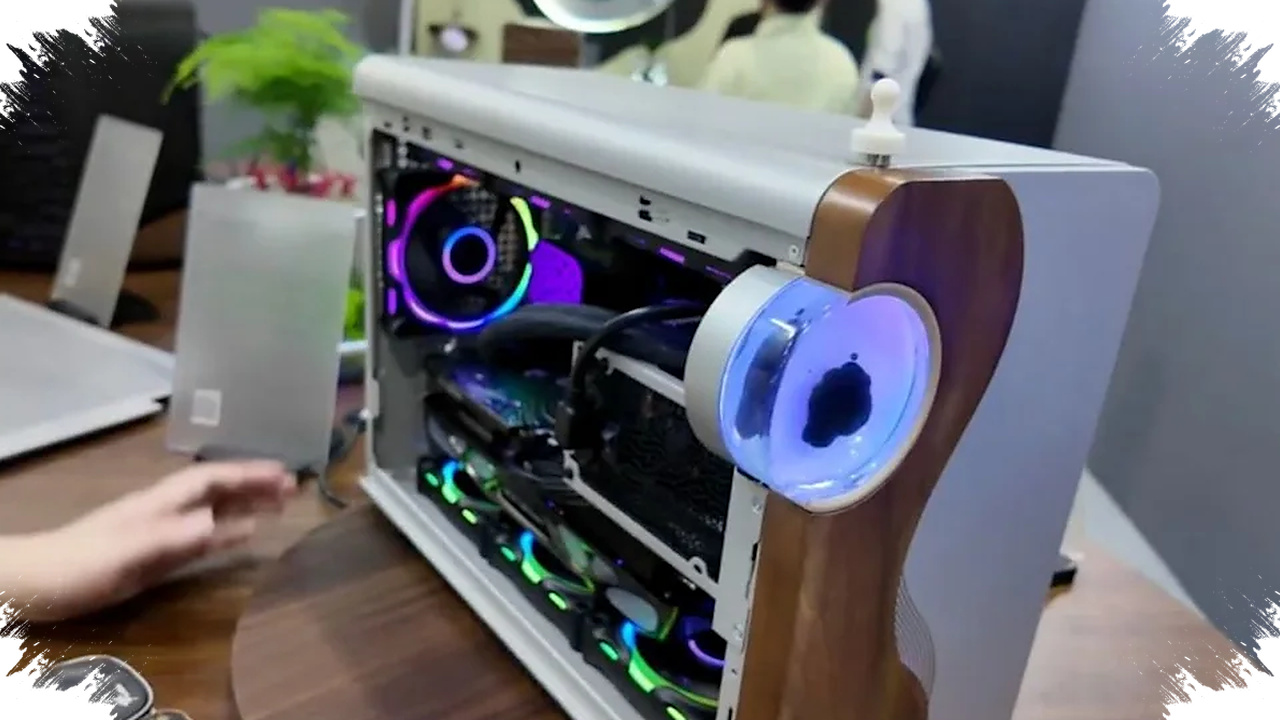
Amiiba’s Ferra turns a compact microATX case into something closer to an interactive desk display than a standard PC enclosure. The most unusual part is the ferrofluid chamber on the front panel, where the black liquid shifts when a magnet is brought near it.
That single element gives the case an identity far removed from the usual mix of RGB lighting and glass panels. On a work desk, the long, narrow shape and warm wood accents make it stand out immediately without looking overly aggressive.
A front panel that reacts to touch and sound
The circular feature on the front is the main visual anchor of Ferra. Inside it sits ferrofluid that pulses and changes form when users interact with it using the small included magnet.
Amiiba also placed a microphone on the back of the case. That allows the ferrofluid mass to respond not only to the magnet, but also to sound.
A live demonstration from Dave of Future on the Computex 2026 floor showed the mechanism in action. The ferrofluid visibly reacted to the small magnet, which made the feature feel like a working interaction rather than a static showpiece.
More than one look for the same case
Ferra will arrive in two versions with different prices. The non-ferrofluid model costs $119, while the ferrofluid version is priced at $199, according to Hardware Canucks.
Amiiba is also planning swappable front panels. Those add-ons are said to range from $50 to $150, depending on the material and how complex the design is.
The front-panel system was quick to swap during the event demonstration. That gives buyers a way to change the case’s look without taking the whole system apart.
A compact case built for the desk
Beyond the animated front panel, Ferra still works as a visually distinct microATX case. Its body is longer than it is wide, which helps it feel compact on a desk while also making it visually different from more conventional towers.
The design has also drawn comparisons to Fractal Design Terra because of its shape. The wood accent helps soften the appearance and makes the case feel more like a designed object than a plain computer shell.
There is also an option for a front panel without any wood element. That flexibility fits the growing interest in compact microATX cases with modular faceplates, especially for users who want personality without giving up a small footprint.
An unusual product from a little-known brand
Amiiba is still not widely known, and information about the company behind Ferra remains limited. Even so, the product is already easy to remember because of how different it is from most cases shown at the event.
The company is targeting a September release. For anyone looking for a small case that does more than house hardware, Ferra offers a design that turns the desk itself into part of the experience.
-

-

-
-