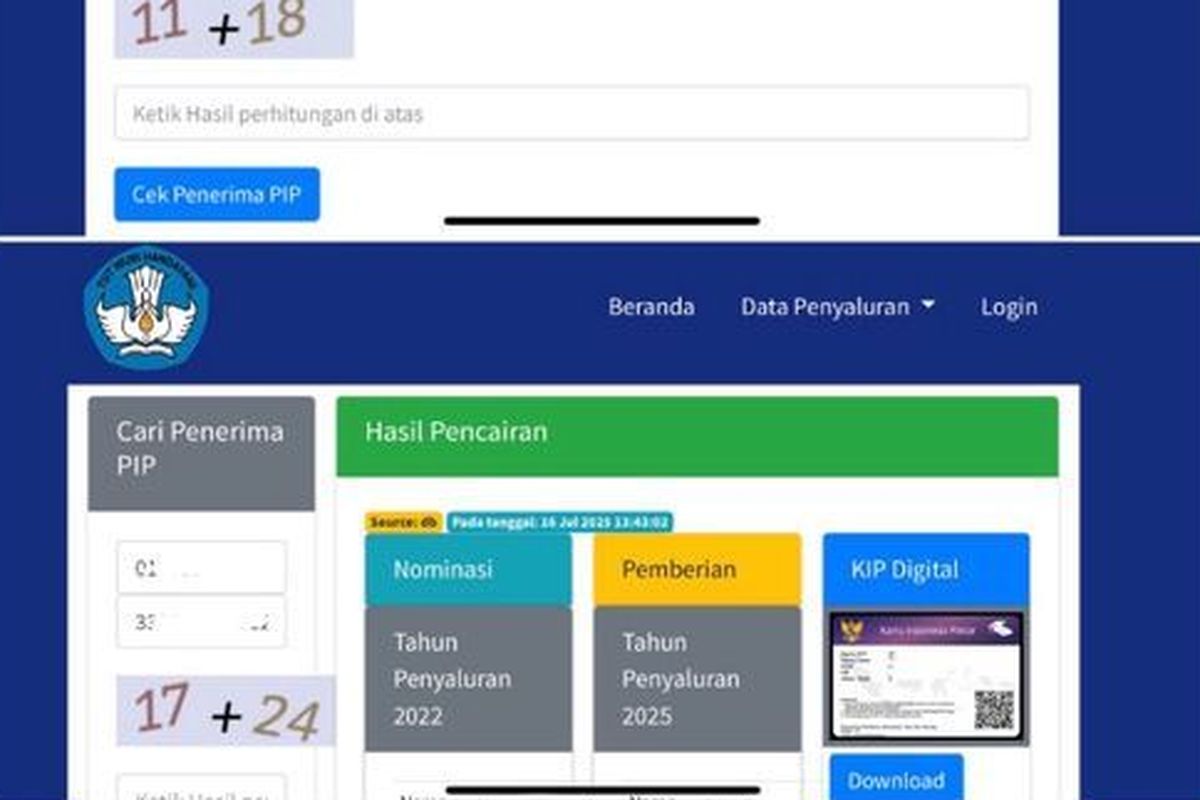
Families checking whether their children are listed in Program Indonesia Pintar, or PIP, no longer have to rely on school visits or education office appointments. The status can now be checked online, which makes the process faster and easier for parents and students who want clearer information about education assistance.
This access matters even more as interest in PIP checks rises again during the PIP 2026 period. Program Indonesia Pintar is an education aid program for students from poor and vulnerable families, designed to help children stay in school and reduce the education costs carried by households.
Online access through the official portal
The status check is done through the official Program Indonesia Pintar Information System portal. Through that system, users can see whether a student’s name has been recorded as a recipient of government education assistance.
To perform the check, users need to prepare the National Student Identification Number, or NISN, and the National Identity Number, or NIK. Once the data is entered correctly, the system will display the recipient status.
When available, the system can also show the student’s school of origin and information on fund disbursement. This reduces dependence on manual notifications and allows families to follow the progress of the assistance directly from the system.
Why regular checks still matter
Many people assume a PIP check is only needed when funds are about to be disbursed. In practice, routine checks also help confirm that a student’s data remains recorded in the system.
Recipient status can change after government data updates or recommendations from the school unit. Regular monitoring helps parents find out whether a child is still listed as a candidate or a recipient of the aid.
This is also important for students who actually meet the requirements but have not yet seen their data position. Without periodic checks, the opportunity to receive education assistance can be missed.
Routine monitoring also gives families more time to prepare identity documents or activate an account if that step is needed in the disbursement process. That way, administrative matters can be handled earlier rather than in a rush.
Status is not automatically permanent
One point that is often overlooked is that PIP recipient status does not continue automatically every year. The aid distribution still depends on data updates and verification carried out by the government.
Changes in a family’s economic condition can also affect recipient status. In addition, school recommendations remain part of the data collection process for potential beneficiaries.
For that reason, students and parents are advised to actively monitor the aid status instead of waiting for news to arrive on its own. That approach is considered the safest way to follow the development of education assistance they may need.
Schools and families both play a role
Schools have an important function in this program because they are involved in collecting data on potential education aid recipients. The Ministry of Primary and Secondary Education also opens the possibility for schools to propose students who are considered eligible.
That role matters because schools are closest to students’ daily conditions. With more active data collection, the chance for eligible students to enter the aid system can increase.
Parents also affect whether the program reaches the right target. When families regularly check the aid status, oversight of education fund distribution becomes stronger.
For parents and students, the first step is simple but important. Prepare the NISN and NIK, then check the status through the official Program Indonesia Pintar Information System portal to confirm whether the education aid has been recorded in the system.
-
-

-

-