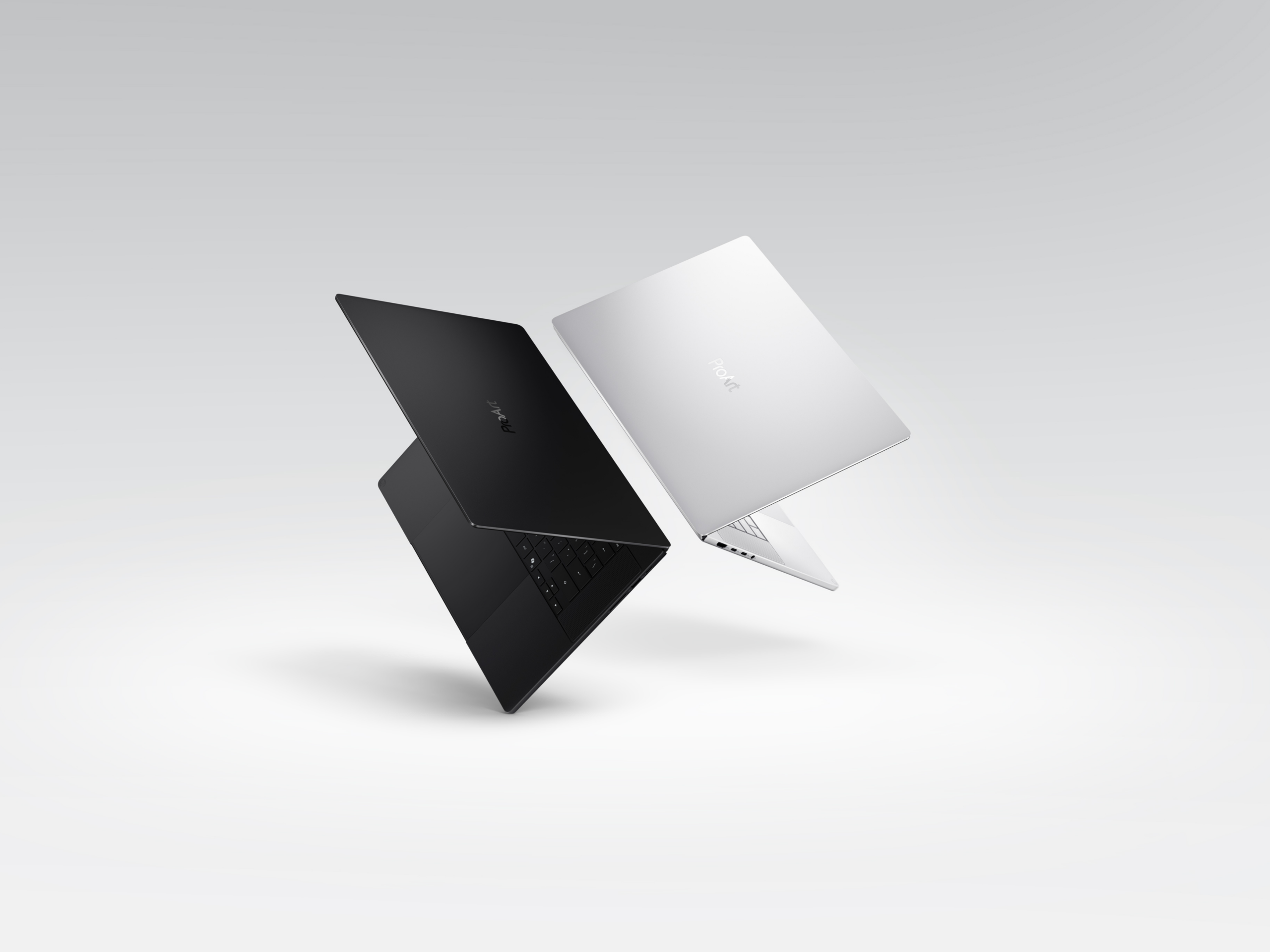
Asus is pushing its ProArt line into a new category with the ProArt P16 and ProArt P14. These are slim creator laptops, but Asus is positioning them for AI workloads that feel much closer to a workstation than a typical thin-and-light machine.
The key change is the move to Nvidia’s RTX Spark chip based on Arm. Asus introduced the ProArt P16, ProArt P14, and ProArt Mini PC as its first products to use the platform, and the company says it worked directly with Nvidia to deliver Blackwell RTX GPU performance and premium AI capability.
That launch also places Asus among the early Windows 11 device makers adopting Nvidia’s new chip. The same platform was previously expected to appear in Microsoft’s Surface Laptop Ultra, which shows how quickly the push for high-performance Arm laptops is expanding.
For Windows on Arm, this matters because RTX Spark is being viewed as a major step beyond the Snapdragon X devices that have defined much of the category so far. The focus is no longer only on efficiency, but also on heavier computing tasks that are more relevant to professional users.
Built for creators who need power and portability
The ProArt P16 and ProArt P14 are aimed at creative work, with slim bodies and color-accurate displays. Asus designed them for demanding workloads that need a strong balance of CPU, GPU, and memory, while still keeping the machines portable enough for mobile use.
The ProArt P16 is the more striking model in the lineup. It is configured with up to 6,144 Blackwell RTX cores, unified LPDDR5X memory of up to 128GB, and AI performance claimed to reach 1 petaflop.
Even with that level of hardware, the chassis remains thin. The ProArt P16 measures 0.5 inches, or 12.9 mm, in thickness and weighs 3.9 pounds, or 1.77 kg.
Displays remain central to the ProArt pitch
Asus is also leaning heavily on the displays, which are essential for visual professionals. The ProArt P16 uses a 16-inch 16:10 touchscreen with 4K Tandem OLED resolution and a peak brightness of 1,600 nits.
The ProArt P14 takes a smaller route without dropping the visual focus. It comes with a 14-inch 3K HDR display with a 120Hz refresh rate, and both laptops support 100% DCI-P3 color coverage.
That combination makes the pair suitable for design, illustration, photo editing, and video production, where color accuracy matters as much as raw speed.
RTX Spark becomes the defining difference
The real distinction of this new ProArt generation is the Nvidia RTX Spark chip. Built on Arm, it is aimed at AI and complex workflows rather than everyday efficiency alone.
That gives Asus a different angle from many other thin Arm laptops. Instead of simply chasing battery-friendly design, the company is trying to bring high-end graphics and serious AI capability into a form factor that is still easy to carry.
Asus also emphasizes the Blackwell RTX GPU experience as a core part of the platform. The result is a set of devices that stays compact while targeting performance levels usually associated with much larger machines.
A desktop option joins the lineup
Alongside the two laptops, Asus also introduced the ProArt Mini PC in the same family. It uses the same RTX Spark chip and brings the same high-performance direction into a far smaller desktop format.
The Mini PC supports up to 128GB of unified memory, includes 10GbE networking, and offers nM.2 PCIe Gen 5 x4 expansion. Its compact footprint measures 150 x 150 x 51 mm.
That makes the lineup relevant not only for mobile creators, but also for users who need a compact workstation setup on a desk with serious connectivity and expansion needs.
Asus has not announced pricing or availability for the ProArt P16, ProArt P14, or ProArt Mini PC. Other early Windows 11 devices expected to use RTX Spark include the Dell XPS 16, Lenovo Yoga Pro 9n, and MSI Prestige N16 Flip AI.
Source: www.xda-developers.com-
-
-

-