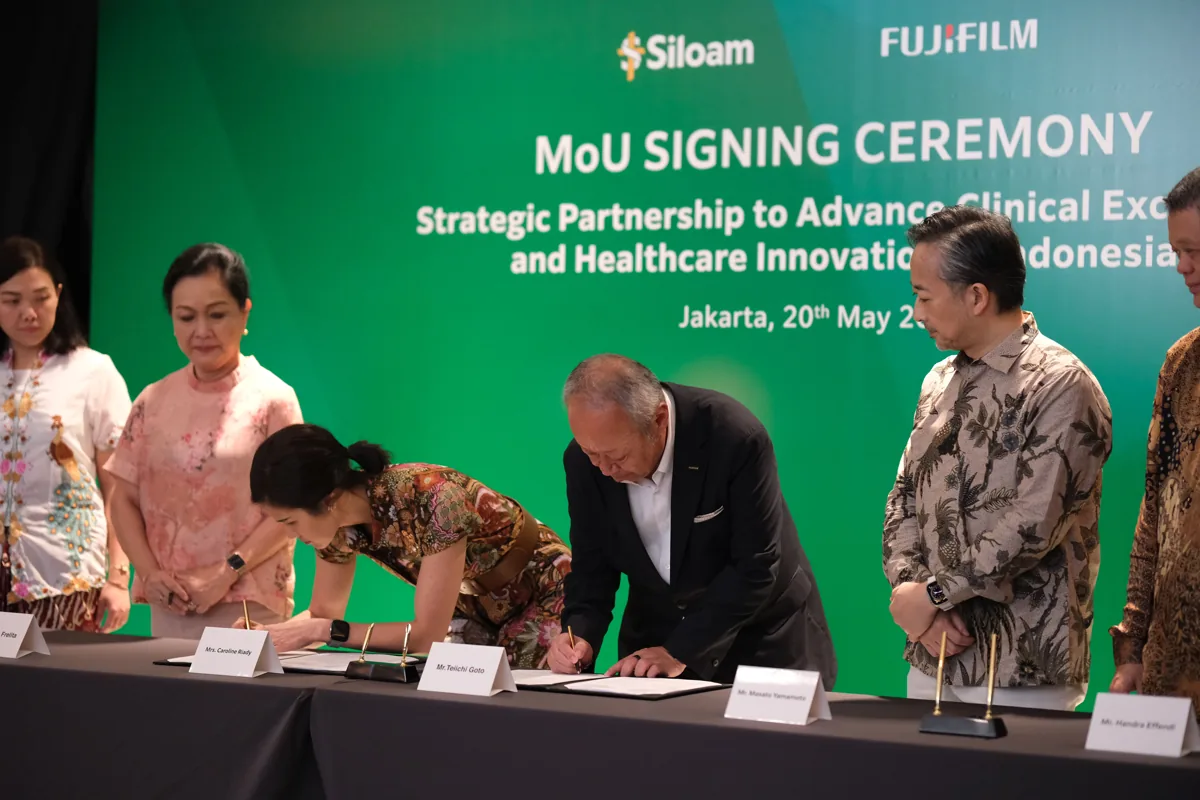
Indonesia’s push for more modern healthcare is increasingly centered on artificial intelligence, and a new partnership between Fujifilm Indonesia and Siloam International Hospitals shows how broad that shift may become. The collaboration is not limited to medical equipment procurement, but is designed to connect diagnosis, clinical training, and wider access to care within a more integrated system.
At the core of the agreement is a plan to use AI to support clinical screening and diagnosis. The aim is to help healthcare workers make faster, data-driven decisions while improving diagnostic accuracy in an environment where hospitals are expected to deliver more efficient services without reducing quality.
AI moves into clinical workflows
Fujifilm brings imaging technology and AI capabilities to the partnership, while Siloam contributes clinical experience and a large hospital network. Together, the two companies are positioning AI as a practical tool for improving workflow efficiency, accelerating disease detection, and supporting better treatment outcomes.
This approach reflects a broader effort to build a healthcare ecosystem that is more connected and more responsive to technological change. Instead of treating AI as a standalone feature, the collaboration places it inside the daily process of care delivery.
Training becomes part of the strategy
One of the most important elements of the partnership is the development of an Endoscopy Training Center. The facility is intended to strengthen the skills of Indonesian medical professionals in gastroenterology and advanced medical procedures.
The training program will support procedures such as Endoscopic Ultrasound, or EUS, Endoscopic Retrograde Cholangiopancreatography, or ERCP, and colonoscopy. Fujifilm and Siloam are also preparing international knowledge-exchange programs with Japan and regional partners, with Universitas Pelita Harapan included in the education effort.
TB screening and access for harder-to-reach areas
The collaboration also targets tuberculosis, one of Indonesia’s major public health challenges. Fujifilm and Siloam plan to explore AI-based medical technology to support early TB detection and extend services to areas that are difficult to reach.
A portable AI-based X-ray system is among the solutions being prepared for screening in remote regions and communities with limited access to healthcare. The goal is not only faster TB response, but also a more even distribution of diagnostic services across the country.
That focus matters because it shows the partnership is not aimed only at urban hospitals. It also reflects an effort to bring modern diagnostic tools to service points that have long lacked access to quality healthcare facilities.
Why the partnership matters for the market
AI, advanced imaging, and digital medical systems have become central to healthcare transformation around the world. Fujifilm has been expanding its healthcare technology business in recent years through clinical AI development, medical imaging systems, and modern diagnostic solutions.
Its work with Siloam suggests that Indonesia is becoming an important market for AI-based healthcare technology in Southeast Asia. As the sector continues to evolve, AI is expected to play a larger role in disease diagnosis, medical data analysis, and smart patient monitoring systems.
Source: id.mashable.com-

-

-

-