


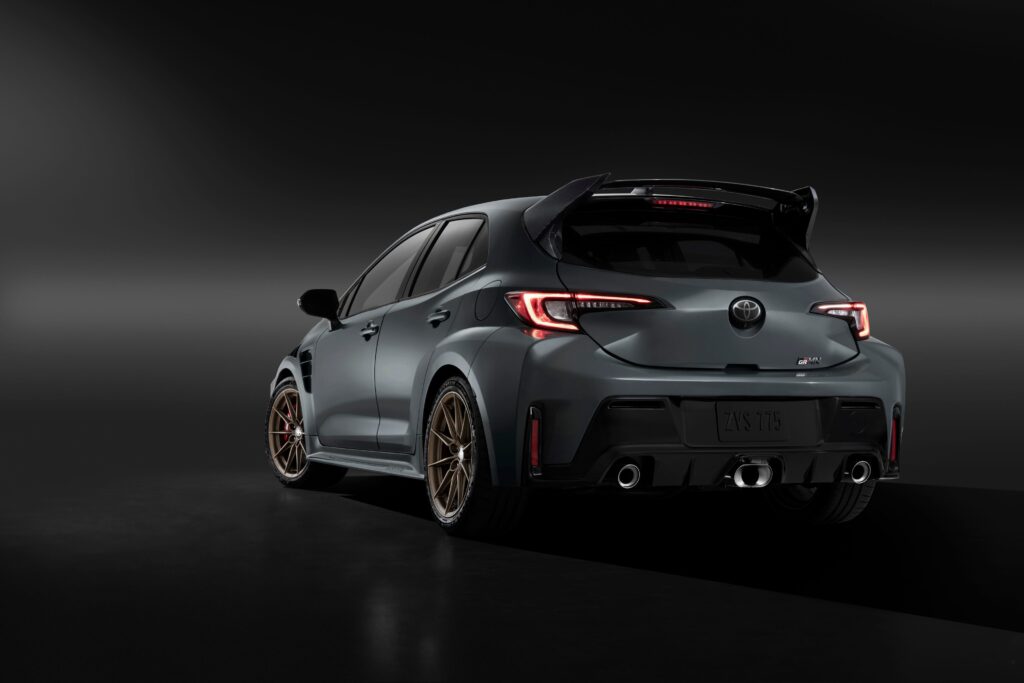
Toyota is sharpening the GRMN Corolla into a far more focused machine than the standard GR Corolla. The headline figures tell the story quickly: 409 Nm of torque and a suspension package built to stay composed when the car is driven hard on track.
That direction makes the car feel less like a hotter hatchback and more like a road-legal tool for precision driving. Toyota is clearly aiming at drivers who value grip, response, and stability over everyday practicality.
A track-first setup shaped by racing experience
The GRMN Corolla was developed with lessons drawn from Nürburgring testing and Japan’s Super Taikyu endurance racing series. That background pushed Toyota to tune the car closer to a competition machine than a conventional street hatch.
The model sits under the GAZOO Racing umbrella, and its development also follows the “making ever-better cars” philosophy associated with Akio Toyoda, also known as Morizo. That connection helps explain why the car is being positioned as more than a simple performance upgrade.
More torque where it matters most
The biggest mechanical change is centered on the turbocharged three-cylinder engine that underpins the GR Corolla. Toyota revised the engine significantly, lifting torque to 409 Nm and strengthening the delivery in the mid-range between 4,000 and 4,600 rpm.
That tuning should make the car feel more forceful when exiting corners and more aggressive on both circuits and mountain roads. Toyota links the result to its experience developing a hydrogen-fueled race engine that has been tested for several years in motorsport.
Weight loss for sharper behavior
Toyota also removed the rear seats to improve the power-to-weight ratio. That decision cuts about 30 kilograms compared with the standard GR Corolla.
The lower mass supports quicker acceleration, sharper handling, and more precise steering response when the car is pushed hard. It also reinforces the GRMN Corolla’s purpose as a car for buyers who prioritize driving feel over daily versatility.
Aerodynamics and suspension built for the limit
Toyota gave the car a dedicated aerodynamic package developed through intensive testing at Nürburgring. The hardware includes a hood vent, special fender ducts, and a front side spoiler, all intended to help manage airflow as speed rises.
At the rear, the car uses an adjustable wing with five levels of setting and one-degree precision. Toyota says the package is meant to produce the downforce needed for different track conditions.
The suspension setup is equally serious. Toyota fitted exclusive monotube dampers at both the front and rear, then combined them with special rebound springs to keep the tires working properly during aggressive cornering. The electric power steering was also recalibrated to deliver a more communicative and accurate feel.
Stronger body, track-ready tires, and a focused cabin
Body stiffness was increased with 32.6 meters of structural adhesive. That added rigidity is designed to help the car remain stable at high speed and under heavy lateral loads.
Michelin Pilot Sport Cup 2 tires complete the chassis package. The tires are suited to track days while still fitting the character of a sporty road car.
Inside, the cabin keeps the performance theme alive with semi-bucket seats wrapped in premium suede and synthetic leather. Red GR accents appear throughout, while flocked trim is used in selected areas to reduce light reflection during serious driving.