


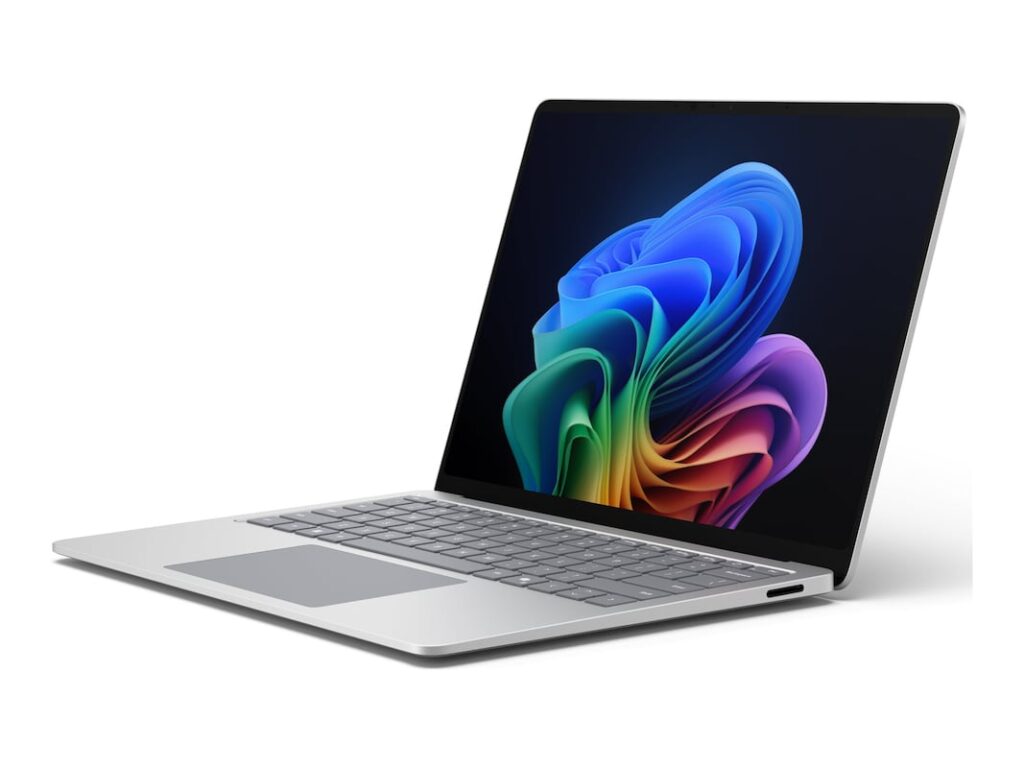
Microsoft’s next Surface Laptop does not need to copy the Surface Laptop Ultra item for item to become more compelling. It would make more sense for the consumer model to borrow the most useful ideas from the Ultra while avoiding the cost and complexity that come with a flagship-class machine.
The Ultra pushes the Surface family forward in obvious ways, but it is not built for everyday buyers. That leaves Microsoft with a clear challenge: bring the right improvements into the mainstream Surface Laptop without turning it into an expensive, overbuilt device.
More practical connectivity
One of the clearest upgrades worth carrying over is a more flexible port selection. The Surface Laptop Ultra includes HDMI, three USB-C ports, USB-A, a card reader, and a headphone jack, while the Surface Laptop 8 for Business offers only two USB-C Thunderbolt 4 ports, one USB-A port, a headphone jack, and Surface Connect.
For a consumer Surface Laptop, the best answer would sit somewhere between those two approaches. It does not need as many ports as the Ultra, but it would feel far more complete if Microsoft expanded connectivity beyond the current business model’s limited layout.
One detail that stands out is the USB-C port on the right side of the Surface Laptop Ultra. Microsoft has not confirmed why it looks different, but Zac Bowden said it appears unlike a standard connector and may use a breakaway, possibly magnetic, design to make alignment easier.
A brighter display that better suits premium use
The display is another area where the Ultra raises expectations. The 15-inch laptop uses a mini-LED panel with a peak HDR brightness of 2,000 nits, while the Surface Laptop 8 for Business reaches 500 nits in Daniel Rubino’s testing.
That kind of brightness is not realistic for a mainstream consumer laptop, even in the premium segment. Still, a Surface Laptop that could reach around 600 to 700 nits would be much better positioned for use in different lighting conditions.
The same reporting notes that the Surface Laptop 8 for Business already has an anti-glare screen and integrated privacy features. Microsoft may therefore need to balance higher brightness with privacy tools instead of focusing too heavily on only one of those priorities.
A larger haptic touchpad would matter more than raw specs
Another upgrade worth adopting is a larger haptic touchpad. The Surface Laptop Ultra has the largest haptic touchpad ever seen on a Surface device, and Rubino described the newer haptic touchpad on the Surface Laptop 8 for Business as a “joy to use”.
Haptic touchpads have real advantages over traditional diving-board designs. They feel more consistent across the surface, avoid dead zones that can disrupt control, and do not depend on different click pressures in different areas.
Microsoft is also leaning more heavily into haptics in Windows 11. The operating system now includes subtle touch feedback, such as a “bump” effect when dragging files between folders, so Surface hardware should be able to take fuller advantage of that capability.
Why this matters for the next Surface Laptop
The difficult part for Microsoft is price discipline. It cannot simply shrink the Surface Laptop Ultra and call it a regular Surface Laptop, because smaller laptops can actually be more expensive to manufacture.
That approach also would not work if Microsoft merely switched to a cheaper chip. Some Ultra components, such as dual-fan cooling, are unnecessary in a standard model, while unified memory is largely determined by the chip maker rather than Microsoft.
Other parts, including RTX Spark and mini-LED, would likely make the consumer Surface Laptop too expensive if they were forced into the lineup. That is why the smarter move is to carry over features that are both affordable and highly visible in everyday use.
Microsoft needs to find the middle ground between an Ultra PC and a premium PC. Push too hard toward top-end hardware and the consumer market gets priced out, but play it too safe and the Surface Laptop loses ground to rival premium notebooks in the same bracket.
That is where a better port selection, a brighter screen, and a larger haptic touchpad could make the biggest difference. With those changes, the Surface Laptop could feel more refined without losing its identity as a premium machine for general users.