The GPU market is heading into a remarkably quiet stretch, with 2026 shaping up to deliver far fewer surprises than buyers might expect. Instead of a full wave of new graphics cards, the year is being filled with small revisions, delayed launches, and product refreshes that feel more incremental than transformational.
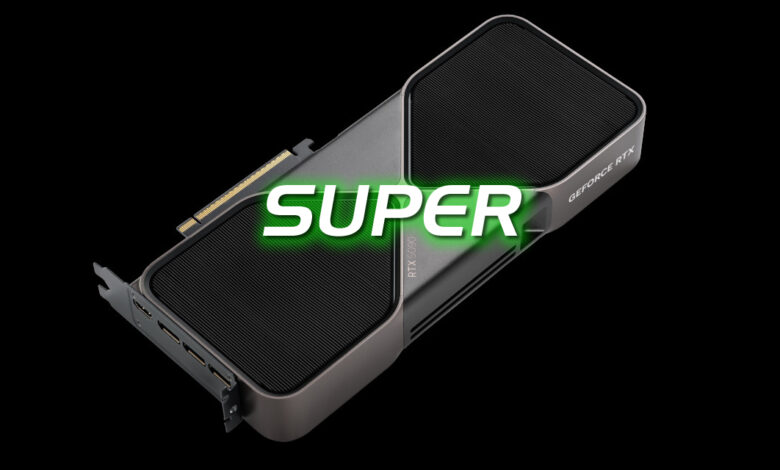
The clearest sign comes from Nvidia’s RTX 50 Super Series. Videocardz, citing Taiwan’s Benchlife, reports that the lineup is not expected until early 2027, with CES 2027 in January seen as the earliest likely window.
A year dominated by minor updates
So far, 2026 has produced only limited releases in the upper tier. AMD introduced the Radeon RX 9070 GRE, but it is essentially a revised GPU with slightly reduced specifications rather than a new class of hardware.
Nvidia also brought out the RTX 5070 12 GB for laptops, though that model mainly adds more video memory to an existing chip. Its launch was described as so small that Nvidia reportedly mentioned it only as a note in a driver update release.
Other recent products do not change the picture much. Intel Arc Pro B70 is an AI-focused $1,000 card with gaming performance closer to a $400 desktop graphics card, so it does not fit the role of a major gaming GPU launch.
Nvidia’s RTX Spark also sits outside that category. It is an APU with CPU cores rather than a pure GPU, and it is also just a new name for the DGX Spark chip that was announced more than a year earlier and only shipped in October.
The budget end is not much more exciting
For the rest of the year, attention turns to the AMD Radeon RX 9050 as a possible budget option. Even there, the card is said to use the same Navi 44 chip as the RX 9060 and RX 9060 XT, making it look like another variation rather than a clean generational step.
Nvidia is also expected to have an RTX 5050 9 GB, but that model is described in the same way: a tweaked version of an existing GPU, not a true architectural leap.
That leaves 2026 looking thin from top to bottom. If the standard is a genuinely new GPU experience, this year has very few candidates that qualify.
Why 2027 may not fix the problem quickly
The slowdown matters even more because AMD is also now expected to delay RDNA 5 graphics chips until late 2027 or even 2028. If RTX 50 Super arrives at the start of 2027, Nvidia would still have little room to replace it quickly with the Rubin architecture.
That creates the risk of another flat year. If AMD’s RDNA 4 and Nvidia’s Rubin both drift into 2028, the market may continue to rely on refreshes and recycled designs, including the RTX 50 Super Series.
In that scenario, 2026 becomes one of the weakest years for new GPU launches, and 2027 may not look much better. The pace of true generational change appears to be slipping further away, while older flagship cards continue to hold their ground longer than expected.
RTX 4090 remains the clearest example of that long lifespan. Bought near its MSRP when it launched in October 2022, it is still the second-fastest GPU and could remain near the top for six years or more before a real successor finally surpasses it.