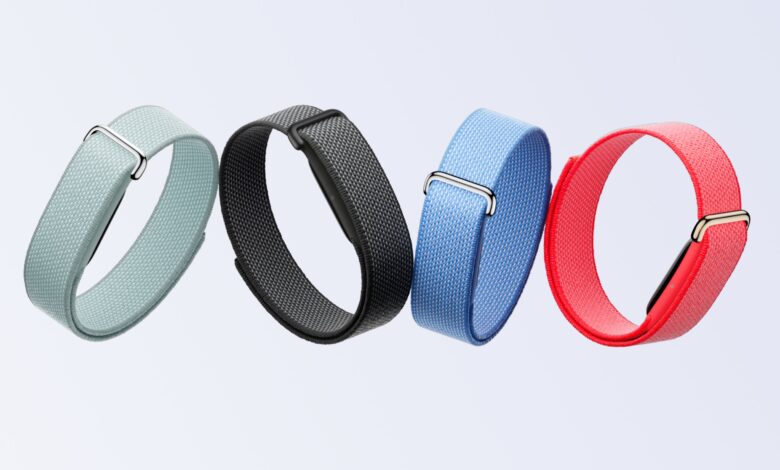
Google has taken an unusual step with Fitbit Air by releasing design guidance and 2D CAD files for its band. That move gives owners, DIY builders, and third-party accessory makers a formal path to create custom straps instead of relying only on the limited official options.
The decision matters because Fitbit Air is a screenless fitness wearable, which makes the band one of the most visible parts of the device. In a product like this, the strap is not just an accessory; it is part of the user’s style, comfort, and daily experience.
A wearable built around simplicity
Fitbit Air is positioned as a distraction-free fitness tracker, closer in spirit to Whoop than to a conventional smartwatch. Without a display, the device focuses on core health tracking while leaving personalization largely to the band itself.
Google has already offered bands in several styles and colors, but the new blueprint expands that flexibility. It opens the door for users who want a more personal look, as well as small makers who want to produce compatible designs with less trial and error.
What Google released
The company has published technical instructions for the Fitbit Air band together with relevant 2D CAD files. Those documents provide a foundation for producing custom bands, including precise dimensions for the pebble and sleeve components.
The guidance goes beyond general sizing. Google also specifies mechanical force parameters and tolerances, along with details about how the band should attach and detach from the module.
| Document Detail | What Google Specifies |
|---|---|
| Core files | Design guidance and 2D CAD files |
| Measured parts | Pebble and sleeve dimensions |
| Mechanical requirements | Force parameters and tolerances |
| Fit behavior | Band attachment and removal mechanics |
Two technical rules cannot be ignored
Google says the sensor on the bottom of the pebble must remain unobstructed at all times. It also needs stable contact pressure against the skin, because accurate health readings depend on how the device sits on the wrist.
That warning makes the release more than a design exercise. Anyone producing a custom band has to respect the sensor’s placement and ensure the wearable still functions as intended.
The company also cautions against using cheap materials that can trap sweat or irritate the skin. In other words, a custom band must still meet basic standards of comfort and safety, not just visual appeal.
Why the blueprint could matter beyond Fitbit Air
Wearable accessories are usually shaped through reverse engineering or manual measurement by third-party makers. With Fitbit Air, Google is instead publishing an official technical reference that can reduce guesswork.
That approach may encourage more variety in the band market, from practical sports-focused options to more expressive everyday designs. It also gives small accessory makers a clearer starting point, especially when compatibility with the main module is essential.
For users, the result could be a more open ecosystem around a device that is already built on minimalism. When the screen is removed, the band becomes one of the few ways to make the product feel personal.
The device still stays focused on core fitness basics
Fitbit Air comes with up to 7 days of battery life, a 35 x 17 x 8.3 mm module, and water resistance up to 50 meters. It is equipped with an optical heart-rate sensor, a 3-axis accelerometer, and a temperature sensor.
Those hardware details show that the product remains centered on essential fitness tracking rather than a crowded set of smartwatch features. With the band now open to custom fabrication, the most visible part of the device may become the most creative one as well.