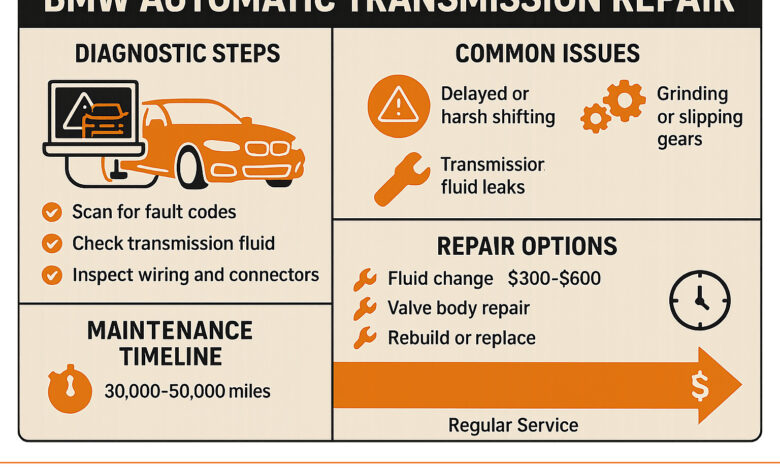
Automatic cars are built for convenience, but the transmission underneath is far more sensitive than many owners realize. Small driving habits and delayed maintenance can turn a smooth gearbox into a costly repair problem.
The most common mistake is also one of the easiest to avoid: ignoring the transmission fluid. Unlike engine oil, ATF does more than lubricate because it also carries hydraulic pressure that helps the gearbox shift properly.
Why transmission fluid deserves close attention
Owners often remember routine engine-oil changes but forget that the automatic gearbox needs its own service schedule. A regular fluid change is generally done every 20,000 km, while a full flush with special equipment is recommended every 40,000 to 50,000 km.
Fluid choice also matters. Conventional automatic transmissions, CVT units, and Dual-Clutch Transmission or DCT systems use very different oil specifications, so using the wrong one can cause problems.
Checking the fluid before it becomes a larger issue is equally important. On vehicles with a dipstick, the correct inspection is done on level ground, after the engine reaches normal operating temperature, and with the selector in Park.
The dipstick should be wiped clean, reinserted, and removed again to read the level, which should sit on the “Hot” mark. Healthy fluid is usually bright red or clear yellowish, depending on the type.
If the fluid turns dark brown or black, or smells burnt, that often signals worn clutch packs inside the gearbox and calls for immediate replacement.
Three driving habits that shorten gearbox life
Keeping the selector in Drive while the car is stopped for too long can add unnecessary heat and strain. When the car remains stationary for more than 10 to 20 seconds, shifting to Neutral is the safer habit.
That small change reduces the load on the transmission fluid, which would otherwise keep working to hold back engine power while the vehicle is not moving. Excess heat can damage rubber seals and clutch material over time.
Another damaging habit is shifting the lever too abruptly. The gearbox should be fully stopped before moving from D to R or from R to D, because any motion while the vehicle is still rolling can send shock through the gears and holding mechanisms.
Repeated shock loading may cause early wear and, in the long run, tooth damage inside the transmission. These problems often begin with habits that seem harmless in daily use.
Uphill driving needs a more careful approach
On steep climbs, leaving the transmission in Drive can make the system hunt between gears as the control unit keeps reacting to changing load. That repeated shifting increases stress and can make the car lose momentum.
In those conditions, lower gears such as L, 2, or a manual tiptronic mode help keep torque more stable. Locking the gearbox in a lower gear also reduces the workload on the fluid and lowers the risk of overheating.
With proper maintenance and calmer driving behavior, an automatic transmission can last much longer. The cost of prevention is far smaller than the expense of repairs after a gearbox failure has already started.