The U.S. Supreme Court has effectively cleared the way for stronger punishment against major wireless carriers over the sale of customers’ real-time location data. For consumers, the ruling gives the FCC firmer ground to act when sensitive location information is sold or passed to third parties.
The decision matters because location data is not ordinary customer information. It can reveal where a person is at a given moment, making it one of the most sensitive kinds of data a carrier can hold.
How the case came together
The dispute grew out of an FCC fight with AT&T and Verizon after the agency found that carriers had sold customer location data to third-party aggregators, which then resold it again. The practice drew scrutiny because the data involved was real-time location information.
One of the triggers was a case in Mississippi, where a sheriff used a service called Securus to track suspects’ phones without first seeking a court order. That episode pushed the FCC to investigate more deeply and examine whether carriers had done enough to protect customer data.
What the FCC found
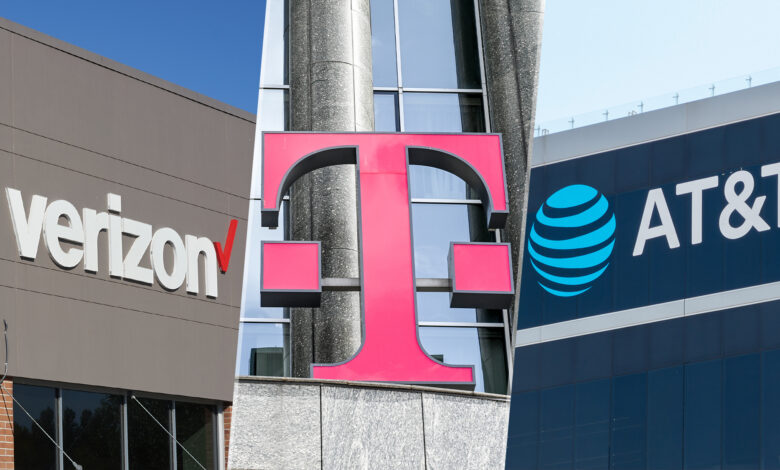
The FCC concluded that AT&T, Sprint, T-Mobile, and Verizon had not provided sufficient protection for customer information under the Telecommunications Act of 1996. The agency then imposed large fines on several operators.
AT&T was fined about $57 million, Verizon about $47 million, and T-Mobile about $92 million. T-Mobile’s figure was higher because it also absorbed Sprint’s penalty after acquiring the brand.
| Carrier | Fine |
|---|---|
| AT&T | $57 million |
| Verizon | $47 million |
| T-Mobile | $92 million |
Why AT&T and Verizon fought back
AT&T and Verizon challenged the fines, arguing that the FCC’s enforcement process violated their Seventh Amendment right to a jury trial. In their view, the agency could not impose penalties of that kind without first taking the matter into a process that allowed a jury to hear the case.
The Supreme Court rejected that argument. Under the ruling, a company can refuse to pay, which would force the FCC to file suit within five years and move the case into a court process that includes a jury.
What the ruling means now
That outcome leaves the FCC with a clearer path to punish carriers if they are found selling or exposing real-time location data. It does not automatically stop the practice, but it makes avoiding consequences much harder for major operators.
The ruling also narrows the room T-Mobile may have had to challenge its own penalty on similar grounds. For the industry, the message is straightforward: customer location data is not a low-risk asset that can be traded without serious legal exposure.
As the case shows, carrier data can travel far beyond the company that first collected it. Once it reaches third-party aggregators, it can be resold again, widening the chain of distribution and the risk of misuse.
For consumers, the practical takeaway is stronger oversight at the federal level. The FCC now has a sturdier basis to pursue carriers when real-time location data ends up in the wrong hands.