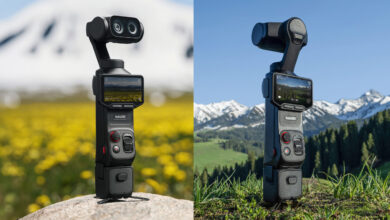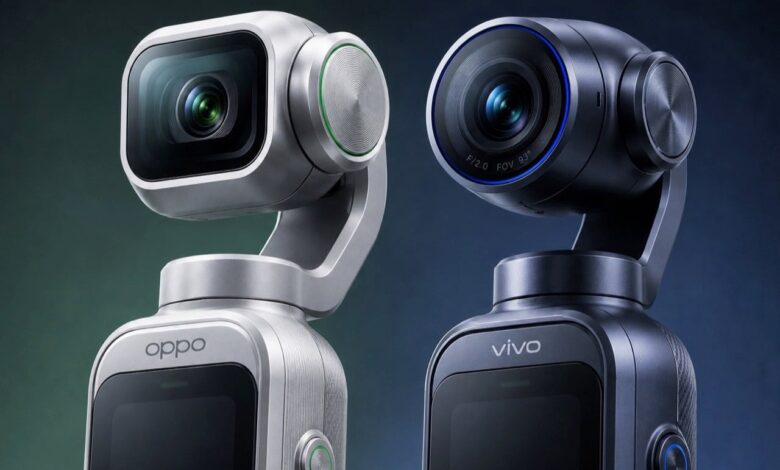
OPPO and vivo are reportedly preparing compact vlogging cameras that could challenge the long-standing dominance of DJI’s Osmo Pocket line. The rumor has drawn attention because the handheld vlogging camera segment has been closely associated with DJI for years.
If the reports prove accurate, the market for portable creator cameras could become far more competitive. The new devices are said to target users who want stronger image quality without giving up a pocket-friendly form factor.
A large sensor may be the main advantage
Leaked information suggests that both devices will use a large 200MP camera sensor measuring 1/1.12 inches. That specification points to the Sony LYTIA 901 sensor introduced by Sony late last year.
A larger sensor is especially important in a vlogging camera because it can capture more light. In practice, that should improve recording performance in low-light environments.
The 200MP resolution could also provide very high detail levels. It may give users more flexibility when cropping footage or processing video for different formats.
Brand camera identities are expected to remain intact
Even with the focus on new hardware, OPPO and vivo are not expected to abandon their established imaging partners. OPPO is reportedly continuing its collaboration with Hasselblad for camera development.
vivo, meanwhile, is expected to rely on Zeiss once again for optical tuning. The presence of both partners could add value in image processing, color reproduction, and overall camera output.
That combination suggests these devices are not being positioned as ordinary compact cameras. Instead, OPPO and vivo appear to be aiming for a more serious imaging product that still stays portable.
Smartphone integration could be a key selling point
Another notable part of the rumor is the close connection to the companies’ smartphone ecosystems. The cameras are said to sync photos and videos directly to the user’s phone automatically.
That workflow would make editing, content processing, and social media publishing much easier. For vloggers and creators on TikTok, YouTube Shorts, or Instagram Reels, instant transfer would be a practical advantage.
The concept also fits a broader trend in creator tools, where cameras and smartphones are becoming increasingly connected. The line between capture device and production device continues to shrink.
Flagship-grade processing is also expected
Beyond the camera sensor, both devices are also said to feature flagship-class chipsets. The exact processors have not been revealed, but their presence suggests the focus goes beyond still photography.
Such chips would likely be needed to support real-time processing of high-resolution video. That is increasingly relevant as content creation moves toward higher-quality formats, including 4K recording.
With stronger processing power, the devices could also support AI-based features. More accurate subject tracking, advanced stabilization, and professional-grade color handling could all become meaningful advantages for creators.
There is still no official confirmation on the product names or launch timing. Even so, the reports are enough to signal that the vlogging camera segment may be heading into a more aggressive new phase of competition.