


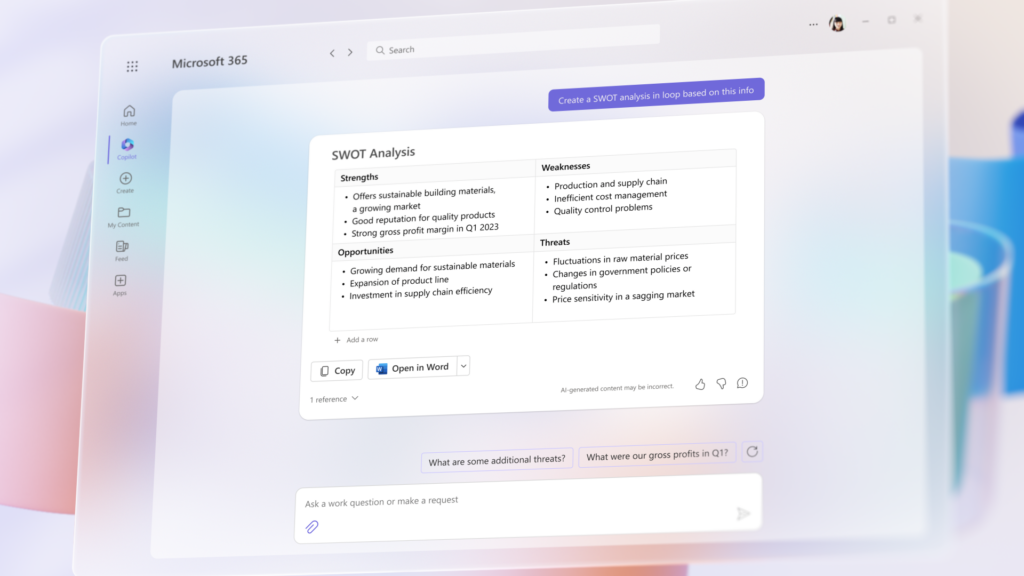
Microsoft is trying to narrow the debate over AI and the future of office work. The company says the technology is not about removing entire white-collar jobs, but about automating the repetitive tasks that people find most tedious.
The clarification matters because an earlier comment from Microsoft AI chief Mustafa Suleyman was widely read as a sign that AI would soon replace many desk-based roles. In his latest explanation, he drew a clear line between a task and a job.
Tasks are the first target
Speaking in a recent interview cited by The Verge through Decoder, Suleyman said he had meant “tasks,” not “jobs,” when discussing automation. He described jobs and roles as broader categories, while tasks are only the building blocks inside them.
That distinction reshapes how his earlier remarks should be understood. In a report that drew attention after being picked up by Financial Times, he had said that most white-collar tasks done while sitting in front of a computer would be fully automated by AI within 12 to 18 months.
The latest clarification suggests Microsoft sees AI as something that enters the workflow rather than something that eliminates a profession outright. The emphasis is on repeated, structured, and predictable digital work.
That includes activities such as drafting initial text, organizing digital workflows, or handling standard steps on a computer. These are the kinds of tasks that are easiest for AI to take over first.
What still needs people
Even if many computer-based steps become automated, Microsoft still sees a strong role for humans in the wider job. Conversation, physical presence, judgment, and the finer details of a project remain areas where people are still needed.
Client communication, coordination between teams, reading nuance, and making sure the final result fits the situation are all examples that still depend on human involvement. Physical attendance at a site and direct participation in project details also remain outside full automation.
That is why the company’s clarification is less about disappearing occupations and more about changing how work inside those occupations gets done. A lawyer, accountant, project manager, or marketer is not presented as vanishing, but as working with a different balance of AI and human input.
Why the debate spread so fast
The reaction was fueled by a broader split in how people view AI. Some see agentic systems as only a short step away from doing nearly everything a human worker can do, and doing it faster.
Others believe large language models will remain tools that support workers rather than replace them entirely. Microsoft’s latest explanation sits much closer to that second view.
By restating his point, Suleyman also reduced the room for speculation. The discussion is no longer framed as the end of white-collar professions, but as the automation of specific units of work.
That matters most for administrative and operational tasks that have long been considered repetitive. As AI takes over more of that routine digital work, the human side of office jobs is likely to stand out more clearly in communication, decision-making, and oversight.
For office workers, the message is not that their roles will stay exactly the same. It is that the biggest change may come from losing the most boring parts of the day to AI, while the parts requiring conversation, presence, judgment, and careful execution remain human territory.
Microsoft’s position points to a workplace shaped by a more defined division of labor between people and machines. AI is being aimed at repetitive digital tasks, while humans keep the responsibilities that depend on context, nuance, and direct interaction.
WAMF_CONTENT_HTML_jemv6zkd