Not every room monitor has to look generic. Veltoc Model 01 takes a different route, pairing an ESP32-based environmental tracker with an e-Ink display and a retro-inspired finish that makes it stand out on a desk.
The project focuses on the basics, but it does so with unusual style. It shows temperature, humidity, and air pressure on a 2.9-inch monochrome e-Paper screen, turning a practical gadget into something that also works as a display piece.
A DIY build aimed at makers
Veltoc Model 01 is meant for users who want to build and understand the device themselves. That approach also makes it easier to repair later, as long as the builder is comfortable handling a fairly detailed parts list.
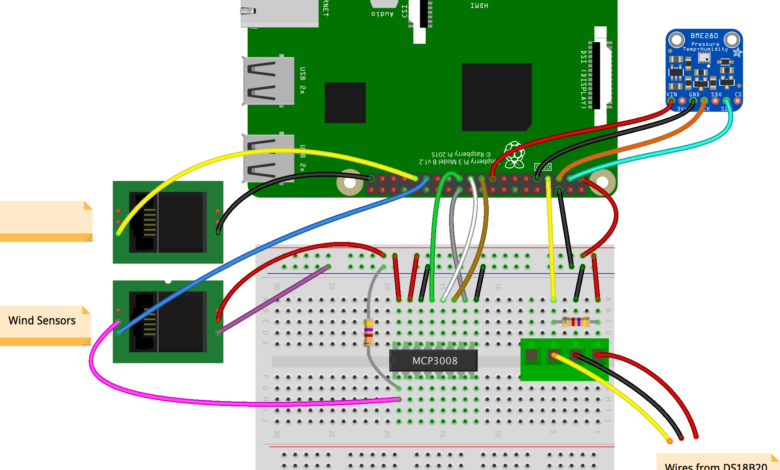
The system runs on a Xiao ESP32 C6, paired with an ePaper Driver Board for Seeed Studio XIAO so the e-Ink display can function properly. For sensing the room environment, it uses a BME280 sensor that handles temperature, humidity, and pressure readings.
What the build includes
The project also calls for a rotary encoder, a 3 mm 3.7-volt LED, and two 100kOhm resistors for battery-level reading. Power comes from an EEMB LiPo Battery 3.7V 1400mAh 112945, while USB-C Pigtail Cable Extension female and a USB C Connector 24 Pins male plug socket are included for physical connectivity.
That combination shows the project is not a simple snap-together kit. It is better suited to makers who are ready to source and assemble the components carefully.
Files and instructions are already available
One of the most useful parts of the project is that the code, setup instructions, and 3D case files are available through GitHub. That makes the build more approachable for anyone who wants not only a working monitor, but also a finished product with a custom enclosure.
The 3D-printed casing gives Veltoc Model 01 a more polished look than many standard environmental monitors. Instead of treating the enclosure as an afterthought, the project makes design part of the experience.
For the ESP32 community, it is another example of how flexible the platform can be when combined with a sensor, an e-Ink panel, and battery power. The result is a compact room monitor that feels more like a crafted object than a typical off-the-shelf device.