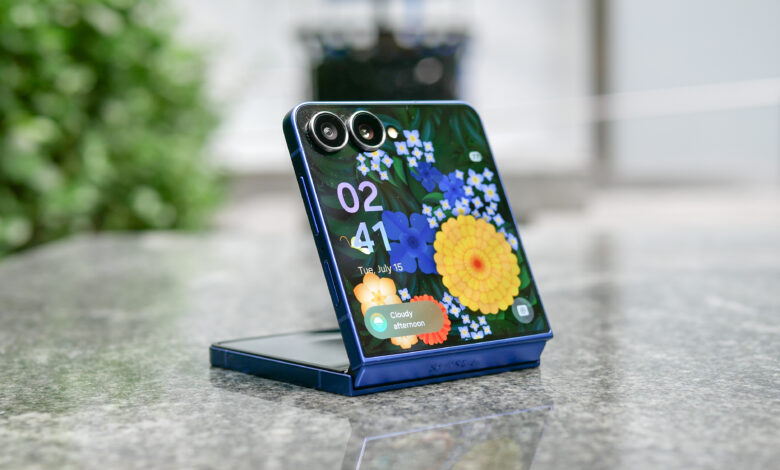
Samsung’s next clamshell foldable may arrive with a message that is more restrained than many fans expected. Early reports on the Galaxy Z Flip 8 point to a device built around a thinner body, smarter software, and AI-driven improvements rather than a major leap in hardware.
That direction stands out in a foldable market where rivals continue to push faster charging and larger spec gains. Instead of trying to win every category on paper, Samsung appears to be refining the everyday experience of using a compact foldable.
Charging stays unchanged
One of the clearest clues comes from an SGS certification document, which reportedly shows the Galaxy Z Flip 8 still supporting 25W charging. That matches Samsung’s existing approach and translates to 9V 2.77A, with no sign of a higher charging standard for this generation.
For a device category now competing against Chinese brands offering 67W to 100W charging, the unchanged figure is notable. It suggests Samsung is not chasing a rapid charging race on the clamshell line, at least not yet.
Design becomes the main upgrade path
The more important change appears to be physical design. Leaks indicate Samsung is prioritizing a thinner and lighter build to improve portability and comfort in daily use.
That focus makes sense for a foldable phone designed to be carried easily and opened frequently. A slimmer body could strengthen the Galaxy Z Flip 8’s appeal for buyers who value premium style without extra bulk.
Samsung is also said to be improving the hinge structure and body materials. Those changes would aim at better durability, which remains one of the most closely watched issues in the foldable segment.
Battery and cameras remain familiar
Battery capacity is also expected to stay the same at 4,300 mAh. For a foldable phone, that is not a dramatic step forward, especially as power demands continue to matter for users who rely on their phones throughout the day.
Instead of raising the battery size, Samsung is reportedly leaning more heavily on software efficiency and system optimization. The same pattern appears to extend to the camera setup, which is said to remain close to the Galaxy Z Flip 7.
Rather than introducing a new sensor package, Samsung is believed to be improving photo quality through AI processing and software. That approach reflects a wider industry shift toward computational photography, where image output is shaped as much by software as by hardware.
Two chipsets, depending on the market
Another reported detail is the use of two different chipsets depending on region. Samsung has used similar strategies before, and it could do so again to balance performance and efficiency across markets.
If confirmed, that split may lead to different user perceptions of the phone in different regions. Even so, the biggest talking points remain the same: 25W charging, a 4,300 mAh battery, and a design-first upgrade strategy.
The result would be a Galaxy Z Flip 8 that feels more like a refinement than a reinvention. For current Galaxy Z Flip 7 owners, the improvements may not feel dramatic, but for new buyers, a thinner foldable with stronger AI support could still be compelling.
Samsung is expected to reveal more official details in the coming months. Until then, the early picture suggests the next foldable battle will be shaped not only by raw specifications, but also by design polish and smarter software.