


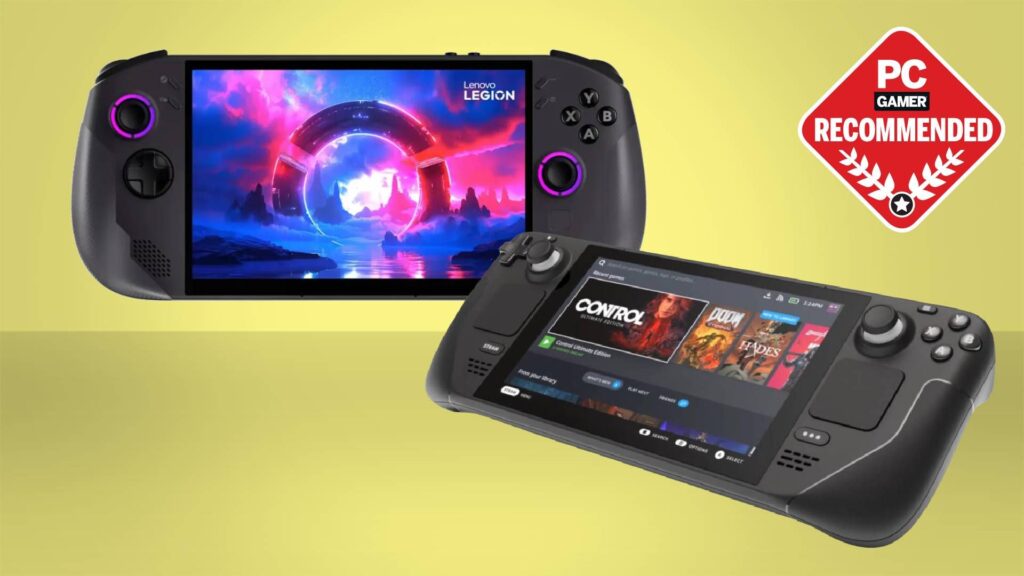
A handheld gaming PC rarely tries to be this many things at once, but CG Deck does exactly that. The x86 device is designed to shift between gaming and productivity through swappable input modules, while also supporting dual-boot Windows and Linux.
The concept stands out because it is not just a portable machine for playing games. It is built to move between roles, giving the user a handheld that can act more like a mini laptop, a portable console, or a compact work device depending on the setup.
Modular inputs change the device’s purpose
CG Deck’s main attraction is its modular input system. Users can replace the input module to suit different tasks, whether that means gaming, typing, precise navigation, or specialized control.
According to the project details shared by developer ZCTMO, the handheld is split into two slots with two module types: a main slot and a secondary slot. That structure allows the device to accept different input hardware based on the intended use.
The main slot currently has three options. These include a 64-key rubber keyboard, an 11-key module with a rotary knob and hot-swap sockets, and a gamepad controller module.
The secondary slot currently supports a trackball mouse module. ZCTMO has also said more modules are planned, suggesting the platform may expand beyond the current set of inputs.
Windows and Linux both have a place here
Beyond the hardware swaps, CG Deck also benefits from its x86 platform. That choice makes it feel closer to a standard PC than many closed handheld systems on the market.
Dual-boot support for Windows and Linux adds another layer of flexibility. Users can move to Windows for software compatibility or switch to Linux for a more open environment and other workflows.
This combination of x86 compatibility, dual-boot support, and modular design is what makes CG Deck unusual. It aims to cover gaming and productivity in the same body instead of forcing buyers to choose between them.
Still a prototype, but the direction is clear
ZCTMO has shown a working engineering prototype, though it still needs refinement and some parts are not yet polished. Even so, the project has already moved beyond a simple idea and into a functioning test build.
The prototype has enough working hardware and software to demonstrate the core concept. That includes the modular approach and the dual-boot setup, both of which already show the basic technical direction of the device.
Interest in the project is also growing because of its open approach. ZCTMO plans to launch a Kickstarter campaign to move the device forward, and the entire project is also intended to be open-source.
That open-source plan could matter to tinkerers, Linux users, and handheld PC fans who want to study or modify the design. It also opens the door for others to build their own versions if the concept proves practical.
A website for CG Deck already offers a waitlist for those who want to follow the project. For now, the focus remains on improving the prototype and building out the module ecosystem that sits at the center of the idea.