


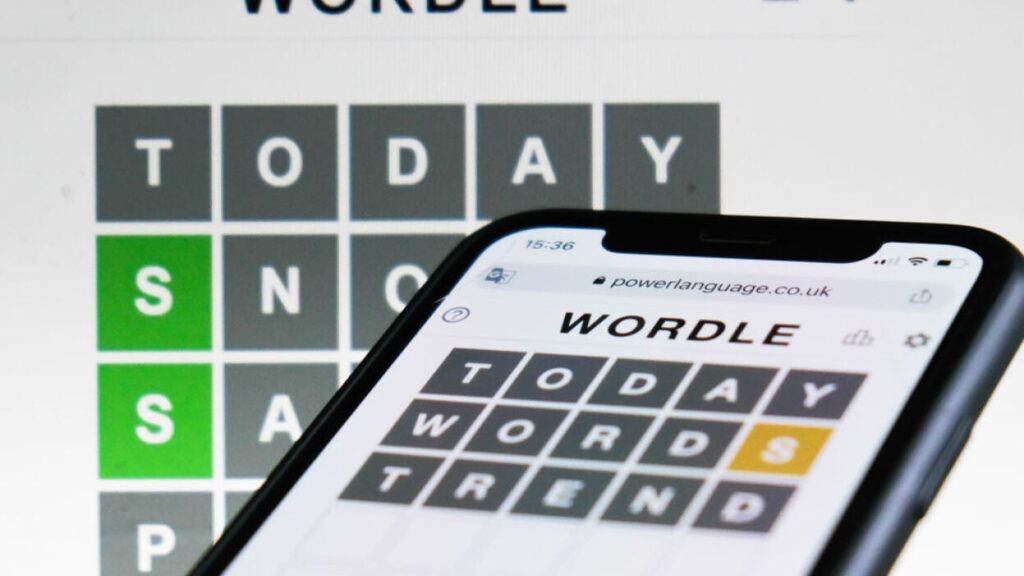
Wordle players faced an unusually deceptive challenge on Monday, June 22, as puzzle #1829 looked simple but demanded careful pattern recognition. The answer, OVATE, is a five-letter word that can slip past even experienced players because of its vowel-heavy structure and clean ending.
The puzzle stood out not because it used repeated letters, but because it did the opposite. With three vowels, no duplicate letters, and an opening O that pairs with an E at the end, the solution narrowed the field in a way that was easy to miss during a fast start.
Why This One Was Harder Than It Looked
Wordle gives six chances to identify a hidden five-letter word, using color feedback after every guess. Green confirms both the letter and its position, yellow shows that the letter exists but is in the wrong place, and gray removes that letter from future attempts.
That simple system is what makes a puzzle like this one tricky. Early guesses that do not account for a dense vowel pattern can leave players chasing the wrong combinations, especially when the answer does not rely on repeated letters to provide extra clues.
The Meaning Behind OVATE
OVATE refers to something shaped like an egg or broadly oval. The word is often used in biology and geometry, where shape descriptions matter and a rounded outline can be important to the definition.
A leaf may be described as ovate when its middle is wider and its tip is rounded. The term can also apply to ancient objects or artifacts when their form resembles a smooth egg-like silhouette.
Practical Clues Players Could Use
The most direct hints for the June 22 puzzle were straightforward: no repeated letters, three vowels, starts with O, and ends with E. Those clues alone were enough to guide a disciplined approach, even before the meaning of the word was fully recognized.
That is why vowel-rich openers can be useful in Wordle. Words such as ADIEU or AUDIO help map out the vowel structure early, making it easier to separate viable answers from dead ends before moving to more common consonants.
Players also gain an edge by resisting the urge to recycle letters without evidence. In a puzzle like #1829, that matters because the final answer does not repeat any letter, so every guess needs to test new ground with care.
Wordle’s Ongoing Appeal
Wordle remains a daily language game from The New York Times, and its shared answer means players around the world face the same challenge each day. That makes the puzzle easy to discuss, compare, and measure against other players’ results.
The game is now mainly played through The New York Times website or the New York Times app, with no separate official standalone app. Its format stays familiar, but the difficulty can still shift sharply from one day to the next depending on the word.
That variability has been visible in recent answers as well. EMOJI on June 19, DRAKE on June 20, ENTRY on June 18, and TOKEN on June 17 showed how the puzzle can move between modern, everyday, and less expected choices.
For anyone who missed the answer on June 22, the final reveal was OVATE after the six guesses ran out. The puzzle served as another reminder that Wordle often rewards pattern recognition and restraint more than rapid-fire guessing.