


China is using the China International Supply Chain Expo, or CISCE, to send a clear message: its clean energy supply chain is no longer aimed only at domestic demand. It has become a major force in the global shift toward lower-carbon power, with cost and scale now working in China’s favor.
The event in Beijing brings together energy companies, equipment makers, and international partners across one industrial ecosystem. That combination is drawing attention because it links manufacturing, innovation, and overseas markets in a way that can make clean energy faster to deploy and cheaper to buy.
A full clean energy ecosystem on display
Inside the clean energy pavilion, exhibitors are showing the breadth of China’s industrial chain, from resource development to manufacturing and cross-border cooperation. The mix of state-owned firms, private players, and foreign partners reflects how far the sector has moved beyond a single-industry story.
One of the most striking displays comes from China National Offshore Oil Corporation, or CNOOC. The company presented a towering cylindrical installation that imagines a future in which offshore oil extraction equipment coexists more harmoniously with marine life.
That presentation reflects a broader shift in how China’s energy sector wants to be seen. Fossil fuel businesses are no longer framed only as high-emission industries, but as part of a wider push toward low-carbon development.
According to CNOOC President Huang Yongzhang, low-carbon development has become a global consensus. He said the company is committed to working with international partners across the value chain to advance that transition.
AI is becoming a practical efficiency tool
Digital technology also has a visible role in the clean energy push. At the expo, artificial intelligence is being positioned not as a side feature, but as a core tool for cutting costs and improving performance.
Shenglong Electric, a private company focused on smart grids and intelligent energy management, launched a new AI-powered low-voltage switchgear. It also showcased an intelligent energy management system built on digital twin technology.
Hu Jia, an engineer at Shenglong, said AI acts as the “smart brain” behind clean energy equipment. The new switchgear allows users to monitor power distribution through one interface while supporting failure prediction, maintenance, and energy savings powered by AI.
Hu said the system can reduce operating costs by as much as 60 percent. The company also said its intelligent energy management platform can significantly reduce building energy consumption.
Shenglong’s products are not limited to China. Its equipment has already been used in projects such as a vegetable oil plant in Brazil, a women’s college in Niger, and a new materials factory in Indonesia.
The company now operates in more than 50 countries and regions, showing how Chinese smart energy solutions are becoming part of the green transition in markets with very different development needs.
Scale at home is powering expansion abroad
China’s advantage in this field rests heavily on the scale of its own domestic market and industry base. Liang Changxin, a senior official at the National Energy Administration of China, said the country has built the world’s largest and fastest-growing renewable energy system.
He said China’s consumption of non-fossil energy has led the world for 11 consecutive years. Renewable energy now accounts for more than 60 percent of the country’s installed power capacity.
Liang added that wind and solar installations have surpassed thermal power. Together, they account for more than half of global new capacity additions, underscoring China’s direct influence on the pace of the clean energy market worldwide.
From that domestic base, China has expanded its industrial reach through international cooperation. The country is currently involved in green energy projects with more than 100 countries and regions.
It also supplies more than 80 percent of the world’s photovoltaic components and 70 percent of wind power equipment. Those figures highlight China’s central role in the global clean energy supply chain.
Wind, solar, and storage are reaching wider markets
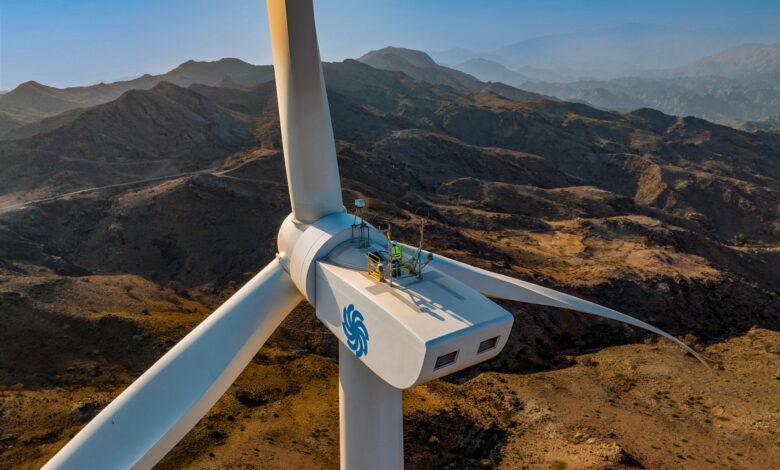
Ming Yang Smart Energy Group is also showing how this expansion is playing out in practice. The company is using data gathered from offshore wind farms to develop what it describes as the world’s leading floating wind turbine technology.
Ming Yang currently operates more than 20,000 wind turbines worldwide. That operational scale gives the company a large data set and extensive field experience to support the next wave of innovation.
Company representatives said its turbines have been well received in South America, Japan, and Vietnam. The business is also deepening its presence in Europe and the Middle East, including through a recent partnership in Saudi Arabia.
The broader picture at CISCE is not simply a trade fair for products. It is a platform for Chinese companies to show that they have moved from equipment makers to global energy solution partners.
That view is echoed by international academia. Ned Ekins-Daukes of the University of New South Wales in Australia said solar photovoltaic technology, battery storage, and wind power were once too expensive to be seriously considered.
He said China has since built an extremely efficient manufacturing and supply chain system that allows these technologies to deliver electricity at the lowest cost. That efficiency is making clean energy hardware more affordable and giving countries at different stages of development more room to use the transition as an engine for growth.