


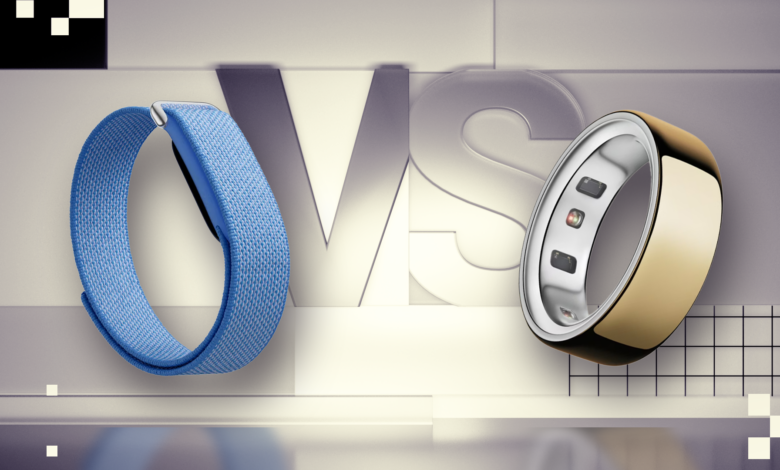
The debate over screenless wearables is not settling around a smart ring just yet. A reader poll shows Fitbit Air as the clear favorite, but interest in a Google-branded smart ring remains strong enough to matter.
That split is notable because the smart ring category has gained momentum quickly, with Samsung, Oura, and other brands already pushing the format forward. Google, however, has taken a different path by focusing on Fitbit Air instead.
Fitbit Air wins the main vote
The clearest signal from the poll is the preference for Fitbit Air as the more convincing screenless wearable. A total of 54% of respondents said the slim band is the better choice over a Google smart ring.
That result suggests Google’s decision to prioritize a simple, low-profile wrist-worn tracker is resonating with a broad audience. Fitbit Air is being positioned as a device that keeps its focus on health and fitness tracking without adding visual clutter.
| Option | Poll Share | Reader Takeaway |
|---|---|---|
| Fitbit Air | 54% | Preferred as the better screenless wearable |
| Google Smart Ring | 35.4% | Still has a sizable audience |
| Wearable With a Screen | 10.4% | Still the preferred option for some users |
A Google smart ring still has a real audience
Fitbit Air may be ahead, but the appetite for a Google smart ring has not disappeared. Just over a third of respondents, or 35.4%, said they would like to see Google release a smart ring in the future.
That leaves room for both approaches in the market. The poll does not close the door on rings; instead, it shows that many users would still welcome a Google option for those who prefer a device on the finger rather than on the wrist.
The remaining 10.4% said they would rather use a wearable with a screen than either a smart ring or a band like Fitbit Air. That group highlights an important point: for some consumers, a display is still a key part of the wearable experience.
Comfort, usefulness, and price all point to the wrist
Among people open to a screenless design, the wrist-worn approach appears to have the edge. Fitbit Air is seen as more practical for all-day use and easier to accept as a device that can stay on throughout daily routines.
Smart rings, by contrast, can feel less versatile and more visually noticeable. They may also be less convenient during household tasks or other activities that rely heavily on the hands, even if they can be removed when needed.
Price also gives Fitbit Air an advantage. It is priced at $99, which sits well below most smart rings and makes it a safer entry point for a wider audience.
That matters because a Google smart ring is expected to land in triple-digit territory and would enter a field already occupied by established names. Oura is one of the better-known players, while Samsung is also strengthening the category with its own ring-shaped wearable.
Fitbit Air also looks stronger in a separate comparison
In another poll that pitted Oura Ring 5 against Fitbit Air, the wrist band again came out clearly ahead. Out of 531 votes, Fitbit Air received 75%, while Oura Ring 5 took 25%.
That second result reinforces the same trend seen in the broader poll. The interest in smart rings is real, but many readers still appear to value the balance of comfort, function, and price that a screenless band can offer.
For Google, that leaves an interesting opening. Fitbit Air appears to be the safer bet for mass appeal, yet the market is still signaling that a smart ring from Google could find buyers if the company chooses to enter the category.