


Google is set to loosen one of the Play Store’s long-standing rules, and the change will reshape how app purchases are handled in several major markets. Starting 30 June 2026, developers in the United States, the United Kingdom, and the European Economic Area will be able to offer alternative billing options or send users to their own websites to complete payments.
The move marks a significant shift for Android’s app marketplace. Until now, Google Play billing has been the standard path in most regions, but the new policy will let developers bring in third-party payment systems while still operating inside the Play Store ecosystem.
Alternative billing arrives in stages
The rollout will not happen everywhere at once. After the first phase in the US, the UK, and the EEA, the same program is scheduled to expand to Australia on 30 September 2026.
Japan and South Korea will follow on 31 December 2026, while the rest of the world is slated for 30 September 2027. The staggered timetable shows that Google is taking a phased approach rather than changing its payment rules globally in one step.
| Market | Start Date | What Changes |
|---|---|---|
| United States, United Kingdom, European Economic Area | 30 June 2026 | Alternative billing and direct-to-web payment options |
| Australia | 30 September 2026 | Program expansion |
| Japan and South Korea | 31 December 2026 | Program expansion |
| Rest of the world | 30 September 2027 | Program expansion |
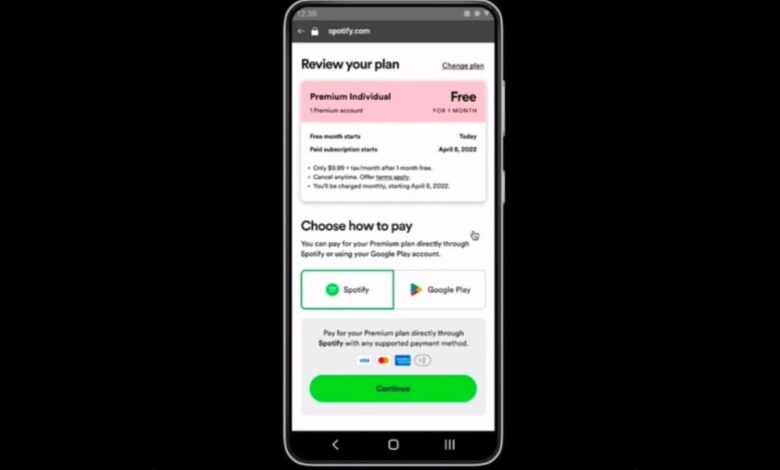
Google also plans to let developers design their own payment choice screens, as long as they follow the company’s UX guidelines. That means checkout flows may begin to look different from app to app, even when the same store platform is used.
Google splits developer charges into two parts
The policy change is not only about payment freedom. Google is also revising how it charges developers, separating its fees into a service fee and a billing fee.
In the first $1 million of annual revenue, the service fee will be 10%. That rate also applies to auto-renewing subscriptions and remains due whether or not the developer uses Google Play billing.
Once annual revenue passes $1 million, the service fee rises. Google says it will be 20% for new installs and 25% for existing installs, changing the cost structure for larger apps and services.
| Fee Type | Rate | When It Applies |
|---|---|---|
| Service Fee | 10% | First $1 million of annual revenue, including auto-renewing subscriptions |
| Service Fee | 20% | After annual revenue exceeds $1 million, for new installs |
| Service Fee | 25% | After annual revenue exceeds $1 million, for existing installs |
| Billing Fee | 5% | Only when Google Play billing is used |
If developers stay with Google Play billing, a separate 5% billing fee will be added. That extra charge will not apply to developers who choose third-party payment methods, although those methods will still carry their own processing costs.
New programs promise lower rates for some apps
Google is also introducing two new programs, Games Level Up and Apps Experience, which are designed to offer a lower service fee for eligible transactions. These programs are scheduled to begin in September 2026.
For qualifying apps, the service fee will be 15% for other transactions after annual revenue goes beyond $1 million. Google says developers must meet specific criteria to join, so the lower rate will not be available to every app by default.
The changes are widely tied to Google’s settlement with Epic Games, which helped open the door to alternative billing in the Play Store. Even so, Google is keeping a core service charge in place, which means the platform will still collect revenue as payment options become more flexible.
For developers, the new model creates more room to choose between Google’s own billing system and an outside payment path. For users, the most visible change may be the checkout experience itself, which could vary more from one app to another once developers are allowed to build their own payment selection screens.
The broader impact will depend on how quickly developers adopt the new options in each market. What is already clear is that Google Play is moving toward a more open payment structure while keeping tighter control over the design rules and the fee framework around it.