


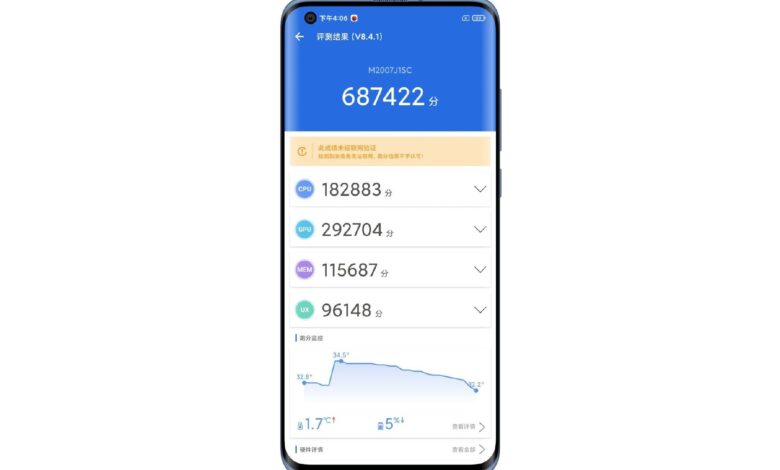
REDMI phones in July 2026 show one of the widest performance gaps in the lineup, with AnTuTu v11 results stretching from the 200,000 range to around 1 million. The spread reflects differences in chipset, RAM, storage type, and the specific model under test.
For buyers, that gap matters because it quickly shows where each series stands in the wider REDMI family. At the same time, benchmark numbers are only one part of the picture, since display quality, network support, and storage performance also shape the daily experience.
Entry-level REDMI series stays in the lower tier
The numbered REDMI series sits at the most affordable end of the brand’s lineup in Indonesia. These models typically use HD+ displays, lower-end chipsets such as MediaTek Helio G88, and a more limited feature set.
| Model | AnTuTu v11 Score | Notes |
|---|---|---|
| REDMI 12 | 370,000s | Entry-level performance |
| REDMI 13 | 370,000s | Same range as REDMI 12 |
| REDMI 10 | 385,000s | Slightly higher than REDMI 12 and REDMI 13 |
| REDMI 10 5G | 520,000s | Suitable for light gaming |
| REDMI 15 | 500,000s | Still in the lower performance tier |
In practice, that level is enough for light games such as Mobile Legends and Subway Surfers. It is not meant for heavier workloads.
REDMI Note 4G and 5G models move into the middle ground
The REDMI Note 4G series adds AMOLED displays, ultrawide cameras, and a more refined design. The lineup starts at Rp2 jutaan and is described as capable of light to mid-range gaming, Netflix viewing, and simple content creation.
| Model | AnTuTu v11 Score | Network |
|---|---|---|
| REDMI Note 11 | 420,000s | 4G |
| REDMI Note 13 | 460,000s | 4G |
| REDMI Note 12 | 470,000s | 4G |
| REDMI Note 10 | 510,000s | 4G |
| REDMI Note 14 | 570,000s | 4G |
| REDMI Note 15 | 580,000s | 4G |
The 5G versions follow a similar pattern in design, display, battery, and camera specifications, but with network support as the clearest distinction. They are priced higher than the 4G versions, and their benchmark scores are only modestly better in some generations.
| Model | AnTuTu v11 Score | Network |
|---|---|---|
| REDMI Note 10 5G | 520,000s | 5G |
| REDMI Note 12 5G | 580,000s | 5G |
| REDMI Note 13 5G | 580,000s | 5G |
| REDMI Note 14 5G | 676,000s | 5G |
| REDMI Note 15 5G | 840,000s | 5G |
REDMI Note Pro and Pro Plus push much closer to flagship territory
The REDMI Note Pro series is aimed at users who want stronger performance at a still-accessible price. It starts at Rp4 jutaan and includes features such as Snapdragon 6 Gen 3, 4K 30 FPS video recording, batteries of around 6000 mAh, and IP68/IP69K dust and water resistance.
| Model | AnTuTu v11 Score | Notable Point |
|---|---|---|
| REDMI Note 11 Pro | 463,000s | Pro class, 4G |
| REDMI Note 12 Pro | 531,000s | Pro class, 4G |
| REDMI Note 13 Pro | 556,000s | Pro class, 4G |
| REDMI Note 11 Pro 5G | 593,000s | Pro class, 5G |
| REDMI Note 12 Pro 5G | 700,000s | Pro class, 5G |
| REDMI Note 13 Pro 5G | 718,000s | Pro class, 5G |
| REDMI Note 14 Pro 5G | 855,000s | Strong jump in performance |
| REDMI Note 15 Pro 5G | 890,000s | Highest in the Pro lineup |
That tier also brings AMOLED curved displays, a more premium design, and Gorilla Glass Victus 2 protection. The result is a line that looks and feels more serious than the lower REDMI models.
Pro Plus models sit at the very top of the REDMI family
REDMI Note Pro Plus is positioned as the highest series in the REDMI lineup. It tries to bring flagship-style features into the mid-range segment, including 120W charging, a curved screen, IP68 protection, long software support, a synthetic leather back, and a 200MP main camera.
The series is also equipped with 12GB of RAM and UFS 3.1 storage. In AnTuTu v11, REDMI Note 11 Pro Plus is listed at 740,000s, REDMI Note 12 Pro Plus at 710,000s, and REDMI Note 13 Pro Plus at 990,000s.
The newest pair goes even further. REDMI Note 14 Pro Plus and REDMI Note 15 Pro Plus are both recorded at 1 million, placing them at the top end of the tested REDMI range.
For power users and gamers, the figures offer a useful starting point before choosing a REDMI phone. High benchmark scores matter for raw performance, but the final decision still depends on display quality, connectivity, and storage behavior.