


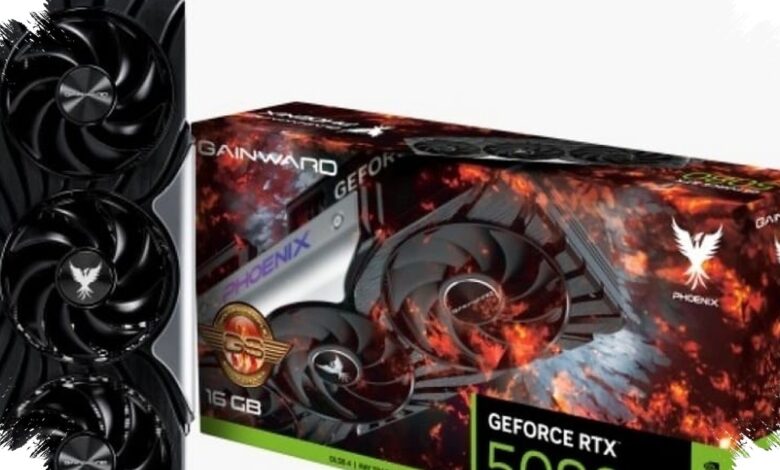
Gainward has unveiled six NVIDIA GeForce RTX 50 Series GPU families, signaling a broader push toward gaming, creative work, and generative AI workloads. The lineup is built around a simple idea: raw performance matters, but efficient cooling and long-term reliability now matter just as much.
The new range is split into clearly distinct roles, from flagship models for heavy workloads to compact cards for small systems. That approach reflects how the graphics card market has shifted, with users increasingly expecting flexibility rather than a one-size-fits-all product.
| Series | Main Focus | Key Note |
|---|---|---|
| Phantom | Maximum performance | Built for demanding games, AI, and professional creators |
| Phantom GS | Extra performance | Continues the Golden Sample legacy with factory overclocking |
| Phoenix | Balanced | Focuses on strong performance, optimal cooling, and broad compatibility |
| Python | Compact size | Designed for Small Form Factor systems without sacrificing thermal performance |
| Ghost | Mainstream | Uses a dual-fan design and supports Ray Tracing, DLSS, and AI acceleration |
| Pegasus | Mini-ITX | Extremely compact for mini desktops and portable gaming devices |
Flagship models aimed at the heaviest workloads
Phantom is positioned as the premium option for users who need full power for intense gaming, AI applications, and professional creative tasks. Within that line, Phantom GS serves as the factory-overclocked successor to the Golden Sample name.
Gainward says this direction is consistent with the company’s long-running focus on graphics cards for PC enthusiasts since its founding in 1984. In a statement cited by www.suara.com, the company said that focus has remained unchanged for more than four decades.
Different form factors for different kinds of PC builds
Beyond the flagship tier, the rest of the lineup is tuned for more specific needs. Phoenix is presented as the choice for users who want a mix of performance, cooling efficiency, and wide compatibility in gaming rigs.
Python Series is aimed at Small Form Factor builds. Its compact design is intended to fit smaller cases while keeping thermal performance under control.
Ghost Series targets mainstream gamers who want a capable graphics card with an efficient dual-fan layout. It also keeps support for NVIDIA features such as Ray Tracing, DLSS, and AI acceleration.
Pegasus Series is the most compact option in the lineup and is meant for Mini-ITX systems. Gainward says it still delivers full graphics performance in a very limited space, including mini desktops and portable gaming devices.
Cooling is the key message behind the new RTX 50 Series
Gainward is also framing the lineup around cooling technology, especially as generative AI workloads continue to raise the bar for GPU demands. The cards use a set of thermal features that includes a nickel-plated copper baseplate, composite heat pipes, an optimized heatsink, reinforced fan blades, and fan-stop technology.
That cooling package is paired with NVIDIA GeForce RTX features such as DLSS, full ray tracing, and AI-based capabilities. Gainward says the cards are designed not only for the latest games, but also for users preparing for more demanding creative and AI-driven applications.
As a result, the new GPUs are being positioned for gaming, rendering, video editing, 3D design, machine learning, and generative AI tools. The message is clear: for this generation, performance is only part of the story, while thermal design and build flexibility take a much larger role.