


China has added an unusual new method to the reusable rocket race. For the first time, an orbital-class booster was recovered by being caught with a net at sea.
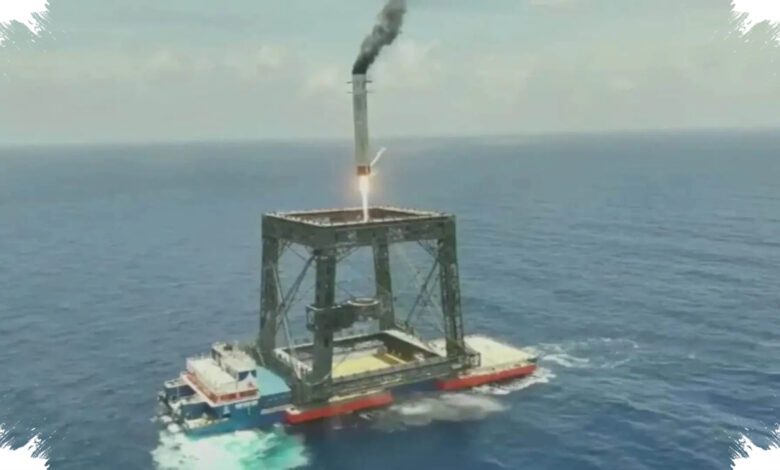
The milestone came during the maiden flight of Long March 10B, launched from the Wenchang Commercial Space Launch Site on Hainan Island, China, on Friday (11/7/2026). About 10 minutes after liftoff, the first-stage booster returned from space and was guided toward an offshore ship fitted with a four-legged structure and a grid-like net.
Instead of touching down on a runway or a drone ship as SpaceX and Blue Origin do, the booster’s landing engine was shut off just before it reached the net. The booster then hung in the air after the capture system succeeded.
While the first stage was recovered, the second stage continued to orbit and delivered the CX-26 payload. China described the mission as a “total success”.
A different path from SpaceX and Blue Origin
China’s approach stands apart from the recovery methods used by the two most established reusable rocket players. SpaceX and Blue Origin both bring boosters back through vertical landings, either on land or on floating platforms.
SpaceX also uses a different system for Starship, catching the booster with two mechanical arms, or chopsticks, attached to the launch tower. China has instead placed a net on an offshore ship to catch a returning booster at sea.
| Recovery Method | Company | Location | Main Feature |
|---|---|---|---|
| Sea-based net capture | China | At sea | Booster is caught by a net system on an offshore ship |
| Vertical landing | SpaceX and Blue Origin | Land or floating platform | Booster lands propulsively |
| Chopstick catch on launch tower | SpaceX | Launch tower | Starship booster is caught with mechanical arms |
CASC says the method can reduce rocket weight because the booster does not need landing legs. Recovery in a location along the rocket’s flight path can also reduce the fuel needed for the return to Earth.
The company said the Long March 10B test validated several key technologies, including high-altitude engine relight, precision navigation and control, and booster capture using a net on a sea platform.
What Long March 10B can carry
Long March 10B can carry about 16 tons to Low Earth Orbit (LEO). That is slightly below the capacity of SpaceX’s Falcon 9.
The first stage uses seven YF-100K engines fueled by kerosene and liquid oxygen. The second stage uses one methane-fueled YF-219 engine.
CASC said development of Long March 10B will continue, including a reuse test for the first booster before the end of this year. The rocket also shares a design direction with Long March 10A, which China is preparing for crewed missions to the Tiangong space station using the new-generation Mengzhou capsule in the future.