


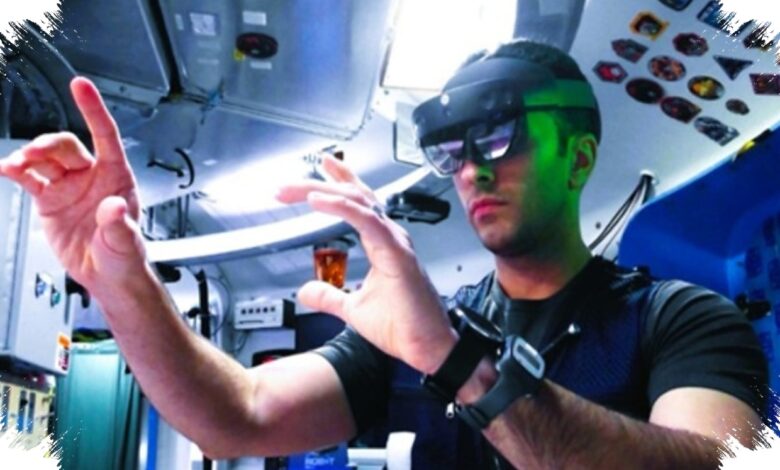
NASA is opening a rare path for civilians who want to take part in preparations for future Moon and Mars missions. Through its Moon and Mars Exploration Analog, or M2A, the agency is recruiting four volunteers for a long-duration simulation designed to test how humans cope with deep-space conditions.
The program stands out because it combines two research habitats that had previously operated separately, Crew Health and Performance Exploration Analog (CHAPEA) and Human Exploration Research Analog (HERA). NASA says that approach should give it a fuller picture of the challenges involved in living and working during an actual mission beyond Earth.
A 12-Month Life Inside a Closed Habitat
The M2A mission is scheduled to begin as early as August 2027 at NASA Johnson Space Center in Houston. For 12 months, the four selected participants will live inside a sealed habitat built to resemble the harsh conditions found on planetary surfaces.
Inside that environment, the volunteers will follow routines similar to those of astronauts. They will also use augmented reality technology for surface exploration while dealing with limited resources, communication delays with Earth, and the psychological strain of long-term isolation.
NASA will use the mission data to monitor physical health, mental health, and team dynamics under demanding conditions.
| Category | Requirement |
|---|---|
| Citizenship | U.S. citizen or Green Card holder |
| Age | 30 to 55 years old |
| Height | Up to 74 inches, or about 188 cm |
| Education | At least a bachelor’s degree in Engineering, Biology, Physics, or Mathematics |
| Special Health Requirement | No history of sleepwalking or dependence on sleeping pills |
| Time Commitment | About 14 months, including selection and preparation |
Strict Screening Similar to Professional Astronaut Selection
NASA is setting standards that are close to those used for professional astronaut selection. Applicants need a STEM background and strong physical condition to handle the pressure of the prolonged simulation.
Additional qualifications can help, including military experience or advanced degrees such as a master’s or doctorate in a related field. The selection process itself is said to last several days, meaning candidates will be assessed not only on academic capability but also on endurance and readiness for a demanding environment.
Why the Mission Matters for Artemis
According to NASA, success in M2A will become an important foundation for the Artemis Program. That program is intended to strengthen human presence on the Moon before moving toward crewed missions to Mars in the future.
The agency wants the simulation to improve technology, operational procedures, and strategies for protecting crew mental health. Its findings are expected to help reduce risks in long-duration space travel while addressing the biological and technical challenges that have long slowed deeper exploration.
MediaIndonesia.com reported the program as one of NASA’s strategic steps in combining previously separate analog research efforts. For qualified volunteers, M2A is more than a simulation task; it is a long test that could help determine how ready humans are to live farther from Earth.