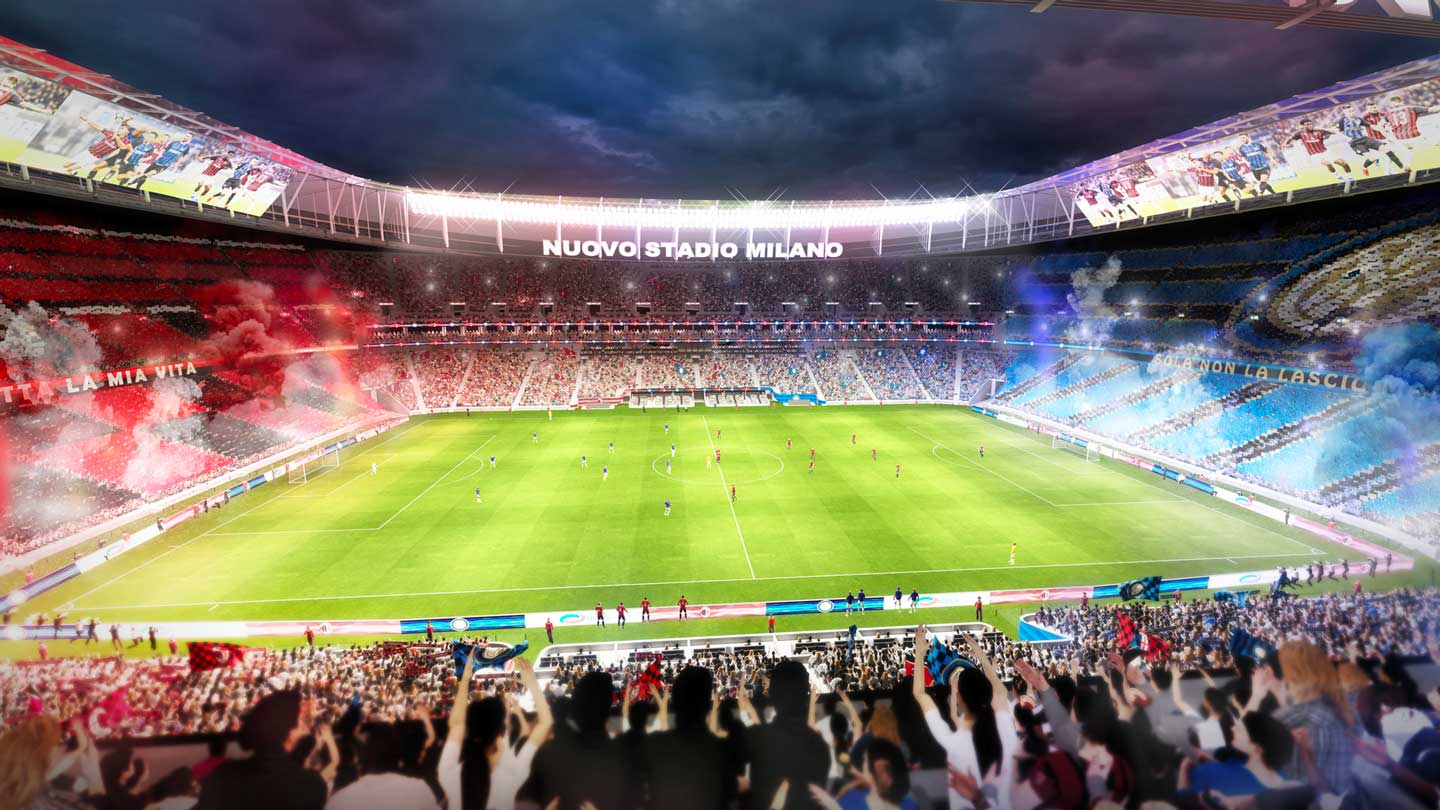
A new chapter is unfolding for Milan’s proud football heritage. AC Milan and Inter are pursuing an ambitious new stadium design with the goal of recreating the legendary San Siro atmosphere, while also setting new standards in sports architecture. The planned design goes beyond standard FIFA recommendations, promising a structure that preserves the spirit of the iconic venue and delivers a next-level fan experience.
The main highlight is the plan to mirror the formidable slope of Dortmund’s famed “Yellow Wall.” This step shows the clubs’ commitment not just to modern facilities, but to an environment that fans recognize as intimidating, electric, and unforgettable. Supporters and stakeholders alike are eager to see how these ambitious features will position Milan’s new stadium at the top tier of European football infrastructure.
A Steep Slope Inspired by Dortmund
Project documentation reveals that the most distinctive feature will be a 37-degree incline for one of the main stands. This number is significant: it matches the legendary Südtribüne (South Stand) at Borussia Dortmund’s Signal Iduna Park. Known as the "Yellow Wall," this section is famous throughout Europe for creating a thunderous and uplifting home advantage, thanks to its steep verticality.
FIFA’s recommended maximum slope for stadium stands is 34 degrees, a benchmark for balancing visibility and safety. Milan’s new design deliberately exceeds this guideline, seeking to replicate the exact intensity experienced at both San Siro’s upper tier and Dortmund’s home end. As highlighted in a project brief, “The grandstand’s incline is designed to echo San Siro’s atmosphere.” This decision ensures that the new ground retains an intimidating edge, cementing it as a fortress for Milan’s passionate supporter base.
Optimized Bowl Design for Visibility and Acoustics
The architects are not stopping at the slope alone. The entire bowl structure of the stadium is being tailored to maximize sightlines and acoustics. By minimizing barriers and adopting a compact configuration, the project seeks to immerse every spectator in the game, providing unobstructed views from virtually every seat.
Key features of the new bowl include:
- Enhanced visibility throughout the seating area.
- Minimal partially obstructed seats, targeting one of the most common fan complaints.
- Spectators placed as close to the pitch as possible, intensifying engagement.
- Architecture that amplifies crowd noise, producing a renowned, intimidating atmosphere.
- Complete compliance with the most stringent standards for security and crowd control.
- Accessibility at the forefront, ensuring inclusivity across all stand sectors.
A project statement underlines, “The stadium bowl’s architecture reinforces the identity of the home end while minimizing barriers in spectator areas.” The design is not just visually impactful, but built for function and safety, in line with evolving best practices for large-scale sports venues.
Emotional Legacy and Modern Necessity
While the stadium aims for cutting-edge functionality, there’s deep respect for tradition. The design brief repeatedly refers to the emotional legacy of San Siro — the roar of its crowd, the unique sightlines, and the historic third tier. This reflects both Milan’s commitment to innovation and their determination to carry forward the essence of what has made their home so iconic.
By adopting the 37-degree slope, architects hope to evoke nostalgia among older fans and excitement among new generations. The result promises an arena that feels both modern and inherently ‘Milanese’, bridging the past and future in a single structure. As noted by La Gazzetta dello Sport, this approach highlights the clubs’ desire to not just build a stadium, but a true home for fans where their voices will “echo at full strength.”
Construction Timeline and Multi-Event Use
The stadium’s completion is projected within a six-year construction window. The goal is to officially open doors in time for a new decade, introducing a modern monument on the European football stage. Crucially, the timeline depends on resolving administrative and purchasing details — the next key step is securing the deed for the San Siro site, an essential component for moving construction forward.
Beyond hosting Serie A and Champions League matches, the stadium is planned to be a major concert and event venue. This multi-use strategy is intended to boost revenue streams, ensuring the stadium plays a vital economic and cultural role for the city. Major concerts, international matches, and community events will all find a home under its roof, maximizing both profitability and public impact.
Key Features at a Glance
Here are some standout design and functional elements of Milan’s new stadium:
- 37-degree main stand slope (compared to FIFA’s 34-degree recommendation).
- Compact bowl design maximizing proximity to the pitch.
- Improved acoustics for stadium-wide sound amplification.
- Minimal sightline interruptions throughout the seating area.
- Facilities ready for both football and non-sporting events.
- Modern security features integrated into all public spaces.
- Full-spectrum accessibility and comfort for all fans.
Maintaining San Siro’s Intimidation and Identity
The proposal goes well beyond creating another modern sports arena. Instead, it seeks to blend Milan’s rich football identity with best-in-class fan comfort and event flexibility. By referencing the famous “Yellow Wall” and prioritizing immersive design, club officials highlight their mission to ensure every matchday is memorable, atmospheric, and uniquely Milanese.
Care is being taken to ensure the transition from old to new is about more than just bricks and mortar. The emotional texture ingrained in San Siro’s legacy will find a new home, ready for the next generation of supporters. For fans and the city at large, anticipation is turning into excitement as groundbreaking approaches.
As plans progress, all eyes remain on Milan’s clubs and the crucial steps needed to realize these ambitions. The result promises a stadium that embodies legacy and pushes European venue standards forward, aiming to deliver a future home worthy of the city’s footballing pride and its supporters’ unwavering passion.
-

-

-

-