


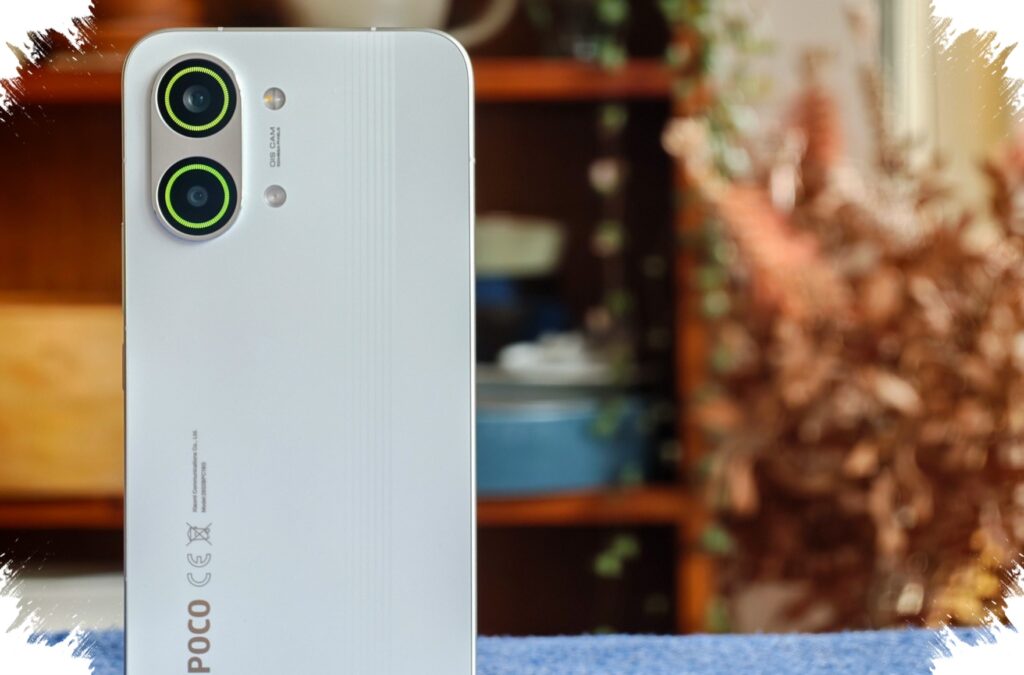
Poco X8 Pro is drawing attention in the budget Android segment not because it tries to look premium, but because its raw performance measurements put it in a different lane from close rivals. Benchmark data cited in the source shows that the phone can hold its own under heavy workloads, with a MediaTek Dimensity 8500 Ultra at the center of that advantage.
That hardware choice appears to shape the device’s identity far more than its price tag alone. In a market where many affordable phones compete on branding and basic smoothness, Poco X8 Pro stands out for consistently stronger CPU, AI, and graphics results.
A stronger showing in CPU tests
Geekbench results place Poco X8 Pro ahead of several phones that are often compared in the same segment. The models specifically mentioned are the Motorola Edge 70 Fusion and Samsung Galaxy A36, both of which reportedly fall behind by around 50 percent in multi-core performance.
That gap matters because multi-core testing is closely tied to how a phone manages several tasks at once. For users, the practical effect can show up when switching between apps, opening demanding software, or running games and other heavy workloads alongside everyday tasks.
AI performance widens the gap
The lead is not limited to general processing power. The source also notes that Poco X8 Pro posts an even larger advantage in AI testing, with the difference against its comparators reaching close to 100 percent.
That result suggests the phone is not only built for standard day-to-day use, but also for the growing number of apps and features that depend on on-device intelligence. In the budget mid-range category, that kind of headroom can matter more as software increasingly leans on AI-based processing.
Graphics performance pushes it further ahead
On the graphical side, Poco X8 Pro uses a Mali-G720 MP8 GPU, which is described as benefiting from one additional core compared with the previous generation. That detail helps explain why the phone’s gaming and visual performance appear notably stronger than expected for its class.
In GFXBench 4K testing, Poco X8 Pro reportedly reached nearly 30 fps. By contrast, the Motorola Edge 70 Fusion and Samsung Galaxy A36 were both unable to break 10 fps, which makes the difference in graphics capability especially clear.
For buyers who care about frame rate and visual stability, that result signals more than just benchmark bragging rights. It points to a phone that is better positioned for smoother gaming and more consistent multimedia performance than many of its low-cost rivals.
Audio adds another layer to the package
Performance is not the only area where Poco X8 Pro gains an edge. The source also highlights its stereo speaker quality, which is described as very good for the segment and stronger than most devices in the same class.
Only 5 percent of phones tested in the category performed better, according to the cited article. Compared with the Motorola Edge 70 Fusion, the Poco X8 Pro is said to deliver a more balanced sound profile, with linear mid and high frequencies and bass that is surprisingly solid for a mid-range handset.
That matters because a phone’s media experience does not depend solely on display quality or chipset speed. When watching videos, playing games, or listening without earphones, speaker performance becomes immediately noticeable in everyday use.
The device also supports Auracast, which adds to its appeal for users seeking a more complete entertainment-oriented setup without moving into a higher price bracket. With its combination of standout CPU results, stronger AI handling, capable graphics, and well-regarded audio, Poco X8 Pro presents a notably aggressive challenge to other affordable Android phones in the same space.
Source: www.notebookcheck.net