OnePlus Watch 4 has appeared on the company’s official site without a major launch event, but the quiet listing has still drawn attention for a clear reason: the watch arrives with much newer software than its predecessor. It runs Oxygen OS Watch 8 based on Wear OS 6 and includes Gemini from the start, making software the main story rather than a dramatic redesign.
That approach is notable because OnePlus Watch 2 and Watch 3 were only promised Wear OS updates later on. Android Authority described the arrival of the newer platform as a welcome surprise, especially in a smartwatch market that still benefits from more Wear OS options.
Software takes the lead
OnePlus appears to be using Watch 4 to highlight what the device can do on day one, not just how it looks. The direct inclusion of Gemini suggests a stronger focus on everyday use, with AI support already baked into the watch experience.
That makes Watch 4 feel more like a software-first refresh than a conventional hardware upgrade. The positioning also sets it apart from earlier OnePlus smartwatch releases, which did not launch with the same OS level out of the box.
A familiar body with only modest changes
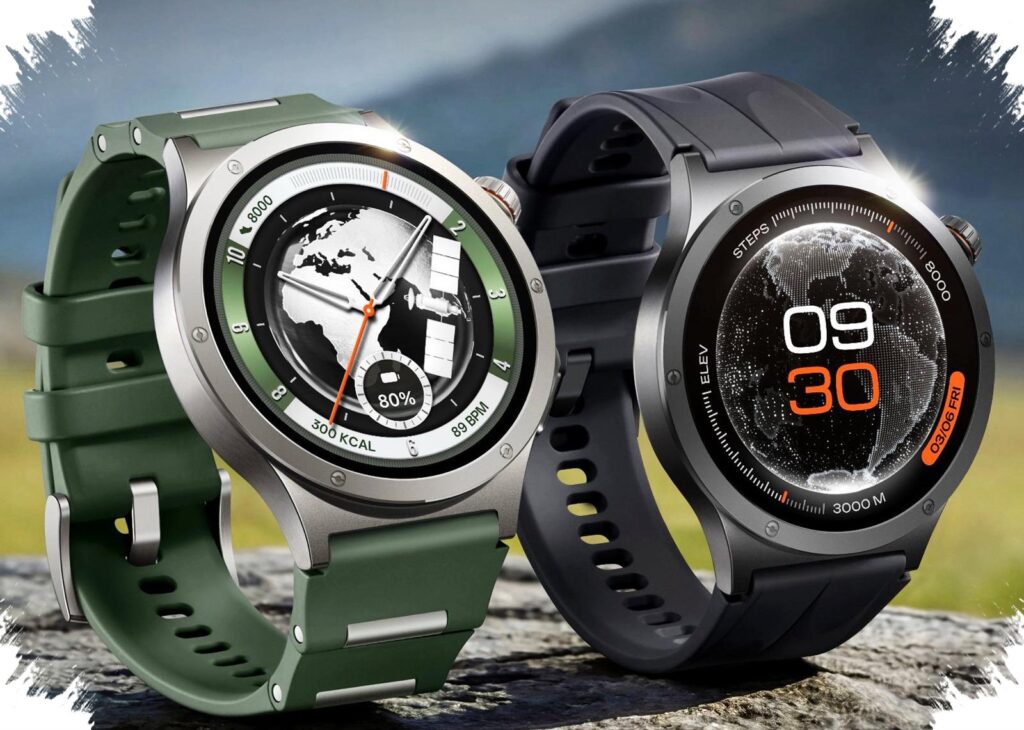
The design does not move far from the OnePlus Watch 3. The shape remains familiar, while the most obvious change is a slightly lighter build rather than a major visual overhaul.
The case uses titanium alloy and measures 47.4 mm x 47.4 mm x 11 mm. Weight comes in at around 43 grams without the strap, which keeps it in a relatively light category for a large smartwatch.
OnePlus also offers two color options: Evergreen Titanium and Midnight Titanium. Both choices keep the watch looking premium while preserving the brand’s restrained design language.
A bright display built for outdoor use
Watch 4 is equipped with a 47 mm LTPO OLED panel with a resolution of 466 x 466 pixels. The display reaches 310 ppi and is protected by Sapphire Crystal for added durability in daily use.
Brightness is another key point here. The screen supports 600 nits in normal use, then climbs to a peak of 3,000 nits in sports mode under strong sunlight.
That level of visibility matters on a smartwatch, especially when checking workout data, notifications, or navigation outdoors. OnePlus is clearly treating the display as one of the device’s practical strengths.
No new chipset, but a large battery remains
Under the hood, OnePlus keeps the same core platform used in the previous generation. Watch 4 still relies on the Qualcomm Snapdragon W5 and BES 2800 co-processor, along with 2GB of RAM and 32GB of internal storage.
There is no move to Snapdragon Wear Elite, so the main emphasis is not on raw performance gains. Instead, the hardware foundation appears to be carried over to support the new software experience and long battery life.
OnePlus lists a 646mAh battery for the watch. The company claims up to three days of use under heavy conditions and as much as 16 days in power-saving mode.
Connectivity is broad, but eSIM is not listed
The connectivity package is fairly complete. Watch 4 supports Bluetooth 5.2, dual-band GNSS with L1+L5, 2.4GHz/5GHz Wi-Fi, and NFC.
One feature that does not appear on the spec list is eSIM support. That omission leaves the focus on connected use through the phone and other standard wireless functions rather than standalone cellular access.
Built for tougher conditions
OnePlus has also given the watch a wide set of durability ratings. Watch 4 carries 5ATM, IP68, IP69, and MIL-STD-810H certifications.
The inclusion of IP69 stands out most clearly, since it adds another layer of protection for more demanding conditions. Together, these ratings suggest a smartwatch designed to handle daily wear with a stronger durability profile than a simple style refresh might imply.
Pricing and availability have not been announced yet, even though the product page is already live. That leaves the software jump, the familiar titanium build, and the tougher protection ratings as the main confirmed details for now.