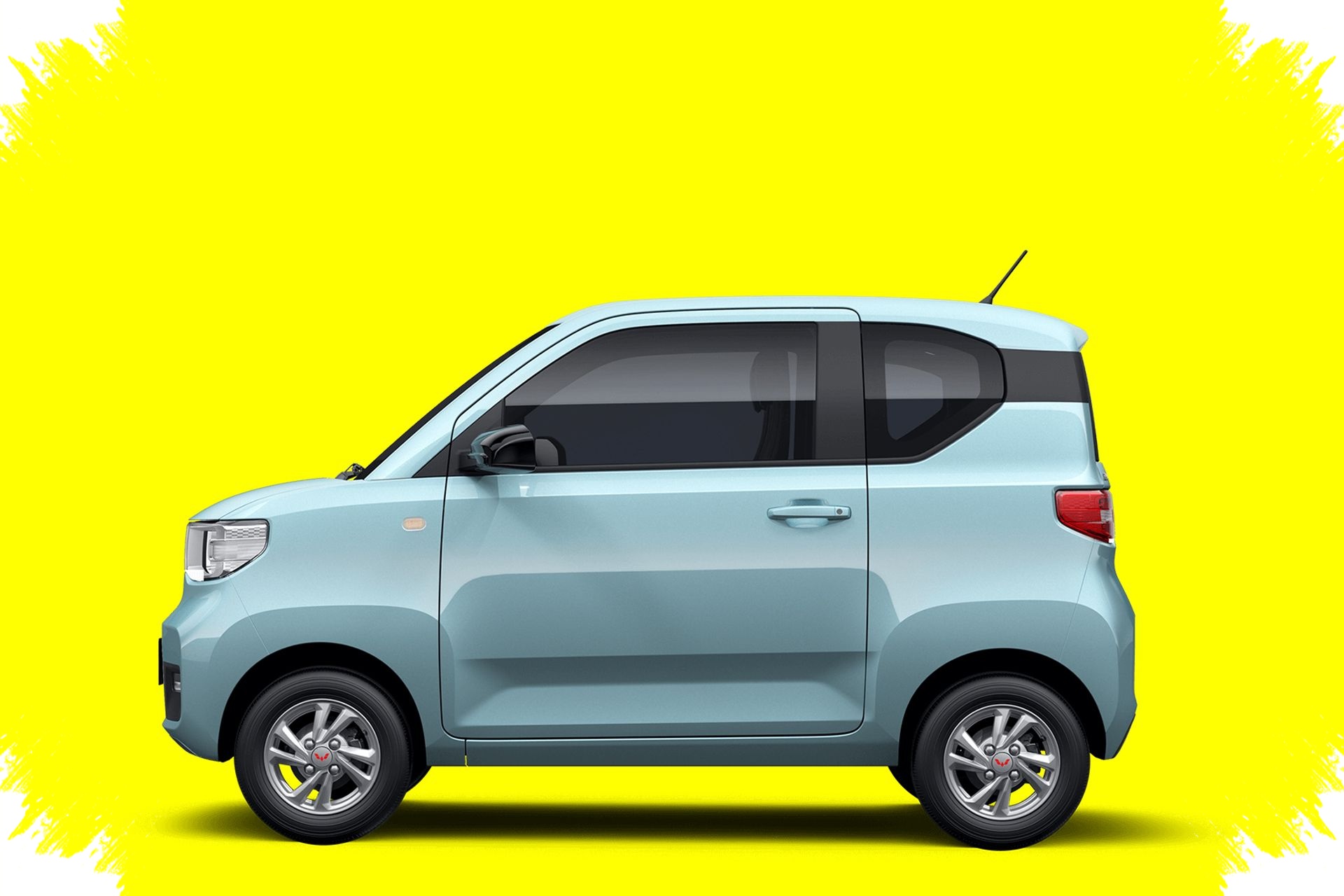
A new low-cost Wuling EV is drawing attention in Indonesia because its expected price range could land directly in territory long dominated by gasoline-powered LCGC models. If the projected band of Rp150 million to Rp180 million materializes after tax and distribution adjustments, the vehicle would no longer sit as a niche alternative, but as a direct challenge to the cheapest conventional cars on the market.
That shift matters because the comparison is no longer limited to sticker price alone. Buyers in this segment are likely to weigh daily efficiency, urban practicality, charging convenience, and the overall value of using an electric vehicle for short city trips.
A compact EV aimed at the mass market
The model linked to this expectation is the latest generation of the Mini EV, specifically the Wuling Hongguang MiniEV 2026 that has already launched in China. The price rumor in Indonesia places it at a level that cuts into the psychological barrier usually associated with affordable small cars.
Its projected arrival is significant because the Rp150 million segment has traditionally been the domain of compact gasoline cars. A battery-powered model entering the same range changes the way budget-conscious buyers evaluate their options, especially when the daily use case is moving around city roads.
The Mini EV 2026 is also reported to offer a driving range of up to 205 km and 301 km under the CLTC standard. For urban use, that range positions it as a practical city EV rather than a vehicle aimed at long-distance travel.
Wuling is also said to equip the model with fast charging. That addition makes the new Mini EV look more complete than its earlier, simpler predecessor.
Why the pressure on LCGC gasoline models is increasing
For years, buyers considering low-cost gasoline cars usually focused on one thing first: the initial purchase price. The presence of an EV in nearly the same bracket forces a broader calculation.
The decision now extends to operating efficiency, available features, and whether the vehicle fits everyday mobility needs in dense urban areas. For many buyers, the appeal of a gasoline LCGC has rested on affordability, but that advantage becomes less distinctive when an electric model arrives with modern tech and lower expected running costs.
That is why the potential arrival of the Mini EV in the Rp150 million to Rp180 million range is being viewed as more than just a new product launch. It could reshape the basic logic of buying a cheap car, especially for consumers who use a vehicle mainly for city commuting.
Small dimensions remain part of the appeal
The Mini EV’s size is another factor that could work in its favor. Wuling reportedly uses a Sweet Fun Cube design concept that gives the car a more modern appearance while keeping the compact character that defines a city car.
A small footprint matters in markets where urban traffic is dense and parking space is limited. In that environment, a compact EV can be easier to maneuver and more practical to live with than larger vehicles.
The design update also shows that Wuling is not relying on price alone. The brand appears to be pushing for a product that looks contemporary while still staying true to the small-car formula that made the Mini EV name recognizable.
Air EV remains the current EV pillar
While the lower-priced Mini EV is being prepared, Wuling still depends on Air EV as the main backbone of its electric portfolio in Indonesia. The model remains relevant because it is already familiar to consumers and fits routine city use.
In the reference material, the 2026 Air EV is listed at Rp214 million to Rp307 million depending on variant. The entry model, Air EV Lite 200 km, is described as the primary choice for urban driving.
Its compact proportions make it easy to use in crowded city streets, while the battery setup is noted for stable performance in tropical conditions. The article source also highlights lower operating expenses compared with conventional cars.
Wuling’s broader electrification push
Wuling’s strategy does not stop at small city cars. The company also introduced the Wuling Eksion concept at the Indonesia International Motor Show 2026, signaling a wider electrification roadmap.
Eksion is aimed at families with seven seats and comes in two versions: a pure electric model and a plug-in hybrid or PHEV. The EV variant is claimed to travel up to 530 km, while the PHEV version is said to reach up to 1000 km.
Taken together, these products show that Wuling is building an electric lineup from the bottom up. If the Mini EV really arrives below Rp180 million, the pressure on gasoline LCGC models could rise sharply, because buyers would be comparing simple low-cost cars not only with each other, but also with EVs that offer a stronger mix of pricing, features, and efficiency for daily use.
-
-
-

-