For daily riders, the comparison between IRC and Kingland usually comes down to one practical question: which tire delivers better real-world value. The answer depends on what matters most, because IRC and Kingland serve different expectations even though both target everyday motorcycle use.
IRC is more often associated with stability, safer handling, and a stronger sense of control, while Kingland draws attention because of its lower entry price. That contrast makes the choice less about one brand being universally better and more about matching the tire to riding conditions, budget, and comfort needs.
Why the two brands are often compared
Tires are not just a supporting component on a motorcycle. Automotive references consistently place them among the parts that affect safety, comfort, and riding efficiency.
That is why the IRC versus Kingland discussion remains relevant for commuters. Both brands are present in the daily-use segment, but they do not position themselves in the same way.
IRC is widely known as a long-established name in the Indonesian market. Technical reviews cited in the source describe its compound as designed to balance grip and durability.
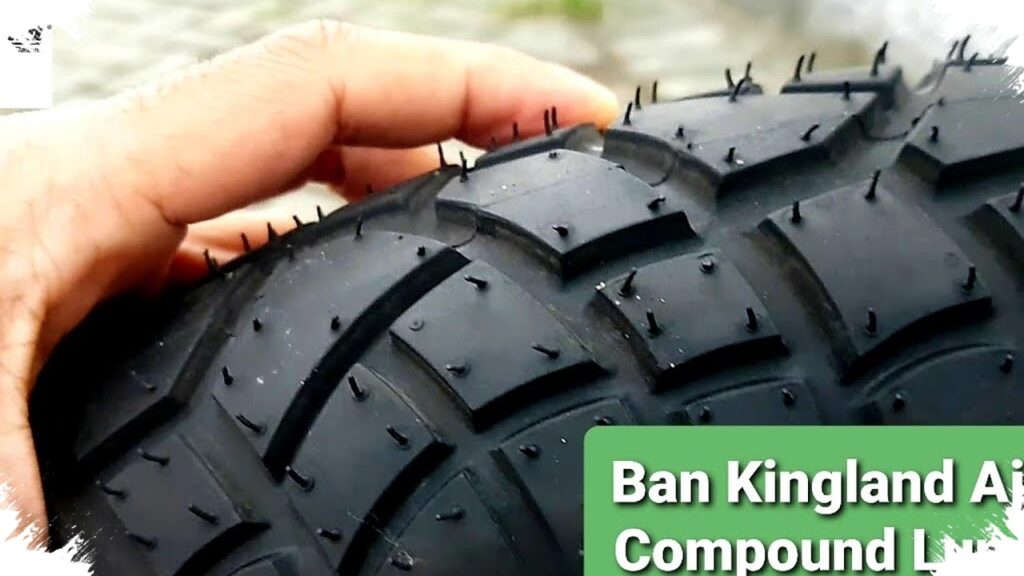
Kingland sits on the more economical side of the market. It is usually chosen by riders who want an affordable tire that still fits basic daily mobility needs.
Where IRC starts to stand out
On dry roads, both tires can perform adequately for routine use. The gap becomes easier to notice when riding speed increases, where cited testing points to more stable grip from IRC.
The difference becomes even clearer once the road surface turns wet. User reviews referenced in the source say IRC handles water better and reduces the risk of slipping compared with Kingland.
That advantage matters for riders who regularly pass through slippery streets or unpredictable weather. A tire that maintains better contact with the asphalt can provide a higher level of confidence when road conditions change quickly.
Kingland can still be used in rainy conditions, but its character is described as better suited to normal riding rhythms. It fits urban routes, calm speeds, and everyday trips that do not place heavy demands on wet-road performance.
Comfort is another dividing line
Grip is only part of the story. Comfort often becomes the next factor that influences a tire purchase, especially for riders who spend a lot of time on the road.
According to the technical testing mentioned in the source, IRC offers better shock absorption over uneven surfaces. That makes the motorcycle feel calmer during longer rides and helps reduce the sharpness of road vibrations.
Kingland is described as having a slightly firmer character. The source notes that this can reduce comfort, but it also gives the tire a tougher feel.
This creates a clear trade-off. IRC leans toward a smoother riding experience, while Kingland emphasizes practicality and basic daily function.
Price and long-term value
The question of worth is not determined by the purchase price alone. Tire life also affects how expensive the choice becomes over time.
The source says IRC tends to last longer when maintained properly. Kingland remains competitive on durability, although it is not placed at the top in this comparison.
Its main appeal lies in the lower starting price, which makes it easier on tighter budgets. For riders whose needs are simple and whose riding style stays moderate, that lower upfront cost can feel more rational.
This is where the meaning of “worth it” becomes relative. A cheaper tire may be the better choice when performance demands are low, while a more expensive one may be justified if safety, comfort, and stable wet-road handling matter more.
The most searched differences at a glance
- Grip and stability: IRC is stronger, especially at higher speeds.
- Wet roads: IRC is judged better at channeling water.
- Comfort: IRC provides smoother damping over rough surfaces.
- Tire character: Kingland feels firmer but more rugged.
- Price: Kingland is cheaper and sits in the entry-level segment.
- Market position: IRC is placed in the middle class segment.
The comparison suggests that the two brands are not competing on exactly the same terms. IRC is better aligned with riders who prioritize performance and safety, while Kingland appeals to those who want a more economical option.
For riders with high daily mileage, IRC may offer a stronger overall package because it combines stability, wet-road confidence, and comfort. Kingland still remains relevant for city use, steady speeds, and situations where the main concern is keeping replacement costs low.
Even so, tire care continues to play a major role in performance and safety. Proper air pressure and regular rotation can help both IRC and Kingland maintain their best possible condition in everyday use.