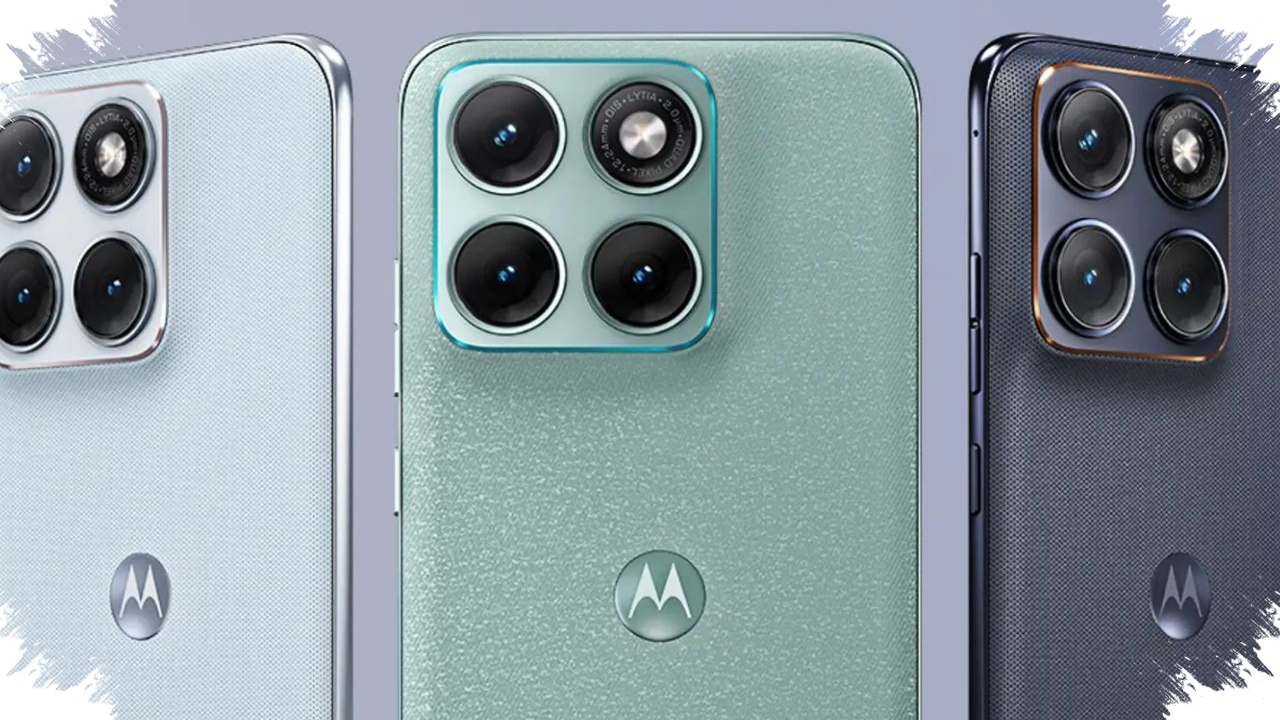
Motorola is making a clearer statement about what it wants a smartphone to stand for. Instead of treating the camera as a supporting feature, the company is placing imaging at the center of its latest device strategy, with strong emphasis on low-light performance, AI processing, and cinematic video.
That direction is visible in both Motorola Signature and Motorola Edge 70 Fusion. The two models follow the same idea from different angles: one aims at premium flagship imaging, while the other brings advanced night photography into a slimmer and more accessible form factor.
Cameras Take Priority
Motorola is no longer leaning only on performance numbers or chipset speed to stand out. In this lineup, the camera system becomes the main identity of the product, and that is where the company wants attention to go.
Motorola Signature reflects that shift most clearly. It carries DXOMARK Gold Label certification, placing it among the stronger performers in smartphone photography. The result is not presented as a single-spec achievement, but as the outcome of a broader system built around image quality.
At the core of that system is the Sony LYTIA 828 sensor, paired with image processing designed to preserve detail more effectively. Motorola says the setup helps keep photos stable in both dark and bright areas, which matters most when lighting becomes difficult.
Low-Light Performance Becomes the Main Story
The low-light message continues with Motorola Edge 70 Fusion, which is framed as a device that handles night scenes with more confidence. It uses the Sony LYTIA 710 sensor, described as the first of its kind in a smartphone, and combines it with moto AI and the Photo Enhancement Engine.
The aim is straightforward: keep photos sharp, reduce noise, and maintain natural color even when light is limited. That positioning matters because low-light shooting remains one of the biggest weaknesses across many phones, especially when users want good results without manual adjustments.
Motorola appears to be addressing that problem by making the camera experience more automatic. The focus is not on complicated controls, but on delivering usable results in difficult conditions with less effort from the user.
A More Complete Camera Setup on Edge 70 Fusion
Edge 70 Fusion is not only about one sensor. Motorola gives it a three-camera configuration that includes a 50MP main camera with OIS, alongside 13MP ultrawide and macro lenses.
That combination adds flexibility for everyday use. It can handle wider scenes, close-up subjects, and standard photos without forcing users to switch devices or rely on a single lens for every situation.
Color accuracy also plays a role here. The device has Pantone validation, and Motorola says skin tones appear more natural as a result. That makes the phone more relevant for portraits and content where color fidelity is important.
Premium Features Extend Beyond Imaging
Motorola Signature is designed to appeal beyond camera buyers. The device uses an ultra-thin body and premium materials such as twill and linen textures, giving it a more refined physical presence.
Inside, it is powered by Snapdragon 8 Gen 5, which supports AI functions that can help optimize photo results automatically. That means the phone is built to reduce the need for constant manual tuning while still delivering consistent output.
The video side also receives attention. Dolby Vision support gives recordings a more cinematic character, with livelier colors and wider dynamic range. This makes the device relevant not only for still photography but also for users who want stronger video performance.
Thin Form Factor, Large Battery
Edge 70 Fusion adds another layer to Motorola’s approach by combining a slim body with a large battery. The phone measures 5.99 mm thick, weighs 159 grams, and still includes a 7000mAh battery.
Motorola uses silicon-carbon battery technology to make that arrangement possible. Charging is supported by 68W TurboPower, keeping the device positioned for heavy daily use without sacrificing portability.
The design also follows a quad-curve shape, which helps the phone sit more comfortably in the hand. Materials based on nylon and linen reinforce the premium feel while keeping the overall profile light and compact.
Motorola’s Direction Is Becoming Clearer
Taken together, Motorola Signature and Edge 70 Fusion show a consistent product direction. The company is treating photography as a core reason to buy the phone, not as a secondary feature added after performance and design.
With new sensors, AI-based optimization, Pantone color validation, and Dolby Vision video support, Motorola is building a portfolio that tries to make mobile imaging more central to the user experience. The result is a lineup where camera quality is not just one specification among many, but the main point of differentiation.
Source: id.mashable.com-

-

-

-