


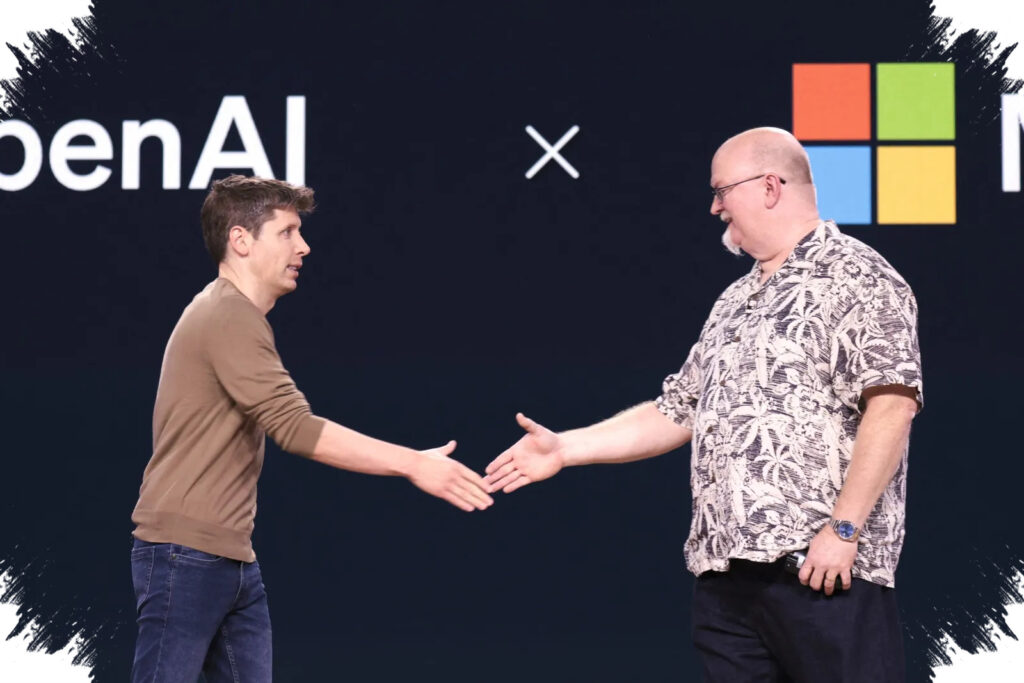
OpenAI’s business relationship with Microsoft has entered a more flexible phase, giving the AI company room to reach beyond a single cloud partner. The change marks a significant shift from the earlier arrangement, when Microsoft held exclusive control over much of OpenAI’s cloud access and related licensing.
The update does not end the partnership. Microsoft remains OpenAI’s primary cloud partner, but the revised terms now allow OpenAI to work with other cloud providers as well, including for customers outside Microsoft’s ecosystem.
A looser partnership, but not a breakup
Under the new setup, OpenAI can offer its products and services through multiple cloud platforms instead of being tied exclusively to Microsoft. That wider freedom gives the company more room to distribute its technology and pursue enterprise customers across a broader range of infrastructure providers.
Sam Altman said in a post on X that the partnership had been updated and now opens the way for OpenAI services to be available “across all clouds.” The comment reflects how the relationship has shifted from a tightly controlled arrangement into one that leaves more commercial options open.
Microsoft still keeps a key position in the deal. OpenAI has also given Microsoft a first right of refusal on its AI products, meaning Microsoft can decide first whether it wants to support the required capabilities before OpenAI turns to another cloud provider.
Why OpenAI wanted more room to move
The new arrangement is strategically important for OpenAI because the company needs more computing capacity and a wider reach in the enterprise market. Greater flexibility in choosing cloud partners may also strengthen its position as competition with Anthropic continues to intensify.
Reuters reported that OpenAI had wanted more freedom to make cloud agreements with Microsoft’s rivals. A memo reported by CNBC also said the company recognized Microsoft’s importance from the beginning, while noting that the relationship also limited OpenAI’s reach in the enterprise market.
That same memo said demand rose sharply after OpenAI appeared in Amazon’s cloud. The detail suggests that a multi-cloud strategy is not just a technical choice, but also a commercial one with direct implications for growth.
Amazon moves quickly to capitalize
The new openness was quickly met with a response from Amazon. In a LinkedIn post, Amazon CEO Andy Jassy said OpenAI’s model would soon be available directly to developers on Amazon Web Services.
Jassy added that more details would be shared at an event in San Francisco. His remarks showed that the change is already moving beyond corporate restructuring and into practical market access.
The revenue model has also shifted
The partnership changes go beyond cloud access. OpenAI and Microsoft have also revised their revenue-sharing arrangement, which had previously been tied to artificial general intelligence, or AGI, the stage at which AI systems match or surpass human ability across many tasks.
In the new structure, OpenAI will continue sharing revenue with Microsoft until 2030. The rate remains 20% of OpenAI’s revenue, but there is now a cap on the total amount OpenAI must pay.
Microsoft will also no longer pay OpenAI’s share of revenue for model offerings on Azure. That adjustment shows both companies are trying to make the business side of the relationship more defined and easier to manage.
Licensing is no longer exclusive
The licensing framework has changed as well. Microsoft previously held exclusive rights to OpenAI’s intellectual property for models and products through 2032, based on a revised partnership agreement in October last year.
OpenAI now says other partners can also take part, and Microsoft is no longer the sole exclusive license holder. The shift matters because it opens the door for broader distribution without forcing OpenAI to sever its strategic ties with Microsoft.
A backdrop of legal and competitive pressure
The restructuring comes as Sam Altman faces a civil lawsuit from Elon Musk. Musk has accused OpenAI executives of financially benefiting from changes in the company’s structure, and the case has moved into trial.
The court is expected to examine OpenAI’s structure, funding, and partnerships, including its ties to Microsoft. At the same time, Microsoft is also working to reduce its dependence on OpenAI by developing its own AI models and by bringing Anthropic models into some products, including 365 Copilot for enterprise.
The new terms show that OpenAI and Microsoft still need each other, but no longer operate under the same exclusive framework that once defined the relationship. OpenAI now has more room to expand, while Microsoft keeps a strategic role in a market that is becoming increasingly open.
Source: www.indiatoday.in